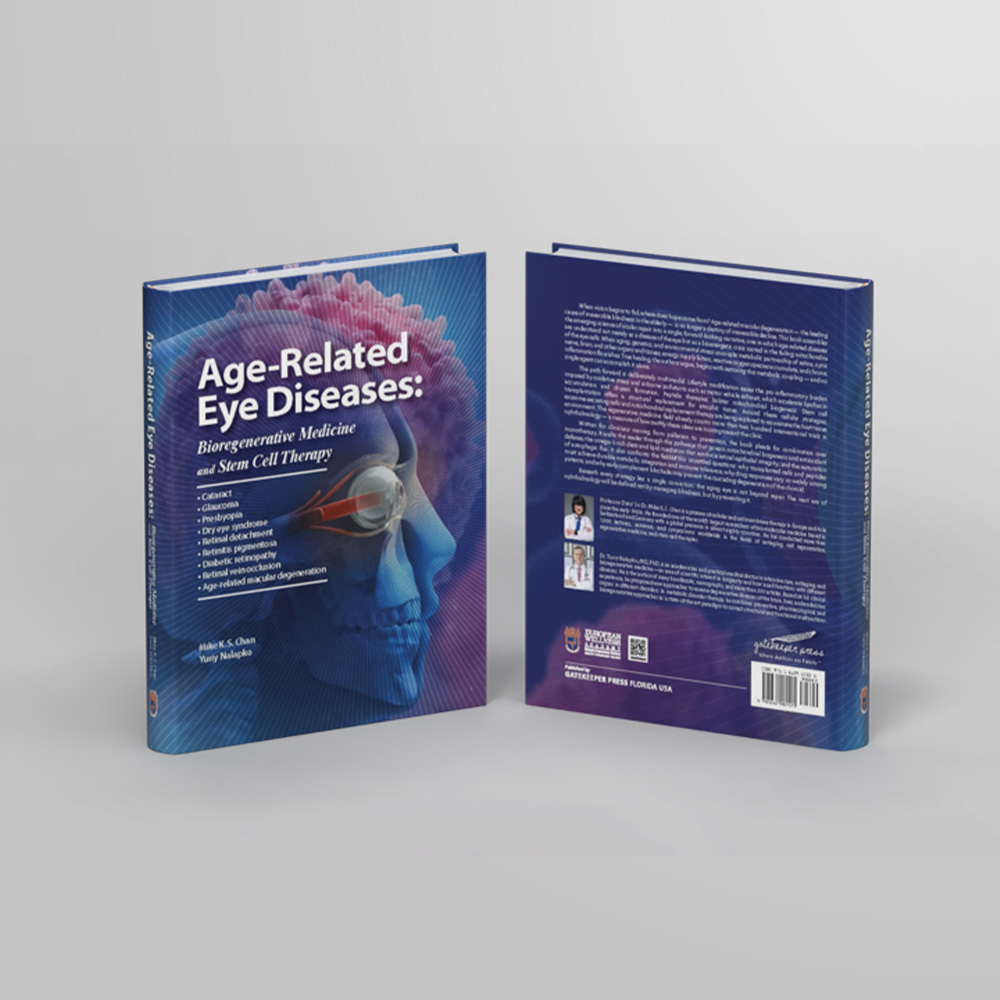
Age-Related Eye Diseases: Bioregenerative Medicine and Stem Cell Therapy
$49.00 – $118.00Price range: $49.00 through $118.00
When vision begins to fail, where does hope come from? Age-related macular degeneration — the leading cause of irreversible blindness in the elderly — is no longer a destiny of irreversible decline. This book assembles the emerging science of ocular repair into a single, forward-looking narrative, one in which age-related diseases are understood not merely as a disease of the eye but as a bioenergetic crisis rooted in the failing mitochondria of the eye cells. When aging, genetics, and environmental stress uncouple metabolic partnership of retina, optic nerve, brain, and other organs and tissues, energy supply falters, reactive oxygen species accumulate, and chronic inflammation flourishes. True healing, the authors argue, begins with restoring this metabolic coupling — and no single agent can accomplish it alone.
The path forward is deliberately multimodal. Lifestyle modification eases the pro-inflammatory burden imposed by oxidative stress and airborne pollutants such as motor vehicle exhaust, which accelerate lipofuscin accumulation and drusen formation. Peptide therapies bolster mitochondrial biogenesis. Stem cell transplantation offers a structural replacement for atrophic tissue. Around these cellular strategies, exosome-secreting cells and mitochondrial replacement therapy are being explored to rejuvenate the host tissue environment. The regenerative medicine field already counts more than two hundred interventional trials in ophthalmology — a measure of how swiftly these ideas are moving toward the clinic.
Written for clinicians moving from palliation to prevention, the book pleads for combination over monotherapy. It walks the reader through the pathways that govern mitochondrial biogenesis and antioxidant defense; the omega-3-rich diets and lipid mediators that reinforce retinal epithelial integrity; and the restoration of autophagic flux. It also confronts the field’s unsettled questions: why transplanted cells and peptides must achieve durable metabolic integration and immune tolerance, why drug responses vary so widely among patients, and why early complement blockade may prevent the cascading degeneration of the choroid.
Beneath every strategy lies a single conviction: the aging eye is not beyond repair. The next era of ophthalmology will be defined not by managing blindness, but by preventing it.
