Exosomes in Therapeutics & Aesthetics: Principles, translation and clinical applications
$59.00 – $143.00Price range: $59.00 through $143.00
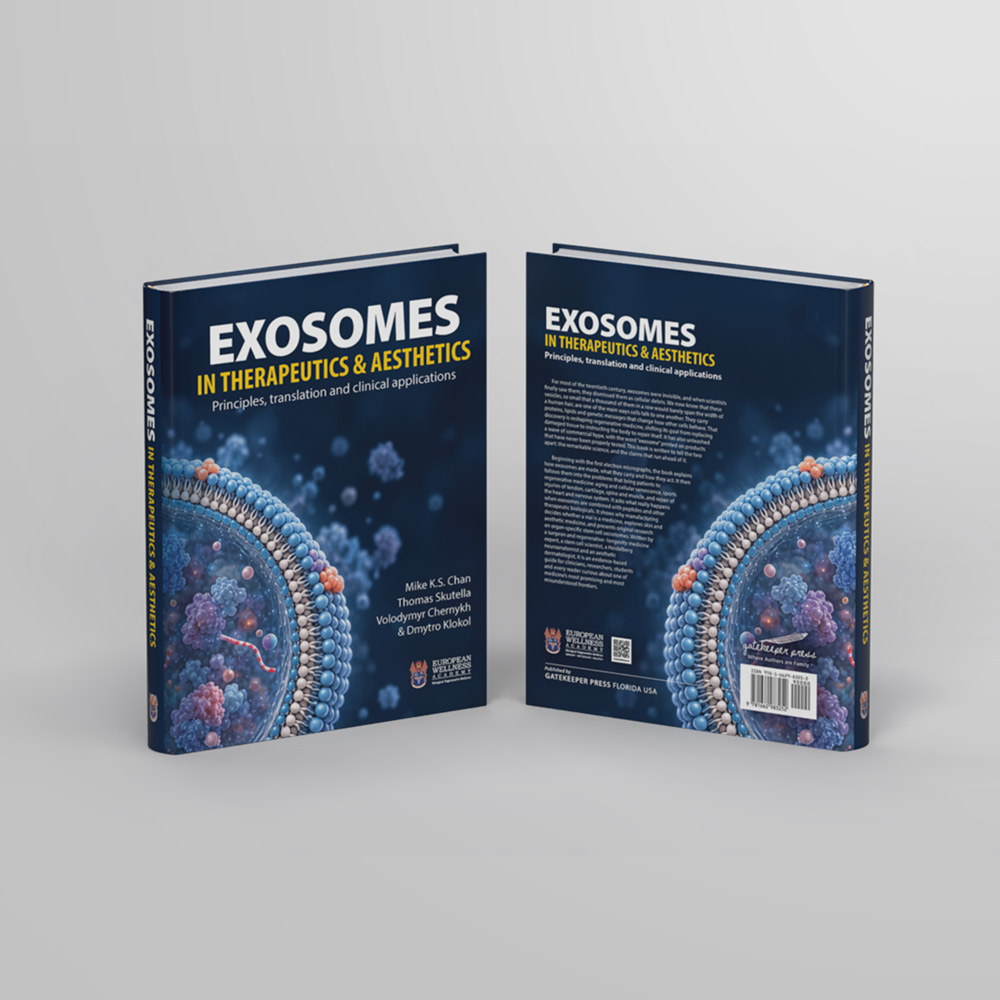
For most of the twentieth century, exosomes were invisible, and when scientists finally saw them, they dismissed them as cellular debris. We now know that these vesicles, so small that a thousand of them in a row would barely span the width of a human hair, are one of the main ways cells talk to one another. They carry proteins, lipids and genetic messages that change how other cells behave. That discovery is reshaping regenerative medicine, shifting its goal from replacing damaged tissue to instructing the body to repair itself. It has also unleashed a wave of commercial hype, with the word “exosome” printed on products that have never been properly tested. This book is written to tell the two apart: the remarkable science, and the claims that run ahead of it.
Beginning with the first electron micrographs, the book explains how exosomes are made, what they carry and how they act. It then follows them into the problems that bring patients to regenerative medicine: aging and cellular senescence, sports injuries of tendon, cartilage, spine and muscle, and repair of the heart and nervous system. It asks what really happens when exosomes are combined with peptides and other therapeutic biologicals. It shows why manufacturing decides whether a vial is a medicine, explores skin and aesthetic medicine, and presents original research on organ-specific stem cell secretomes. Written by a surgeon and regenerative-longevity medicine expert, a stem cell scientist, a Heidelberg neuroanatomist and an aesthetic dermatologist, it is an evidence-based guide for clinicians, researchers, students and every reader curious about one of medicine’s most promising and most misunderstood frontiers.
