A Mother’s Quiet Hope: Understanding Global Developmental Delay (GDD) Through Li Hong Xian’s Journey
As the world marks World Autism Day on April 2, one mother’s journey reveals the…

As the world marks World Autism Day on April 2, one mother’s journey reveals the quiet struggles—and profound victories—behind raising a child with developmental challenges, where even the smallest steps can redefine what hope looks like.
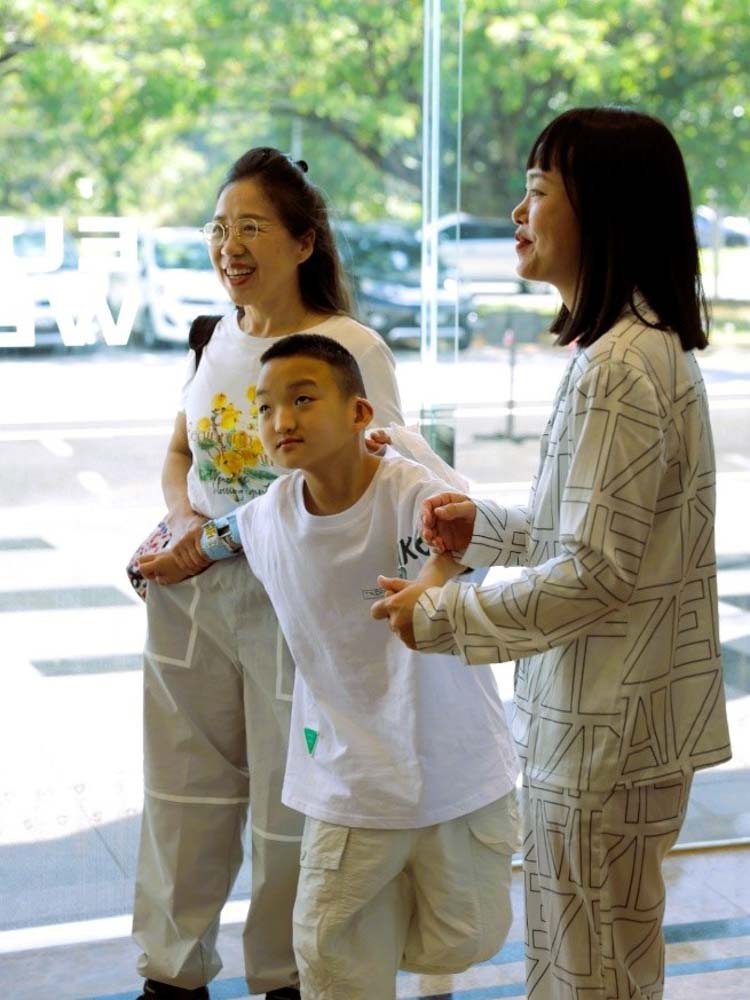
KOTA KINABALU, Malaysia (March 2026) — For years, Li Hong Xian could not sleep through the night.
The young boy from Yinchuan, in China’s Ningxia region, would lie awake for hours, sometimes until dawn, leaving his mother Zhao Yi Hui physically exhausted and emotionally drained.
“He could stay awake for the whole night,” Zhao recalled. “Someone always had to stay with him. Otherwise, he would develop behaviors we couldn’t manage. I was constantly tired, physically and mentally.”
But sleep was only one of many struggles.
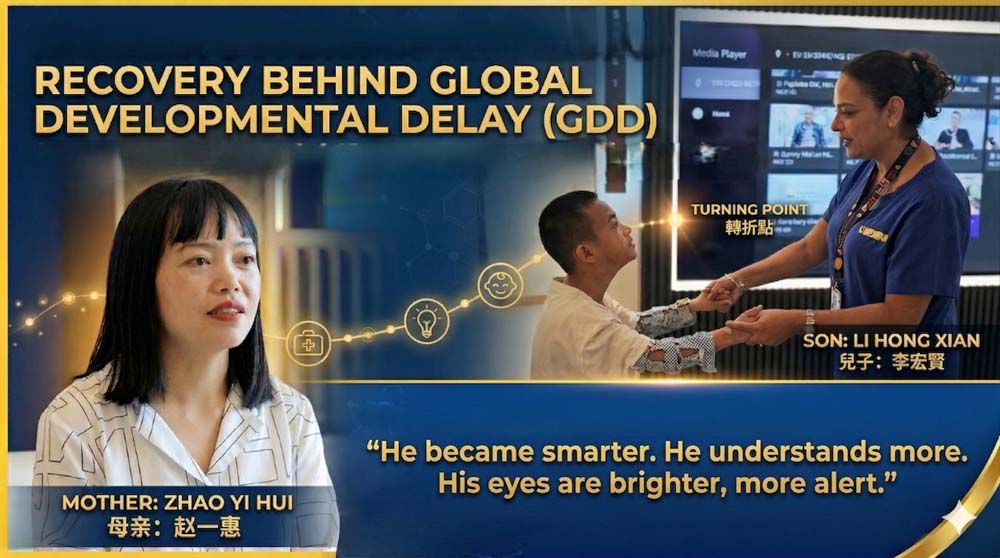
Born in 2016, Hong Xian was diagnosed with Global Developmental Delay (GDD), a condition that affects multiple aspects of development, cognition, motor skills, speech, and emotional regulation.
Unlike autism, which primarily impacts social interaction and behavior, GDD presents a broader and more complex challenge.
For Zhao, the difficulty lay not just in managing symptoms but in reaching her son at all.
“No matter how hard I tried, he couldn’t understand me. He couldn’t respond,” she said. “That made me feel completely helpless.”
Daily life became a cycle of effort without feedback.
In 2022, Zhao made a decision that would mark a turning point in her son’s journey, she sought targeted brain-specific stem cell treatment at European Wellness Premier Centre in Malaysia.
At first, the results were far from encouraging.
“Even after several treatments, I didn’t see much change,” she said. “By the ninth injection, I almost wanted to give up.”
For many families, this is where hope begins to fade.
But for Zhao, it was where something unexpected began.
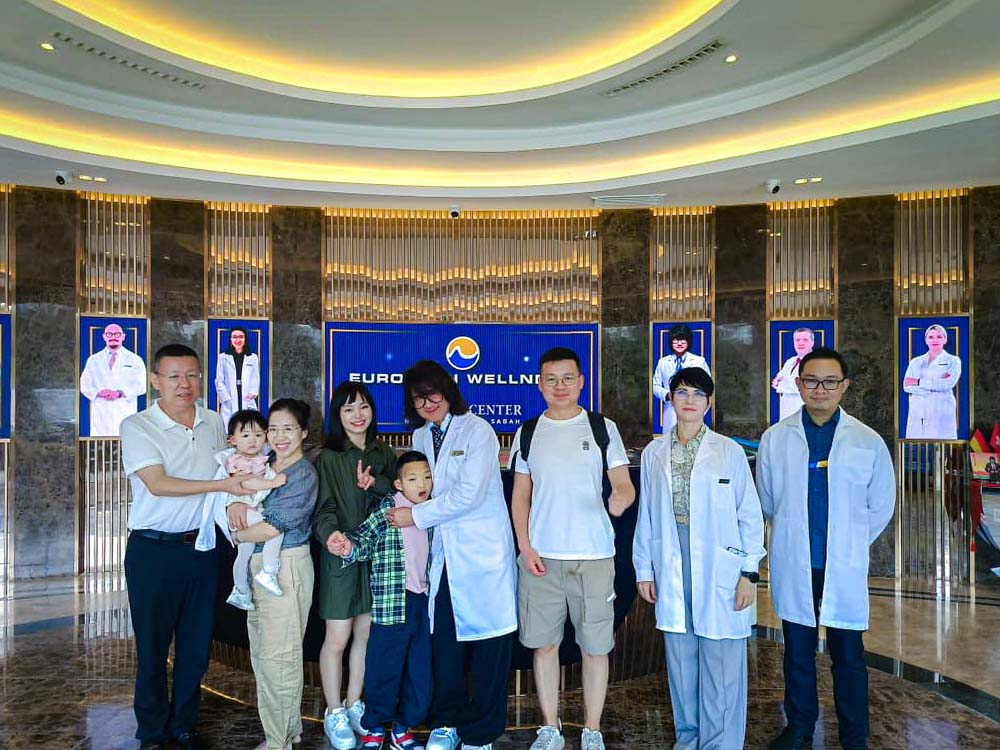
In 2022, the family made a decision that would change their trajectory; they began treatment at European Wellness Premier Centre in Alamesra, Kota Kinabalu, Sabah.
It was not a decision made lightly but one driven by the need to try something beyond conventional options.
Over time, the changes were not sudden, but gradual and steady.
And that, doctors say, is often the hallmark of genuine neurological improvement.
“Since starting treatment, I’ve seen gradual improvements,” Zhao said. “He is slowly learning, slowly understanding.”
Even then, the journey tested her patience.
There were moments when progress seemed invisible, when doubt crept in.
At one point, after multiple supporting therapy (post stem cells), of MO Mitochondrial Peptides of CNS (Central Nervous System), she nearly gave up.
But the story did not end there.
For years, Hong Xian was unable to ride a bicycle.
“We tried everything, guiding his legs, teaching him step by step, but he just couldn’t coordinate the movement,” Zhao said.
Then, one day, something changed.
“Suddenly, he could ride,” she recalled. “It felt unbelievable.”
Today, he rides with growing confidence, each attempt reinforcing a skill that once seemed out of reach.
For Zhao, this was more than progress; it was proof that change was possible.
“Maybe the treatment takes time,” she said. “But it works.”
Beyond physical coordination, Zhao began noticing deeper cognitive and emotional changes.
“He became smarter. He understands more. His eyes are brighter, more alert.”
His engagement with the world gradually evolved.
“When we speak to him with warmth, especially through music he likes, his eyes light up. You can see happiness on his face.”
He also became more socially aware.
“He can sense who is kind to him,” she said. “He becomes close to them, even hugging them.”
One of the most meaningful breakthroughs came through a simple daily task, putting on his shoes.
“Before, I thought this was impossible,” Zhao said. “But now he adjusts his feet, corrects mistakes, and finds a way to put them on himself.”
To others, it may seem minor.
To a mother, it is profound.
“That moment touched me deeply,” she said. “I felt my child has hope.”
For Zhao, progress is not measured by clinical milestones but by daily experience.
“Things he couldn’t do before, now he can,” she said. “He keeps surprising me.”
Even subtle improvements matter.
“His movements are faster. Sometimes when we play, I can’t even catch his hands.”
Zhao’s journey has also been shaped by her encounters within the medical system.
“Many hospitals and centers avoid severe cases like my son,” she said. “Because if there is no result, it affects their reputation.”
At European Wellness, her experience was different.
“Prof. Chan did not reject us,” she said. “Even though he is very busy, he still personally designs every therapy plan.”
One moment, in particular, left a lasting impression.
“My son got off the bed without shoes, and Prof. Mike Chan just bent down immediately to help him put them on,” she said. “That kind of care really moved me.”
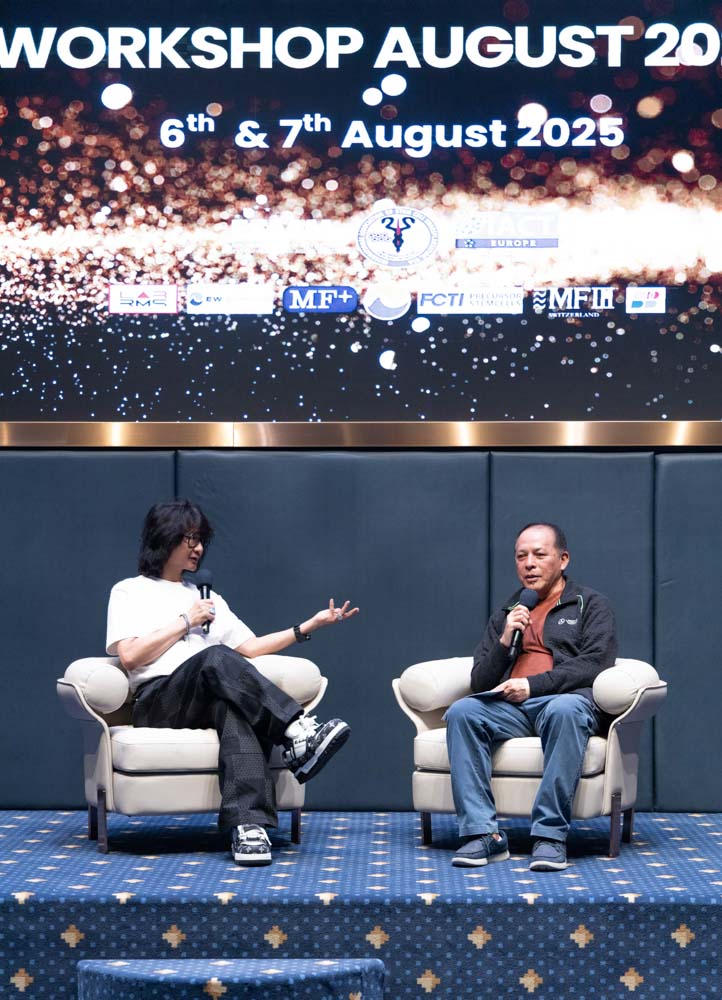
Prof. Mike Chan, a pioneer in regenerative medicine, believes such cases reflect a broader shift in understanding developmental disorders.
“Every child’s brain has the capacity to respond when given the right signals, the right environment, and the right cellular support.”
His approach focuses on restoring biological function rather than simply managing symptoms.
At the same center, cases such as 34-year-old Taiwanese patient Lee Chia Chi, who showed improvement at age 34, have challenged long-held assumptions about age limits in treatment.
Together, these stories point to a continuum of possibility.
While Chia Chi represents a later-stage breakthrough, Hong Xian’s journey reflects early and ongoing intervention, where progress builds gradually over time.
It is never too early to begin.
And never too late to improve.
For Zhao, the goal remains simple.
“I just hope that one day he can take care of himself,” she said.
To live independently.
To manage daily life.
Nothing more, and nothing less.
Back in the treatment center, Hong Xian walks steadily down the corridor, more aware, more responsive.
His progress is quiet.
But it is real.
Because the most meaningful breakthroughs do not arrive all at once,
They emerge in small, unexpected moments that change everything.
Behind stories like Hong Xian’s lies a deeper shift in how developmental conditions are understood and treated.
At the center of this shift is Prof. Mike Chan’s philosophy: the brain is not fixed, it is responsive.
The brain has 52 lobes with 67 different types of Brain stem cells! The frontal lobe of the brain is only fully developed around 25-years-old.
His approach is built on three pillars:
Together, these form a bioregenerative approach, addressing root causes rather than symptoms.

“If we can successfully treat age-related neurodegenerative conditions such as dementia, it demonstrates that neurodevelopmental disorders can also be addressed. From Alzheimer’s, Parkinson’s, and Huntington’s disease to Global Developmental Delay (GDD), we have the capability to intervene across the full spectrum of neurological conditions.” — Prof. Mike Chan
For autism, this means targeting brain regions responsible for speech, behavior, and emotional regulation.
For global developmental delay, the approach is broader, supporting multiple systems across the body, from neurological to metabolic function.
The goal is not immediate change.
It is long-term restoration.
For decades, conditions like autism and GDD were approached with limitation.
Managed, but rarely improved at their core.
What is emerging now is different.
That with the right conditions, the brain can adapt.
It can respond.
And in some cases, it can recover.
For families like Zhao’s, that shift, from limitation to possibility, changes everything.
Prof. Mike Chan said Li Hong Xian’s struggles included severe malnutrition and a strong aversion to food, which significantly aggravated his Global Developmental Delay (GDD) and hindered his normal growth. After treatment, he has experienced improved food intake and better nutrient absorption.
He addressed this critical issue by implementing a subsequent, targeted “brain solution”: precursor stem cells for the intestinal mucosal lining. This intervention was designed to dramatically enhance the absorption of nutrients from his daily diet, grounded in the understanding that the gut, often referred to as the second brain, contains a vast network of neural cells.
The untreatable are treatable.
These groundbreaking treatment protocols and bioregenerative philosophies are extensively documented in Prof. Mike Chan’s published medical works:
Follow European Wellness:



Follow European Wellness Academy:
Follow Prof. Dato’ Sri Dr. Mike Chan: