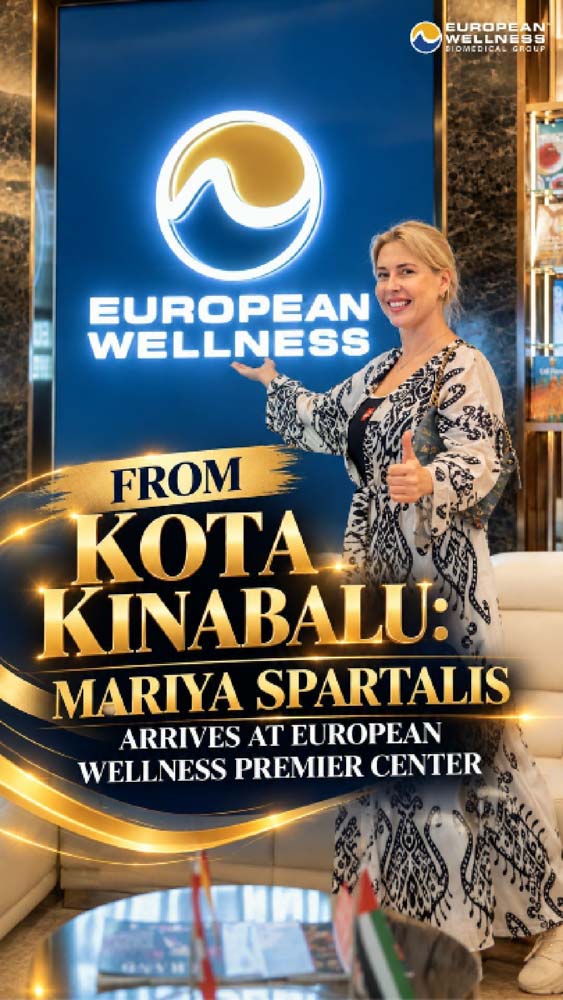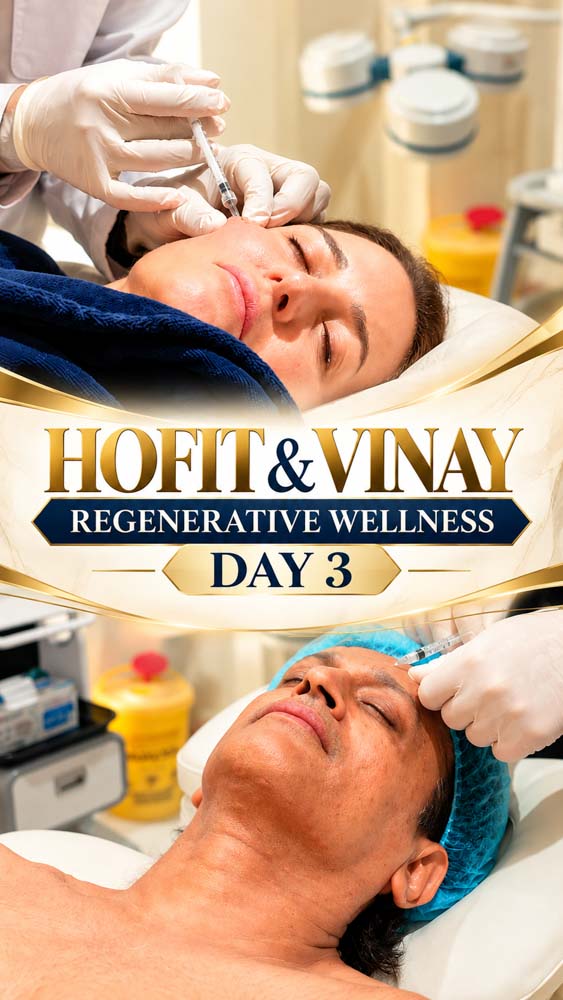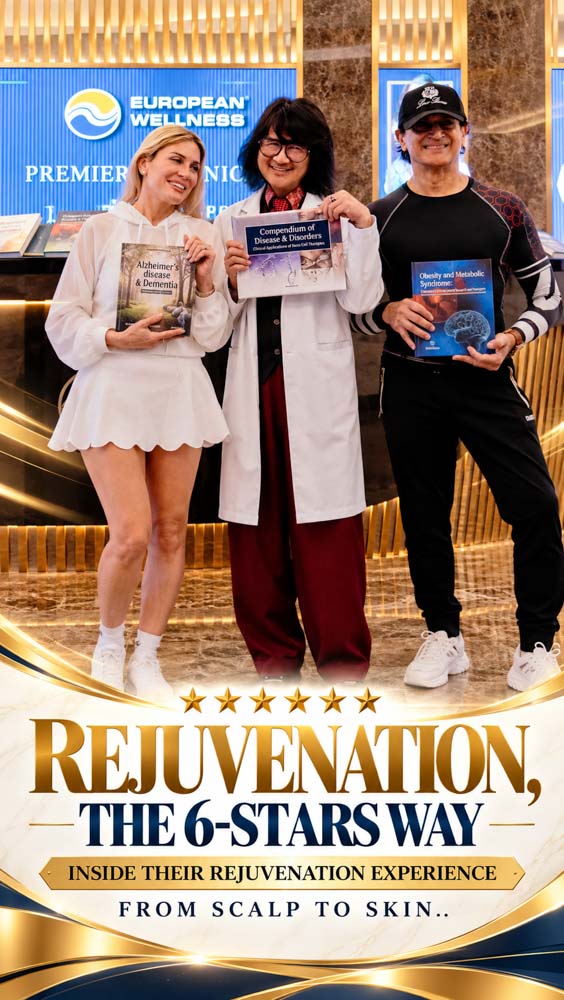
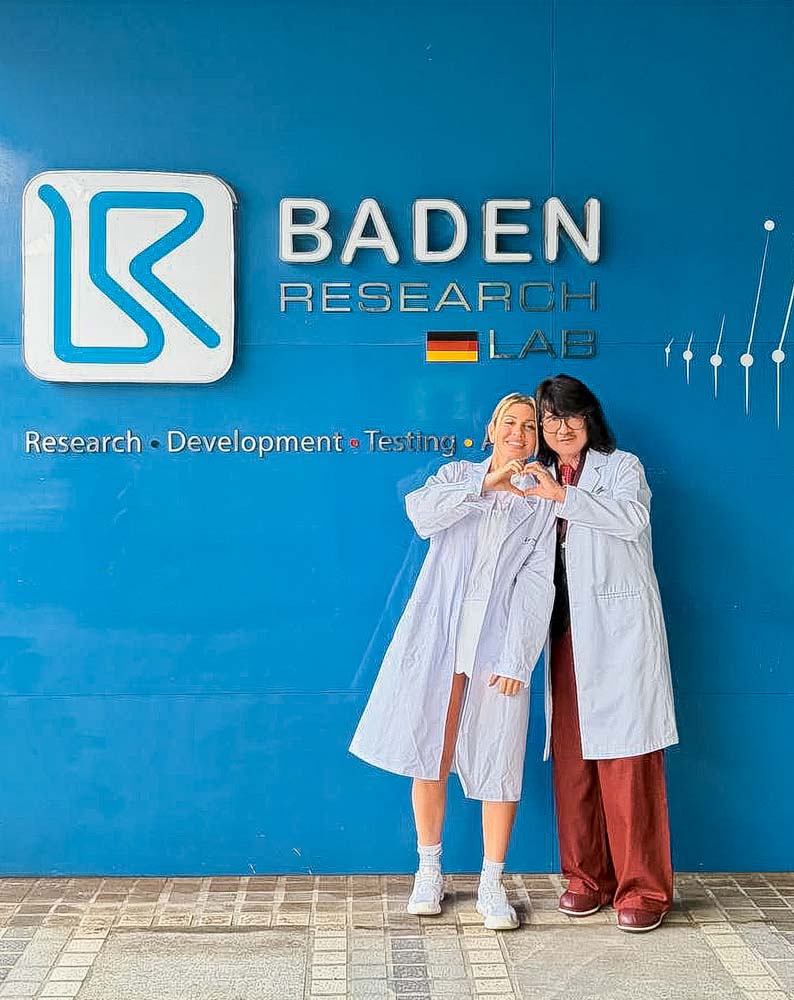
Welcome to Kota Kinabalu, Mariya! 🫶 After more than 25 years in international private banking…
Health Is Your True Wealth: Hofit Golan on Recovery, Research and Longevity
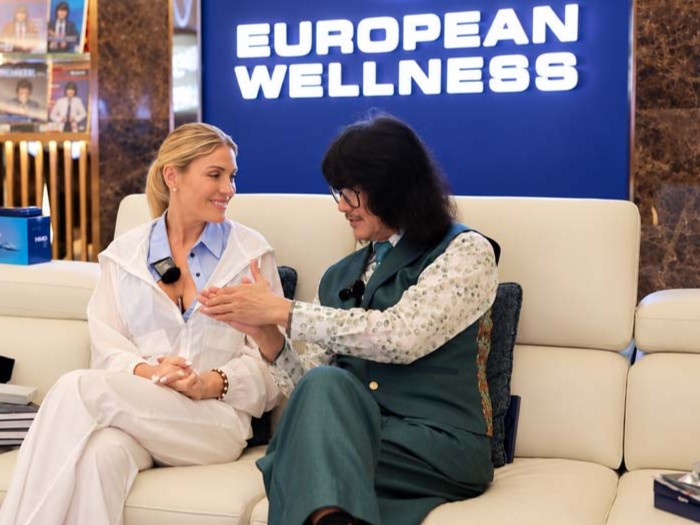
For Hofit Golan, the conversation about longevity begins with something more personal than a fashionable ingredient or a promise of younger-looking skin. It begins with being injured, struggling to move, and wanting to feel that the person treating her understood what the experience meant for her life.
Across four podcast excerpts, that memory becomes the starting point for an expansive discussion with Prof. Mike Chan. Their exchange moves from broken legs and red carpets to peptides, skincare, hair health and the standards they believe should sit behind wellness products. Beneath those subjects is a recurring question: how do people decide whom—and what—to trust with their health?
Hofit brings energy, humor and strong opinions. Prof. Mike Chan responds with explanations of his approach, reflections on research and a philosophy of treating patients as family. The conversation is openly supportive and often promotional, but its most compelling thread is human: the desire to feel heard, understand one’s options and protect the health that makes everything else possible.
A Recovery Story That Changed Her Perspective

Hofit traces her introduction to Villa Medica to 2013, after a leg injury. She recalls frustration with hospital care, long waits and advice that left her feeling she had little to do except remain still and wait.
Her account is not simply about wanting a different treatment. It is about wanting a different relationship with care. She describes feeling that the injury had become the entire focus, while her expectations, independence and sense of self had slipped into the background.
At Villa Medica, she says, the experience felt different. In her telling, the emphasis moved from the isolated injury to the person experiencing it. That distinction remains important throughout the conversation: treating a symptom and caring for a human being are not, to her, interchangeable experiences.
She also recalls returning to the Venice Film Festival while recovering from a later injury, navigating gondolas and cobblestones with crutches, a cast and a gown. The image captures both her determination and the practical demands of the life she wanted to resume.
Hofit attributes her experience to the care she received. Her account is a personal testimonial, however, not clinical evidence that a particular treatment caused accelerated healing. The excerpts describe recovery using different time references and do not provide the medical records needed to establish a single healing timeline. The emotional significance is clearer: she felt supported in returning to a life that mattered to her.
Why Hofit Calls Him the “Godfather”
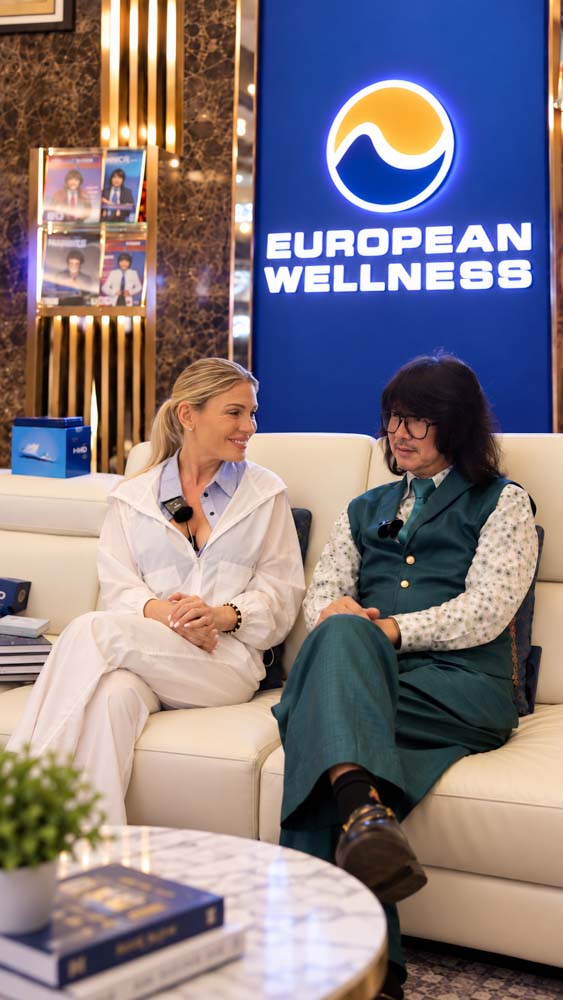
Hofit’s admiration for Prof. Mike Chan is unmistakable. She repeatedly calls him the “Godfather,” explaining the nickname through his publications, teaching and the length of time she believes he has devoted to the subjects now discussed in wellness circles.
Surrounded by books, she contrasts sustained research with the ability to attract attention. Coming from the media world, she argues that visibility and credibility are different things: a persuasive performance can make someone famous, but it does not necessarily establish the value of what they are offering.
Prof. Mike Chan responds to the nickname by acknowledging others. “I would say life is a learning process,” he says. Hofit interprets that response as humility, reinforcing the contrast she draws between someone focused on research and someone focused on selling himself.
His description of his commitment to research is equally direct:
“I put all my money, all my life into research.”
— Prof. Mike Chan
“When it comes to my health, which is my true wealth, I don’t want to be sold,” she says.
The nickname is Hofit’s expression of respect, not a formal scientific designation. What it reveals is the basis of her trust: she values what she perceives as dedication, continuity and a willingness to keep learning over the polish of a marketing campaign.
From Private Clinics to a Public Conversation
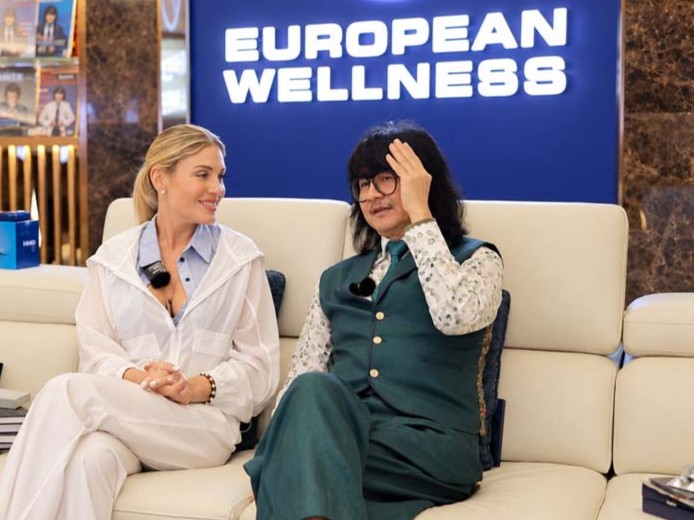
The second excerpt opens with Hofit explaining why she brought Prof. Mike Chan to the Cannes Film Festival. She wanted, she says, to make his work more visible beyond professional audiences and private clients.
Her argument is about communication as much as access. Books and lectures can reach one audience; podcasts, television and social media can reach another. She sees herself as helping bridge that gap, encouraging a guest she describes as reserved to take a more public-facing role.
She also discusses confidentiality around celebrity wellness routines, arguing that people outside those circles should have more opportunity to learn about the approaches being discussed. Her interpretation of private clients’ motives is her own, but the broader concern is understandable: a person cannot ask informed questions about something they do not know exists.
As the exchange turns toward products intended for use outside the clinic, access becomes a commercial topic too. The conversation introduces formulations presented as more convenient for everyday use. Convenience and availability, however, are different from demonstrated safety or effectiveness. Bringing a product to someone’s doorstep does not, by itself, establish that it is appropriate for them.
The useful distinction is between making a subject more visible and making a medical recommendation. Wider discussion can invite questions; individual treatment decisions require a different level of assessment.
Skincare Brings the Discussion Back to Daily Life
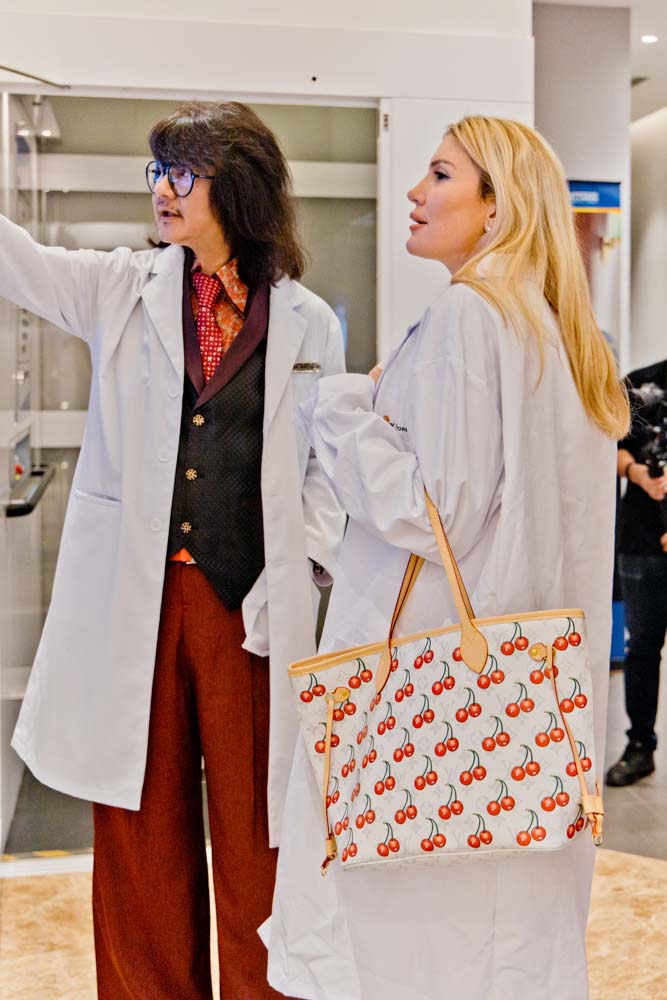
For all its references to film festivals and private clinics, the conversation repeatedly returns to ordinary frustrations. One of the most personal moments comes when Hofit describes persistent itching and eczema.
She recalls trying multiple creams and treatments, and says she experienced relief after a serum was applied during her visit. Her delivery shifts between frustration, surprise and humor. Soon, she is joking that she wants the entire supply for herself.
The story gives the product discussion an emotional context. Skincare, in this moment, is not only about appearance. It is about comfort, sleep and the irritation of a problem that has persisted despite repeated attempts to address it.
Her reported relief should not be described as a cure or assumed to predict another person’s response. Nevertheless, it helps explain why her enthusiasm is so personal. She is speaking from the experience of wanting something to feel different, not merely wanting another item on a bathroom shelf.
Beyond Ingredients: Absorption and Delivery
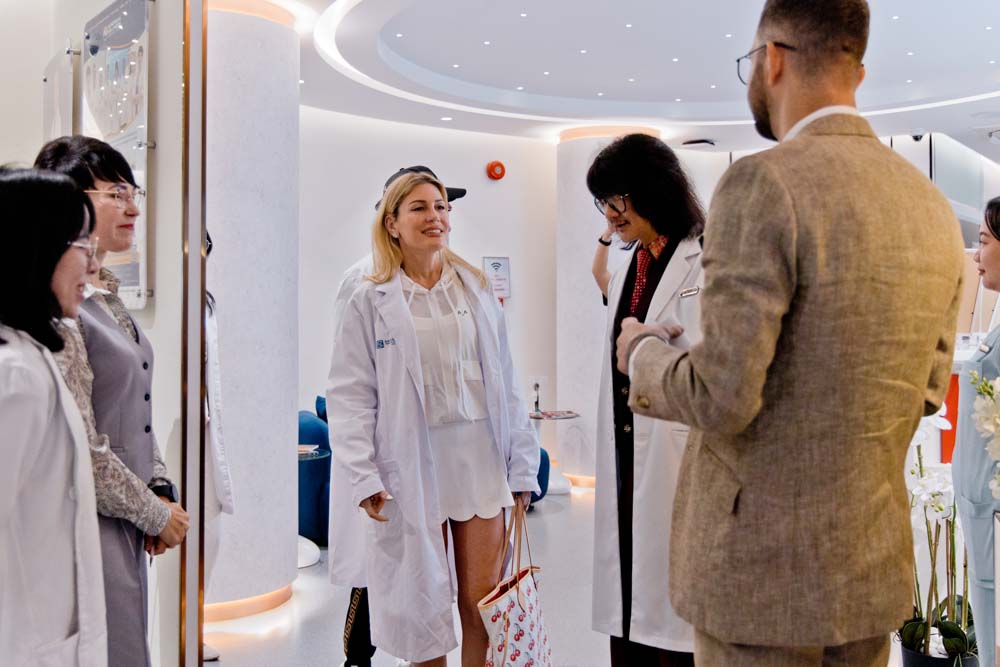
The third excerpt asks a practical question: does the way a product is administered change what people should expect from it?
Hofit raises injections, intravenous administration, topical creams, nasal delivery and sublingual products. Prof. Mike Chan responds by discussing molecular size and describing the delivery technology he says underlies his formulations.
Hofit translates the discussion into an everyday example: an expensive night cream that still feels present on her skin hours later. She uses the anecdote to emphasize three priorities—quality, the right quantity and delivery—and to question whether price or familiarity tells consumers enough about a product.
The exchange is engaging because it moves beyond an ingredient’s name to questions about formulation and intended use. Its explanations remain the speakers’ account, however. The clip does not supply the evidence needed to validate specific size thresholds, establish uptake or compare the performance of the products discussed. Feeling a cream on the skin is not, on its own, a measurement of absorption or benefit.
For readers, the strongest takeaway is therefore a question rather than a promise: what evidence supports the formulation, delivery method and intended outcome of this particular product?
An Organ-Specific Approach—and the Need for Specific

As peptides and stem cells become more prominent in the discussion, Prof. Mike Chan explains the distinction he draws between synthetic peptides and what he calls “organic” peptides. He also describes an approach focused on specific organs and cell types rather than a single formulation for every concern.
Hofit asks how this differs from the products and peptide combinations she has tried. She mentions BPC-157 and GHK-Cu, while Prof. Mike Chan emphasizes the specificity he believes is necessary when considering different tissues and organs.
This is his rationale for his approach, not evidence in itself that one category of peptide is inherently better than another. The terminology, biological explanations and disease-related examples should not be mistaken for established treatment outcomes simply because they are presented confidently.
The discussion becomes especially relevant when it turns to the relationship between a claim and the evidence offered to support it. Prof. Mike Chan repeatedly argues that research should concern the actual product being promoted, rather than a different product used as a stand-in.
“You can’t promote a product without the science,” he says, expressing the standard he believes should underpin product claims.
He also describes university collaborations and publications. Those statements are part of the interview; the excerpts do not independently establish what each study evaluated, how it was designed or which conclusions it supports. His stated principle nevertheless creates a clear standard against which any product claim—including his own—can be examined: is the evidence relevant to the exact formulation and use being proposed?
Hair Health, Confidence and Expectations

The fourth excerpt opens with hair peptides, allowing Hofit to connect the discussion to another personal concern. She describes damage associated with extensions, her eyebrow procedures and her brother’s experience after a hair transplant.
Prof. Mike Chan explains his approach to follicles, while both discuss a spray presented for at-home use. Hofit’s enthusiasm is immediate, but it also reveals what hair concerns can represent: confidence, identity and frustration with the trade-offs of cosmetic procedures.
The products are described in strongly favorable terms, including suggestions that they could replace more invasive approaches. Those statements should not be turned into a promise that a spray will eliminate the need for transplantation or address every cause of hair loss. The interview does not establish such conclusions.
The same restraint applies when the conversation briefly touches on weight management, maintaining muscle and women’s hormonal health. These are substantial medical topics introduced in a short product exchange, not fully assessed treatment options or substitutes for individualized care.
Safety Before Salesmanship

One of the clearest recurring themes is the importance the speakers place on safety, manufacturing transparency and quality control.
Hofit describes visiting facilities and observing attention to research, production, packaging and batch checks. Prof. Mike Chan discusses contamination concerns and repeats the medical principle, “First do no harm.”
The conversation sets these priorities against marketing that creates desire without, in their view, answering enough questions about what is being sold. Hofit is particularly outspoken about wanting results rather than spectacle.
Their criticism is broad, and the descriptions of their own processes remain claims within the interview. A balanced reading should not assume that enthusiasm, a publication count or an association with a university automatically establishes a product’s safety and effectiveness.
What the exchange does offer is a useful direction for inquiry: what has been tested, under what conditions, for which purpose, and with what limitations? Trust becomes more meaningful when those questions can be answered clearly.
Health as Wealth—and Care as a Relationship
Near the end, Hofit turns from products to priorities. Before a luxury bag or an expensive car, she argues, people should consider the health that enables them to enjoy either.
“Your health is your true wealth,” she says.
Prof. Mike Chan describes putting resources back into research and writing, and reflects on the value of giving:
“The greatest gift is to give and not to take.”
— Prof. Mike Chan
Hofit immediately turns the sentiment into a joke, asking whether he will give her the products on display. It is a light ending that captures their familiar rapport: his measured reflections meet her animated, playful response.
The deeper closing thought comes from the first excerpt, where Prof. Mike Chan describes the standard he expects of doctors: patients should receive the care they would want for their own parents or siblings.
“So if you want something good for them, you better do the same for your patients.”
— Prof. Mike Chan
That philosophy brings the four conversations together. They contain personal testimonials, technical explanations and substantial promotional claims that deserve careful evaluation. But beneath them is a message that does not depend on accepting any particular product promise: people want care that respects their individuality, communication that helps them understand their choices, and evidence that matches what they are being told.
Beyond the red carpet, that may be the most enduring definition of health as wealth—not simply looking younger, but having the confidence, support and wellbeing to participate fully in one’s own life.
Follow European Wellness:



Follow European Wellness Academy:
Follow Prof. Dato’ Sri Dr. Mike Chan:

Related Posts