
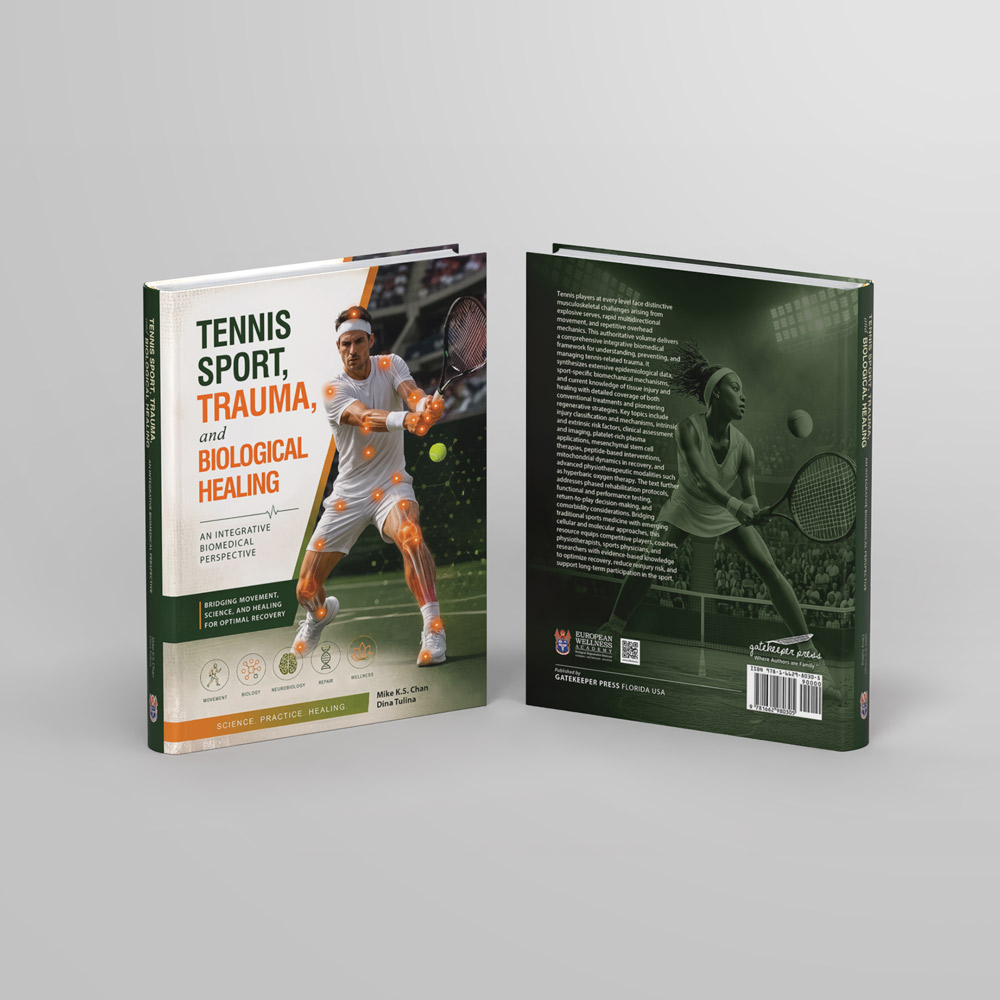
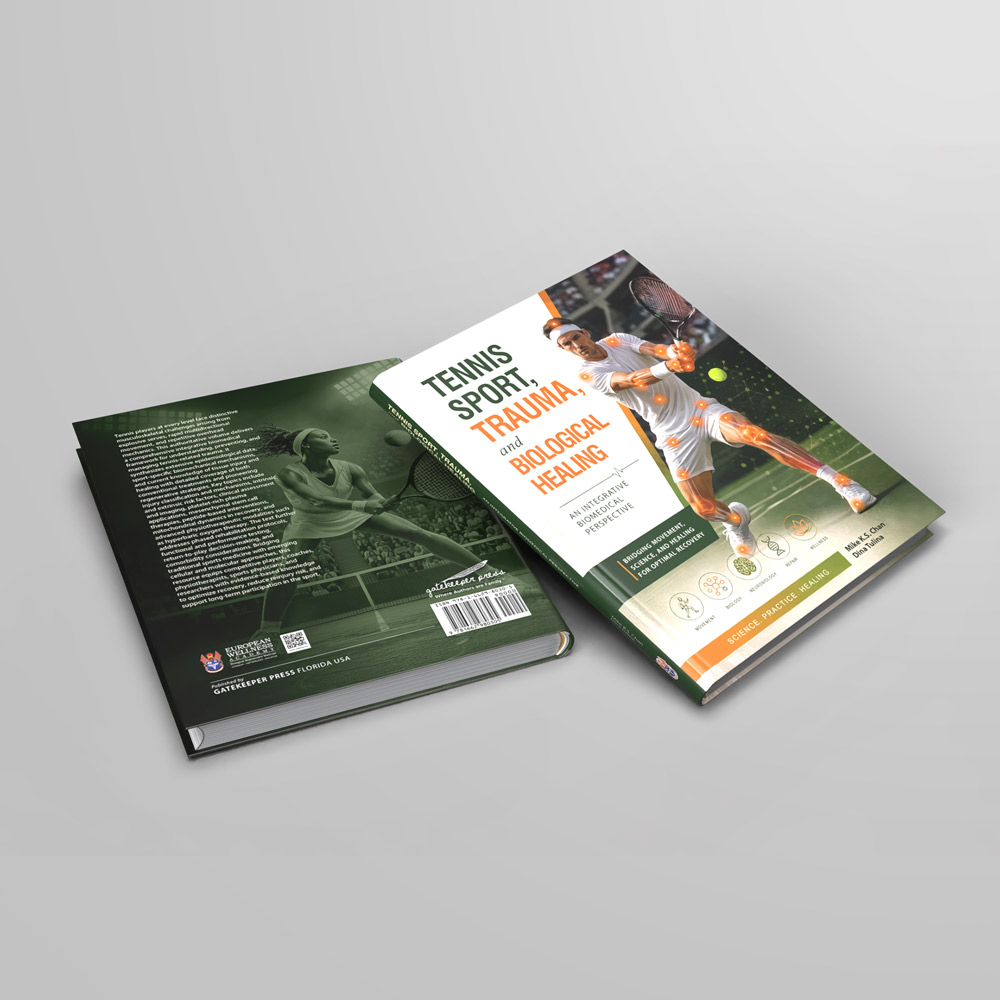
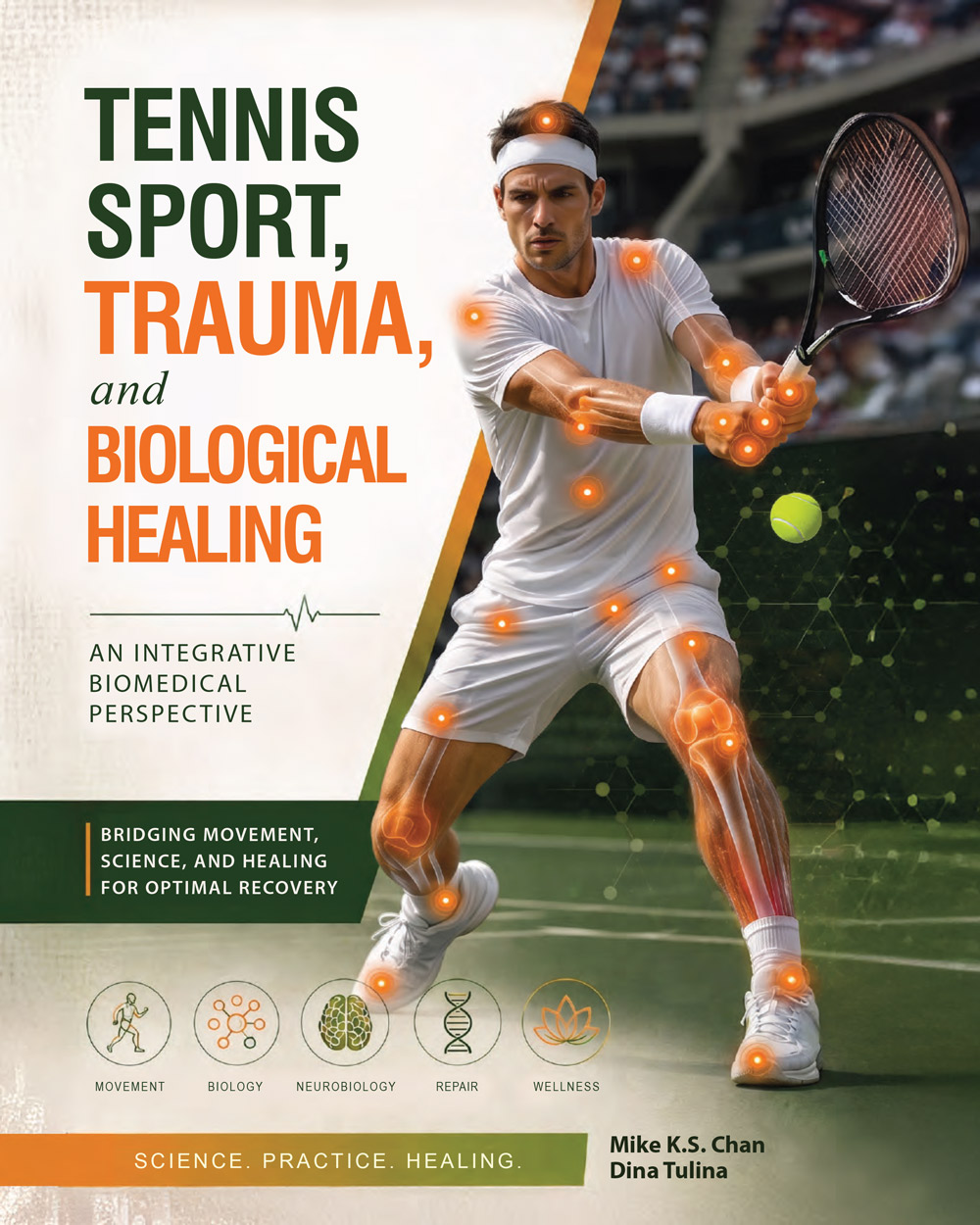
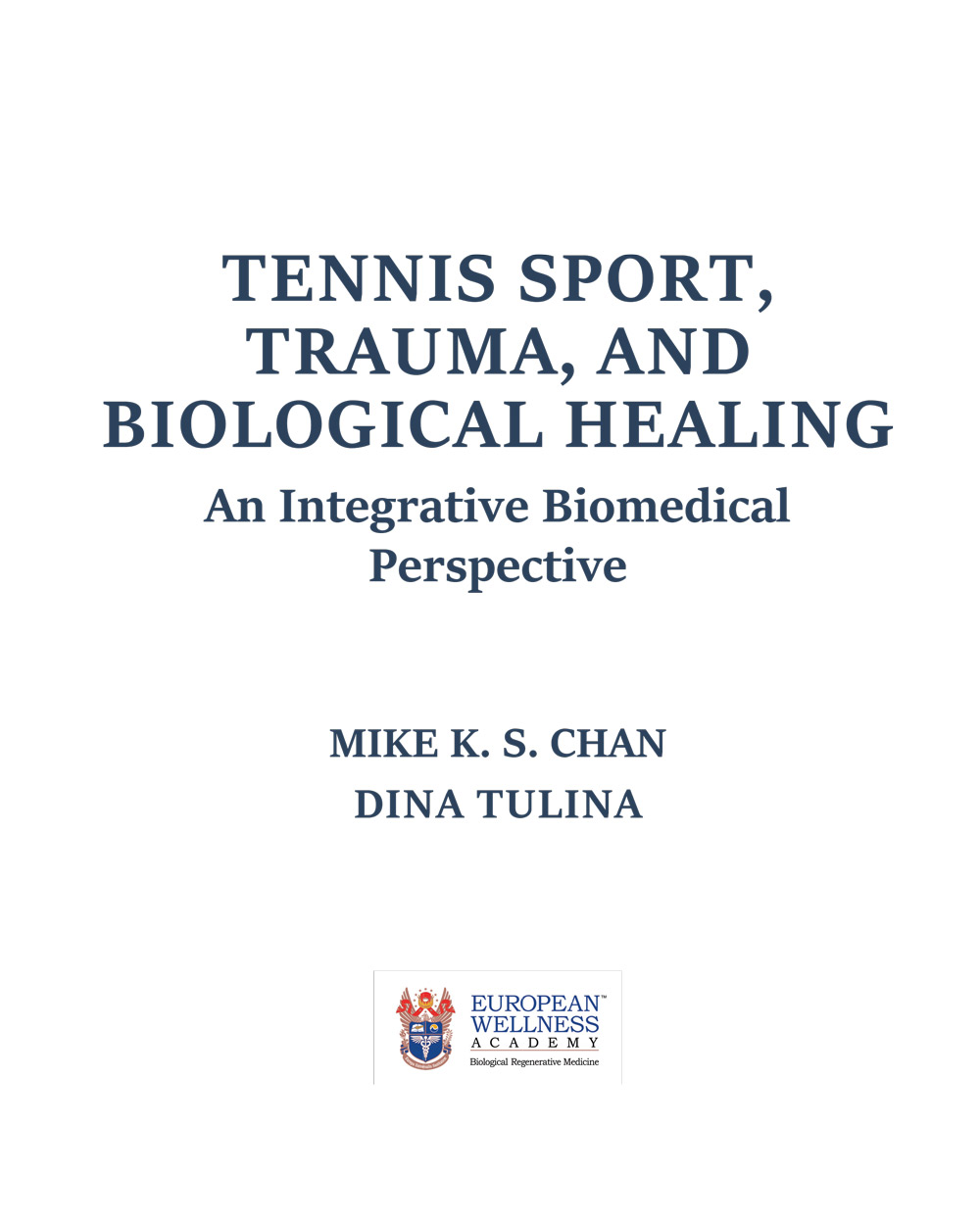

Tennis Sport, Trauma, and Biological Healing
Price range: $60.00 through $144.00
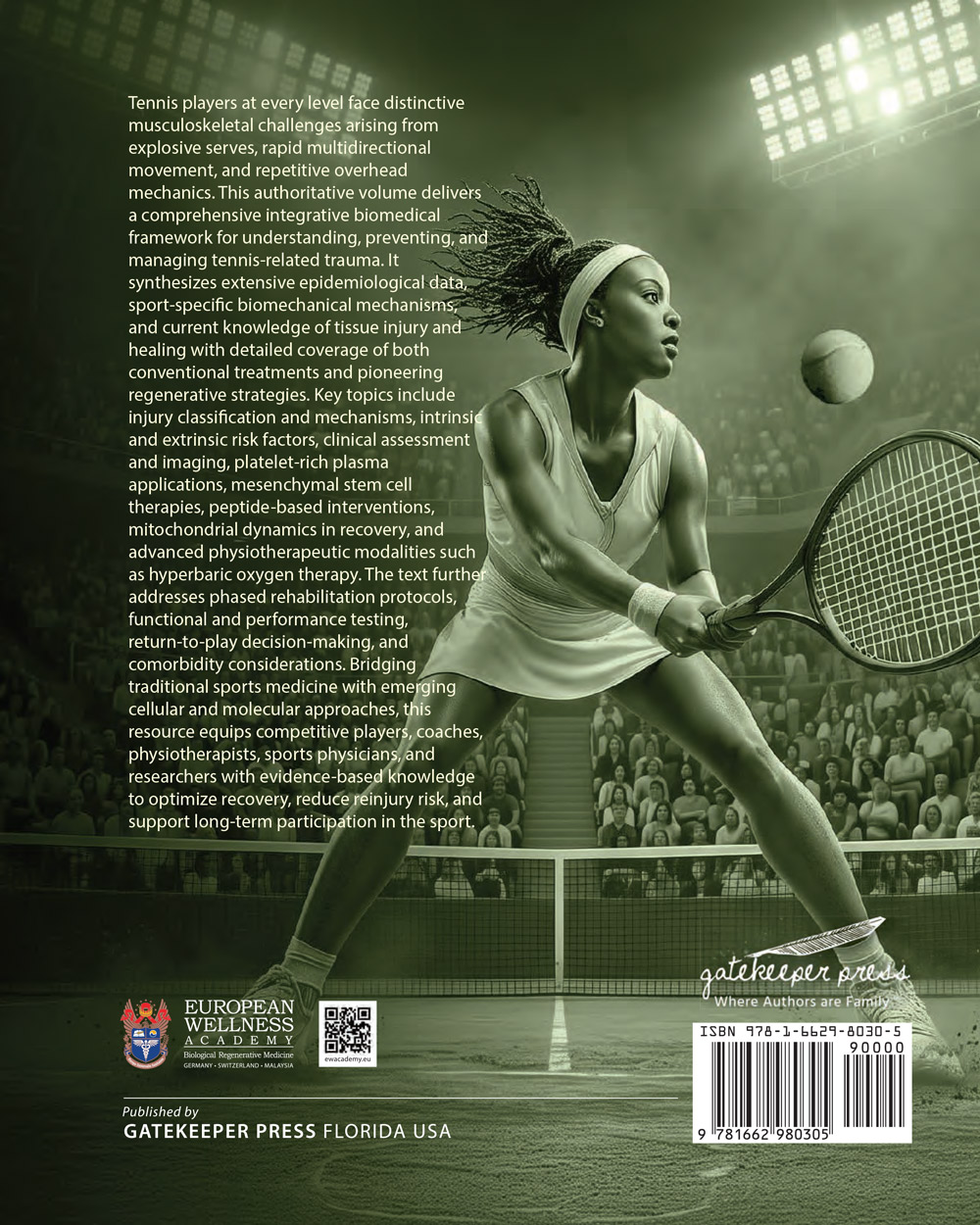
Tennis players at every level face distinctive musculoskeletal challenges arising from explosive serves, rapid multidirectional movement, and repetitive overhead mechanics. This authoritative volume delivers a comprehensive integrative biomedical framework for understanding, preventing, and managing tennis-related trauma. It synthesizes extensive epidemiological data, sport-specific biomechanical mechanisms, and current knowledge of tissue injury and healing with detailed coverage of both conventional treatments and pioneering regenerative strategies. Key topics include injury classification and mechanisms, intrinsic and extrinsic risk factors, clinical assessment and imaging, platelet-rich plasma applications, mesenchymal stem cell therapies, peptide-based interventions, mitochondrial dynamics in recovery, and advanced physiotherapeutic modalities such as hyperbaric oxygen therapy. The text further addresses phased rehabilitation protocols, functional and performance testing, return-to-play decision-making, and comorbidity considerations. Bridging traditional sports medicine with emerging cellular and molecular approaches, this resource equips competitive players, coaches, physiotherapists, sports physicians, and researchers with evidence-based knowledge to optimize recovery, reduce reinjury risk, and support long-term participation in the sport.
Description
Authors
Prof. Dr. Mike K.S. Chan and Dr. Dina Tulina
Published by
EUROPEAN WELLNESS ACADEMY – Medical Research
ISBN: 9781662980305
eISBN: 9781662980312
Authors Bio:
Prof. Dato’ Sri Dr. Mike K.S. Chan is Founder & Chairman of the European Wellness Biomedical Group and Chief Researcher/Chief Technical & Research Director across its international R&D programs. A pioneer of cellular therapy since the 1980s, he helped introduce stem cell and bioregenerative medicine across Asia, building a global network of clinics and research centers—today a chain of 40+ integrative and regenerative medical clinics with 1,000+ staff. He serves as ESAAM Scientific Committee Head for Regenerative Medicine & Stem Cells and ESAAM Chairman/Director for Asia; Associate Professor (AASCP, USA); Associate Professor (Lincoln University College, Kuala Lumpur); Chairman of the European Wellness Academy; Senator of Germany’s BWA; and Honorary Chief Healthcare Advisor to Swiss Strategic Partners. His portfolio includes multiple international patents in immunotherapy, stem cell transport media, and parenteral formulations, and he is a multi-award recipient in Europe and the Middle East. An active academic collaborator (MIT, Cambridge, USC, UCI, Heidelberg), Prof. Chan has authored/co-authored 60+ books and 170+ scientific publications, and has delivered 1000+ lectures and seminars across 60+ regions on anti-aging, regenerative medicine, peptides, and stem cell therapies.
Dr. Dina Tulina is a Medical Advisor and physician specializing in anti-aging, regenerative medicine, and comprehensive wellness. She integrates preventive, biological, and natural care to promote longevity and vitality beyond conventional practice. At European Wellness Global, she contributes to biomedical innovation with holistic approaches and the translation of research into practical applications. Guided by her belief that true health is balance and vitality, and functional longevity, Dr. Tulina is dedicated to shaping the future of personalized and preventive healthcare.
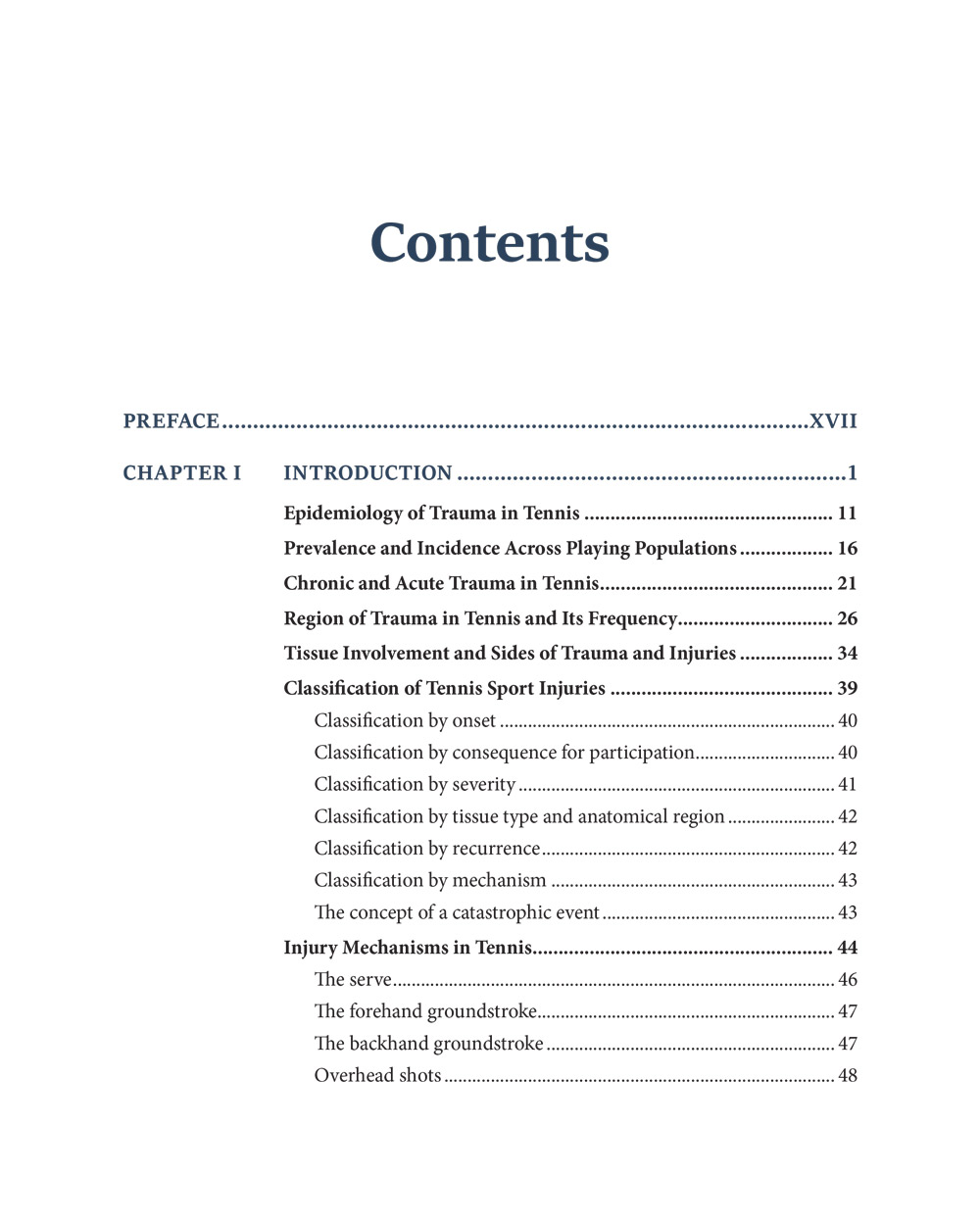
Table of Content
| PREFACE | XVII |
| CHAPTER I INTRODUCTION | 1 |
| Epidemiology of Trauma in Tennis. | 11 |
| Prevalence and Incidence Across Playing Populations | 16 |
| Chronic and Acute Trauma in Tennis | 21 |
| Region of Trauma in Tennis and Its Frequency | 26 |
| Tissue Involvement and Sides of Trauma and Injuries | 34 |
| Classification of Tennis Sport Injuries | 39 |
| Classification by onset. | 40 |
| Classification by consequence for participation | 40 |
| Classification by severity | 41 |
| Classification by tissue type and anatomical region | 42 |
| Classification by recurrence | 42 |
| Classification by mechanism | 43 |
| The concept of a catastrophic event | 43 |
| Injury Mechanisms in Tennis | 44 |
| The serve | 46 |
| The forehand groundstroke | 47 |
| The backhand groundstroke | 47 |
| Overhead shots | 48 |
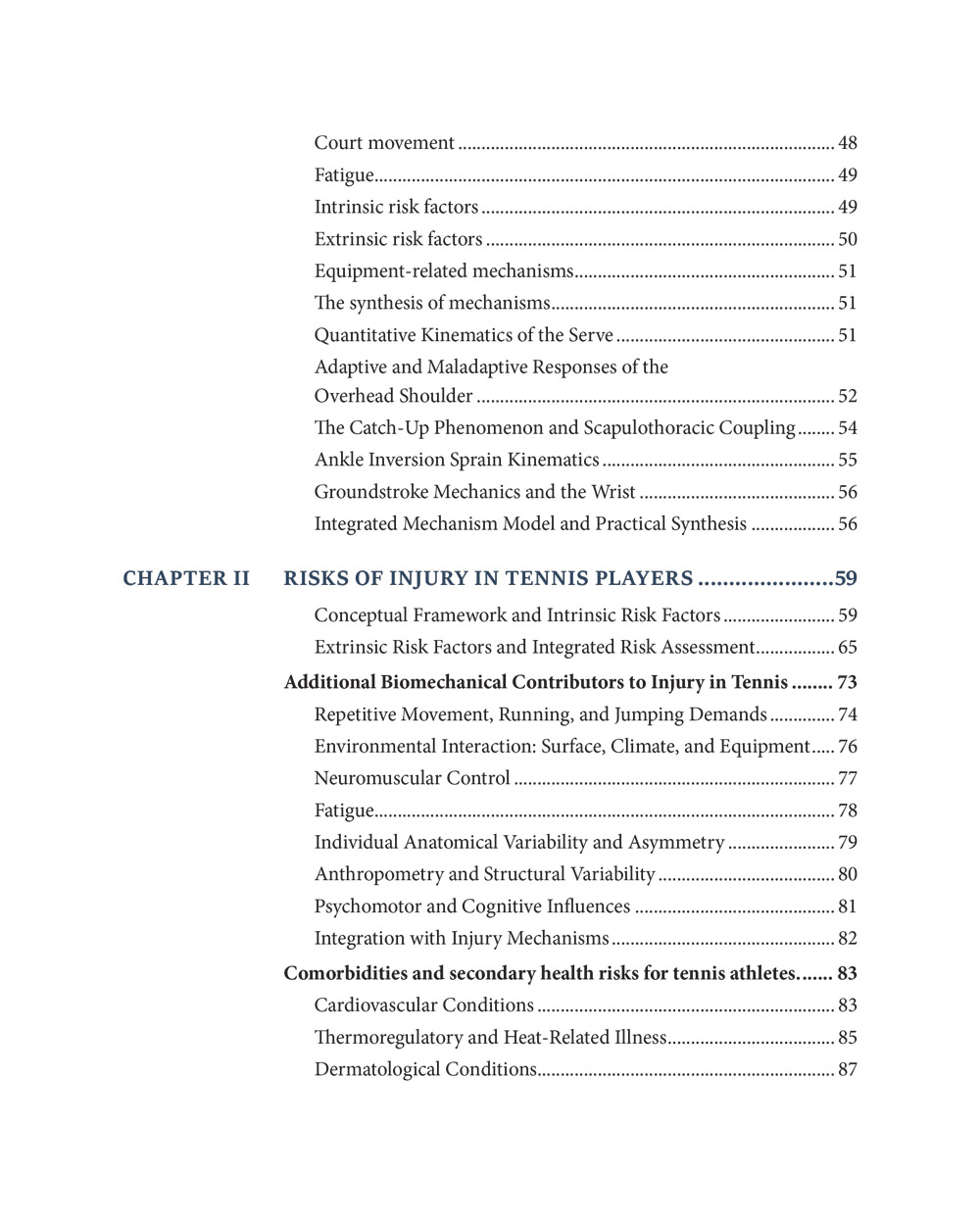
| Court movement | 48 |
| Fatigue | 49 |
| Intrinsic risk factors | 49 |
| Extrinsic risk factors | 50 |
| Equipment-related mechanisms | 51 |
| The synthesis of mechanisms | 51 |
| Quantitative Kinematics of the Serve | 51 |
| Adaptive and Maladaptive Responses of the Overhead Shoulder | 52 |
| The Catch-Up Phenomenon and Scapulothoracic Coupling | 54 |
| Ankle Inversion Sprain Kinematics | 55 |
| Groundstroke Mechanics and the Wrist | 56 |
| Integrated Mechanism Model and Practical Synthesis | 56 |
| CHAPTER II RISKS OF INJURY IN TENNIS PLAYERS | 59 |
| Conceptual Framework and Intrinsic Risk Factors | 59 |
| Extrinsic Risk Factors and Integrated Risk Assessment | 65 |
| Additional Biomechanical Contributors to Injury in Tennis | 73 |
| Repetitive Movement, Running, and Jumping Demands | 74 |
| Environmental Interaction: Surface, Climate, and Equipment | 76 |
| Neuromuscular Control | 77 |
| Fatigue | 78 |
| Individual Anatomical Variability and Asymmetry | 79 |
| Anthropometry and Structural Variability | 80 |
| Psychomotor and Cognitive Influences | 81 |
| Integration with Injury Mechanisms | 82 |
| Comorbidities and secondary health risks for tennis athletes | 83 |
| Cardiovascular Conditions | 83 |
| Thermoregulatory and Heat-Related Illness | 85 |
| Dermatological Conditions | 87 |
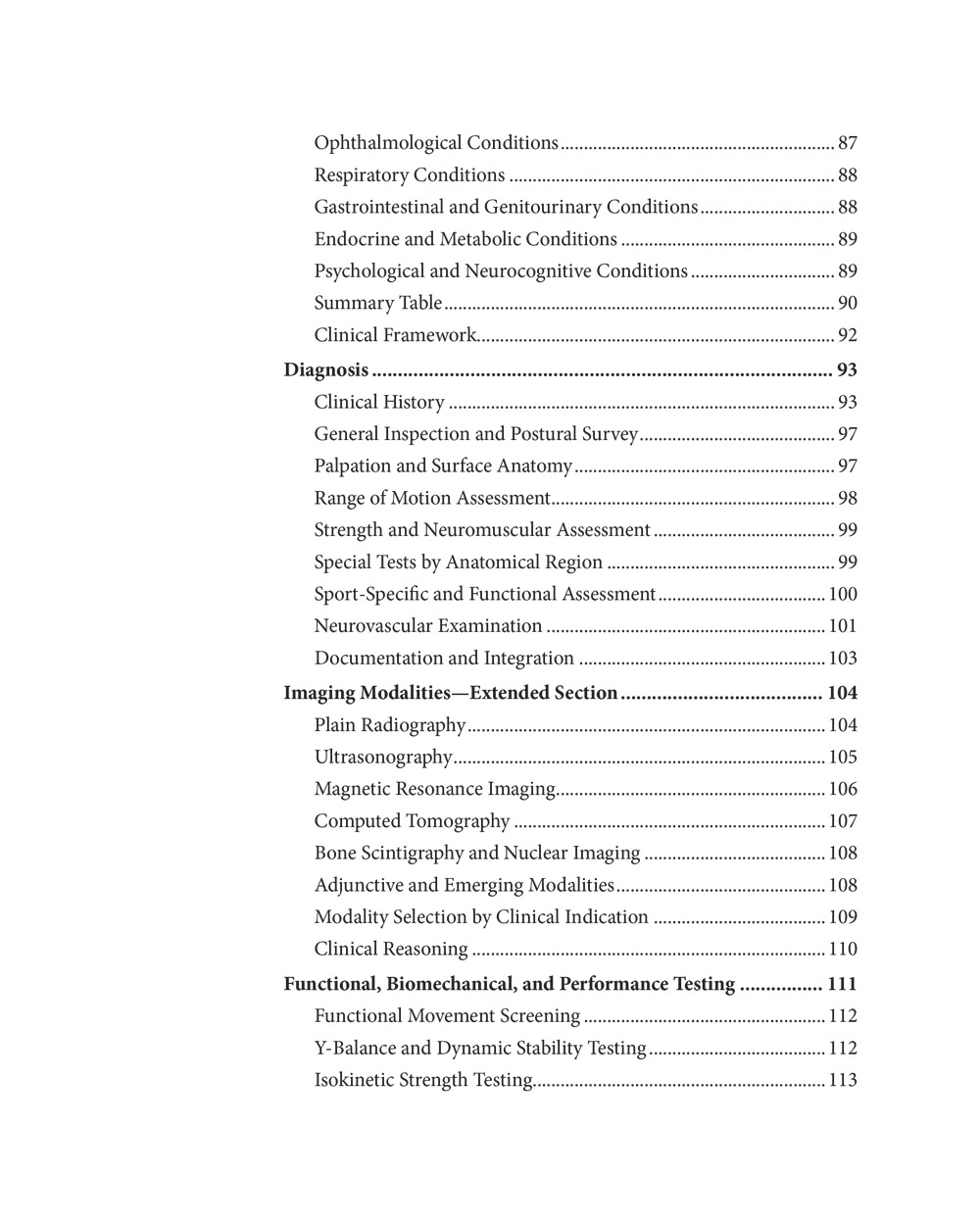
| Ophthalmological Conditions | 87 |
| Respiratory Conditions | 88 |
| Gastrointestinal and Genitourinary Conditions | 88 |
| Endocrine and Metabolic Conditions | 89 |
| Psychological and Neurocognitive Conditions | 89 |
| Summary Table | 90 |
| Clinical Framework | 92 |
| Diagnosis | 93 |
| Clinical History | 93 |
| General Inspection and Postural Survey | 97 |
| Palpation and Surface Anatomy | 97 |
| Range of Motion Assessment | 98 |
| Strength and Neuromuscular Assessment | 99 |
| Special Tests by Anatomical Region | 99 |
| Sport-Specific and Functional Assessment | 100 |
| Neurovascular Examination | 101 |
| Documentation and Integration | 103 |
| Imaging Modalities—Extended Section | 104 |
| Plain Radiography | 104 |
| Ultrasonography | 105 |
| Magnetic Resonance Imaging | 106 |
| Computed Tomography | 107 |
| Bone Scintigraphy and Nuclear Imaging | 108 |
| Adjunctive and Emerging Modalities | 108 |
| Modality Selection by Clinical Indication | 109 |
| Clinical Reasoning | 110 |
| Functional, Biomechanical, and Performance Testing | 111 |
| Functional Movement Screening | 112 |
| Y-Balance and Dynamic Stability Testing | 112 |
| Isokinetic Strength Testing | 113 |
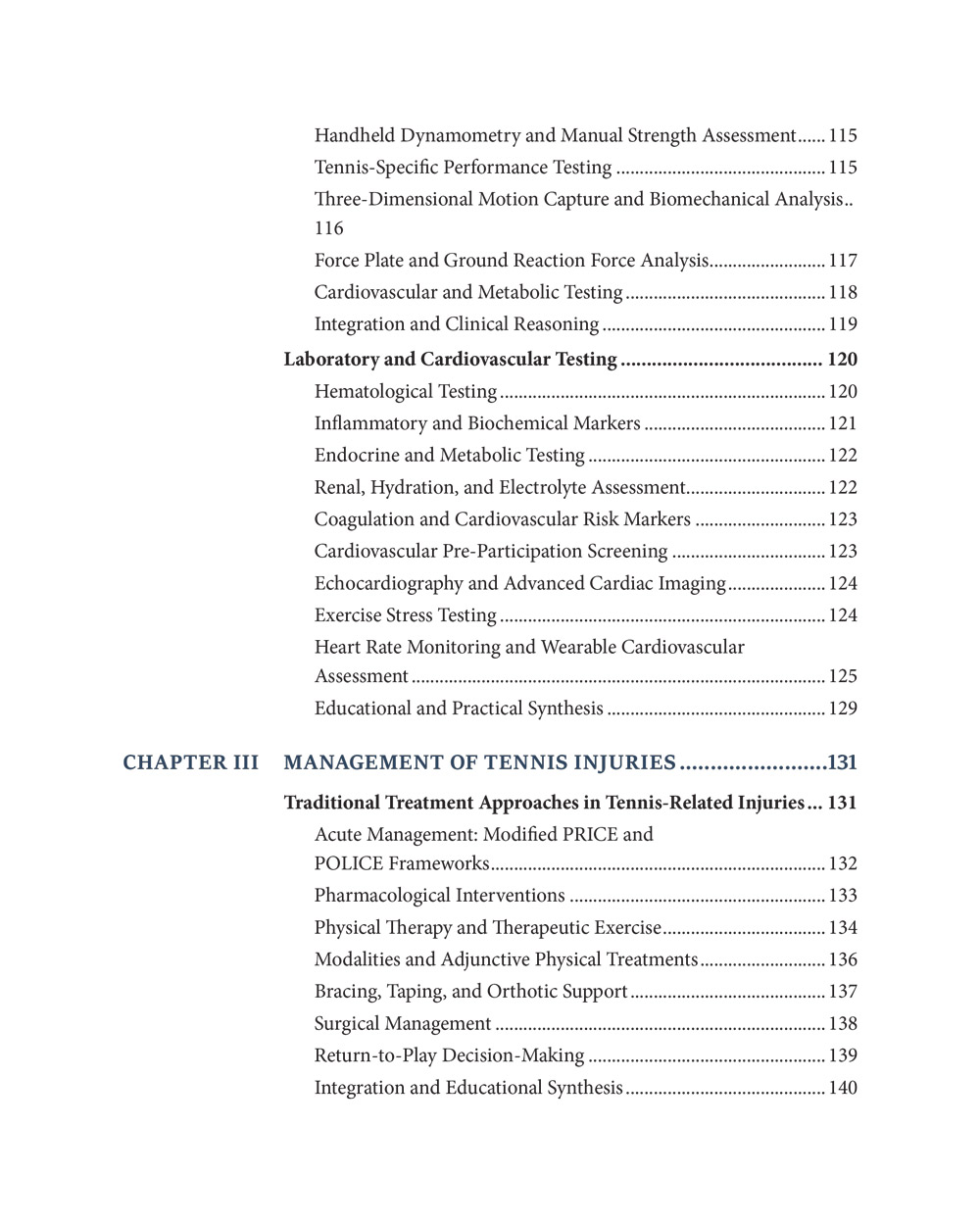
| Handheld Dynamometry and Manual Strength Assessment | 115 |
| Tennis-Specific Performance Testing | 115 |
| Three-Dimensional Motion Capture and Biomechanical Analysis | 116 |
| Force Plate and Ground Reaction Force Analysis | 117 |
| Cardiovascular and Metabolic Testing | 118 |
| Integration and Clinical Reasoning | 119 |
| Laboratory and Cardiovascular Testing | 120 |
| Hematological Testing | 120 |
| Inflammatory and Biochemical Markers | 121 |
| Endocrine and Metabolic Testing | 122 |
| Renal, Hydration, and Electrolyte Assessment | 122 |
| Coagulation and Cardiovascular Risk Markers | 123 |
| Cardiovascular Pre-Participation Screening | 123 |
| Echocardiography and Advanced Cardiac Imaging | 124 |
| Exercise Stress Testing | 124 |
| Heart Rate Monitoring and Wearable Cardiovascular Assessment | 125 |
| Educational and Practical Synthesis | 129 |
| CHAPTER III MANAGEMENT OF TENNIS INJURIES | 131 |
| Traditional Treatment Approaches in Tennis-Related Injuries | 131 |
| Acute Management: Modified PRICE and POLICE Frameworks | 132 |
| Pharmacological Interventions | 133 |
| Physical Therapy and Therapeutic Exercise | 134 |
| Modalities and Adjunctive Physical Treatments | 136 |
| Bracing, Taping, and Orthotic Support | 137 |
| Surgical Management | 138 |
| Return-to-Play Decision-Making | 139 |
| Integration and Educational Synthesis | 140 |
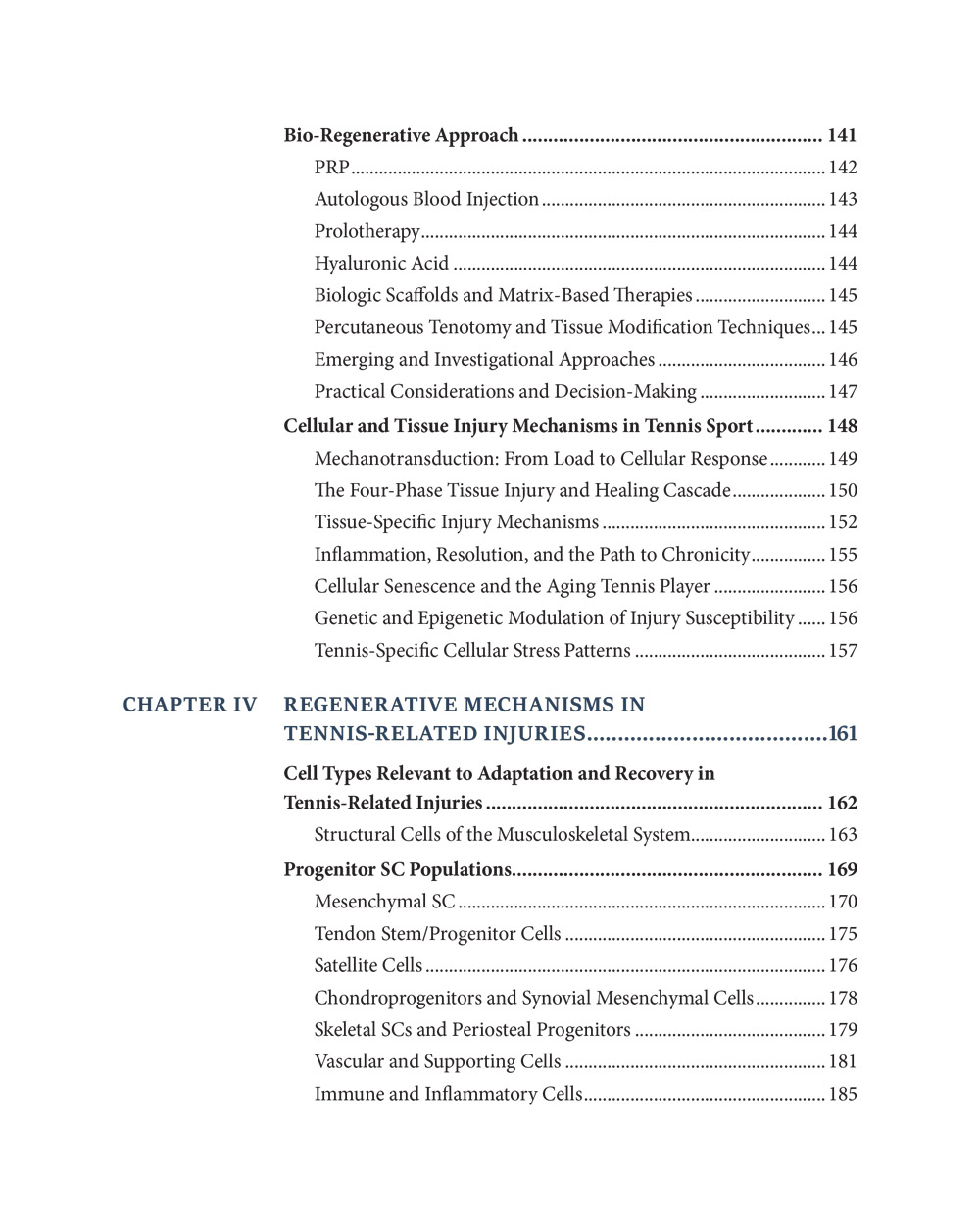
| Bio-Regenerative Approach | 141 |
| PRP | 142 |
| Autologous Blood Injection | 143 |
| Prolotherapy. | 144 |
| Hyaluronic Acid | 144 |
| Biologic Scaffolds and Matrix-Based Therapies | 145 |
| Percutaneous Tenotomy and Tissue Modification Techniques | 145 |
| Emerging and Investigational Approaches | 146 |
| Practical Considerations and Decision-Making | 147 |
| Cellular and Tissue Injury Mechanisms in Tennis Sport | 148 |
| Mechanotransduction: From Load to Cellular Response. | 149 |
| The Four-Phase Tissue Injury and Healing Cascade | 150 |
| Tissue-Specific Injury Mechanisms | 152 |
| Inflammation, Resolution, and the Path to Chronicity | 155 |
| Cellular Senescence and the Aging Tennis Player | 146 |
| Genetic and Epigenetic Modulation of Injury Susceptibility | 156 |
| Tennis-Specific Cellular Stress Patterns | 157 |
| CHAPTER IV REGENERATIVE MECHANISMS IN TENNIS-RELATED INJURIES | 161 |
| Cell Types Relevant to Adaptation and Recovery in Tennis-Related Injuries | 162 |
| Structural Cells of the Musculoskeletal System | 163 |
| Progenitor SC Populations | 169 |
| Mesenchymal SC | 170 |
| Tendon Stem/Progenitor Cells | 175 |
| Satellite Cells | 176 |
| Chondroprogenitors and Synovial Mesenchymal Cells | 178 |
| Skeletal SCs and Periosteal Progenitors | 179 |
| Vascular and Supporting Cells | 181 |
| Immune and Inflammatory Cells | 185 |
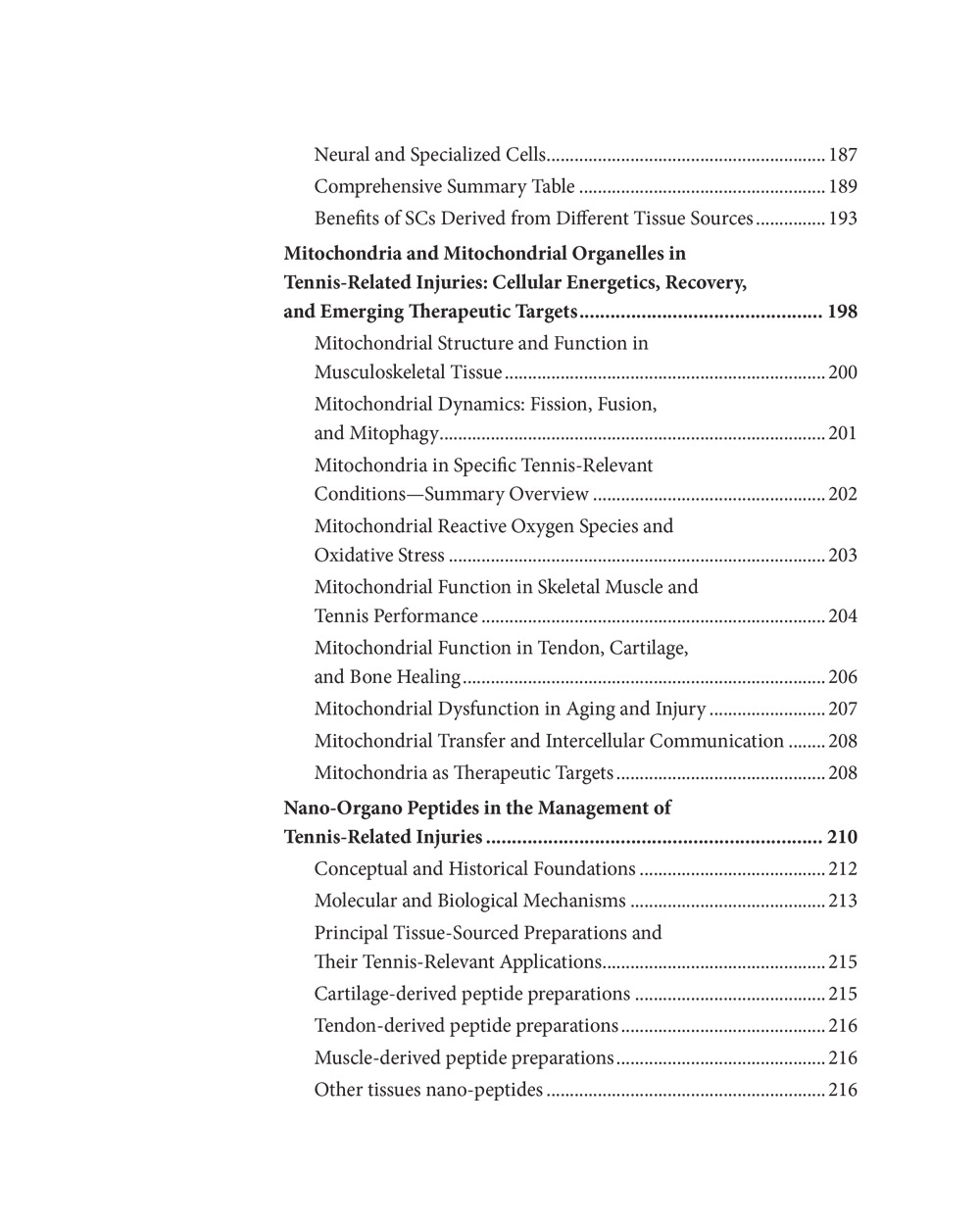
| Neural and Specialized Cells | 187 |
| Comprehensive Summary Table | 189 |
| Benefits of SCs Derived from Different Tissue Sources | 193 |
| Mitochondria and Mitochondrial Organelles in Tennis-Related Injuries: Cellular Energetics, Recovery, and Emerging Therapeutic Targets | 198 |
| Mitochondrial Structure and Function in Musculoskeletal Tissue | 200 |
| Mitochondrial Dynamics: Fission, Fusion, and Mitophagy | 201 |
| Mitochondria in Specific Tennis-Relevant Conditions—Summary Overview | 202 |
| Mitochondrial Reactive Oxygen Species and Oxidative Stress | 203 |
| Mitochondrial Function in Skeletal Muscle and Tennis Performance | 204 |
| Mitochondrial Function in Tendon, Cartilage, and Bone Healing | 206 |
| Mitochondrial Dysfunction in Aging and Injury | 207 |
| Mitochondrial Transfer and Intercellular Communication | 208 |
| Mitochondria as Therapeutic Targets | 208 |
| Nano-Organo Peptides in the Management of Tennis-Related Injuries | 210 |
| Conceptual and Historical Foundations | 212 |
| Molecular and Biological Mechanisms | 213 |
| Principal Tissue-Sourced Preparations and Their Tennis-Relevant Applications | 215 |
| Cartilage-derived peptide preparations | 215 |
| Tendon-derived peptide preparations | 216 |
| Muscle-derived peptide preparations | 216 |
| Other tissues nano-peptides | 216 |
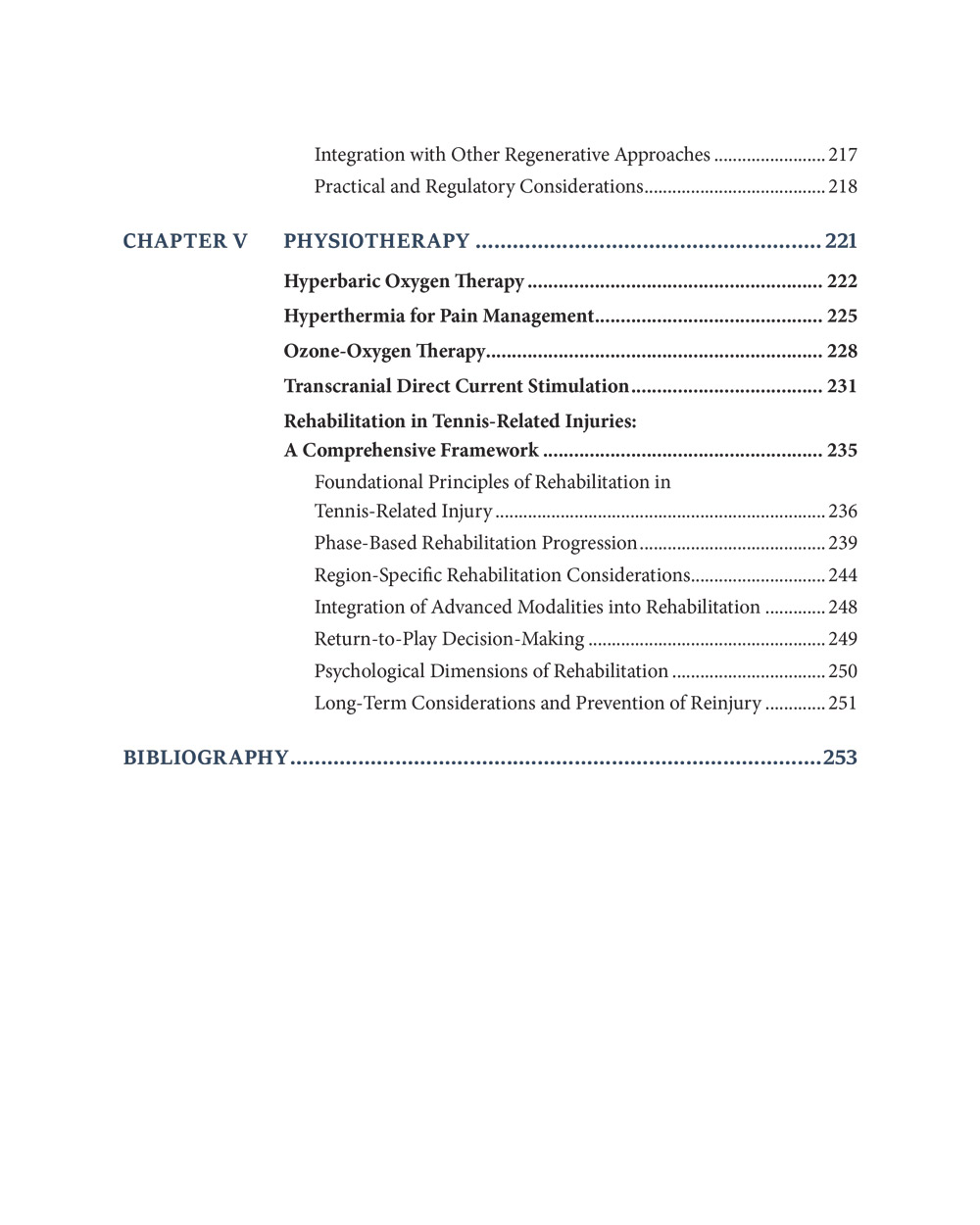
| Integration with Other Regenerative Approaches | 217 |
| Practical and Regulatory Considerations | 218 |
| CHAPTER V PHYSIOTHERAPY | 221 |
| Hyperbaric Oxygen Therapy | 222 |
| Hyperthermia for Pain Management | 225 |
| Ozone-Oxygen Therapy | 228 |
| Transcranial Direct Current Stimulation | 231 |
| Rehabilitation in Tennis-Related Injuries: A Comprehensive Framework | 235 |
| Foundational Principles of Rehabilitation in Tennis-Related Injury | 236 |
| Phase-Based Rehabilitation Progression | 239 |
| Region-Specific Rehabilitation Considerations | 244 |
| Integration of Advanced Modalities into Rehabilitation | 248 |
| Return-to-Play Decision-Making | 249 |
| Psychological Dimensions of Rehabilitation | 250 |
| Long-Term Considerations and Prevention of Reinjury | 251 |
| BIBLIOGRAPHY | 253 |
Additional information
| Weight | N/A |
|---|---|
| Select Book Type | Printed English (Hardcover), eBook English, Printed English (Hardcover) + eBook English, eBook Chinese Simplified (简体)* + eBook English, eBook Chinese Traditional (繁体)* + eBook English, eBook Spanish* + eBook English, eBook Japanese* + eBook English, eBook Vietnamese* + eBook English, eBook Thai* + eBook English, eBook Arabic* + eBook English, eBook Korean* + eBook English, eBook Indonesian* + eBook English, eBook Portuguese* + eBook English, eBook Russian* + eBook English |
Only logged in customers who have purchased this product may leave a review.
You may also like…
-
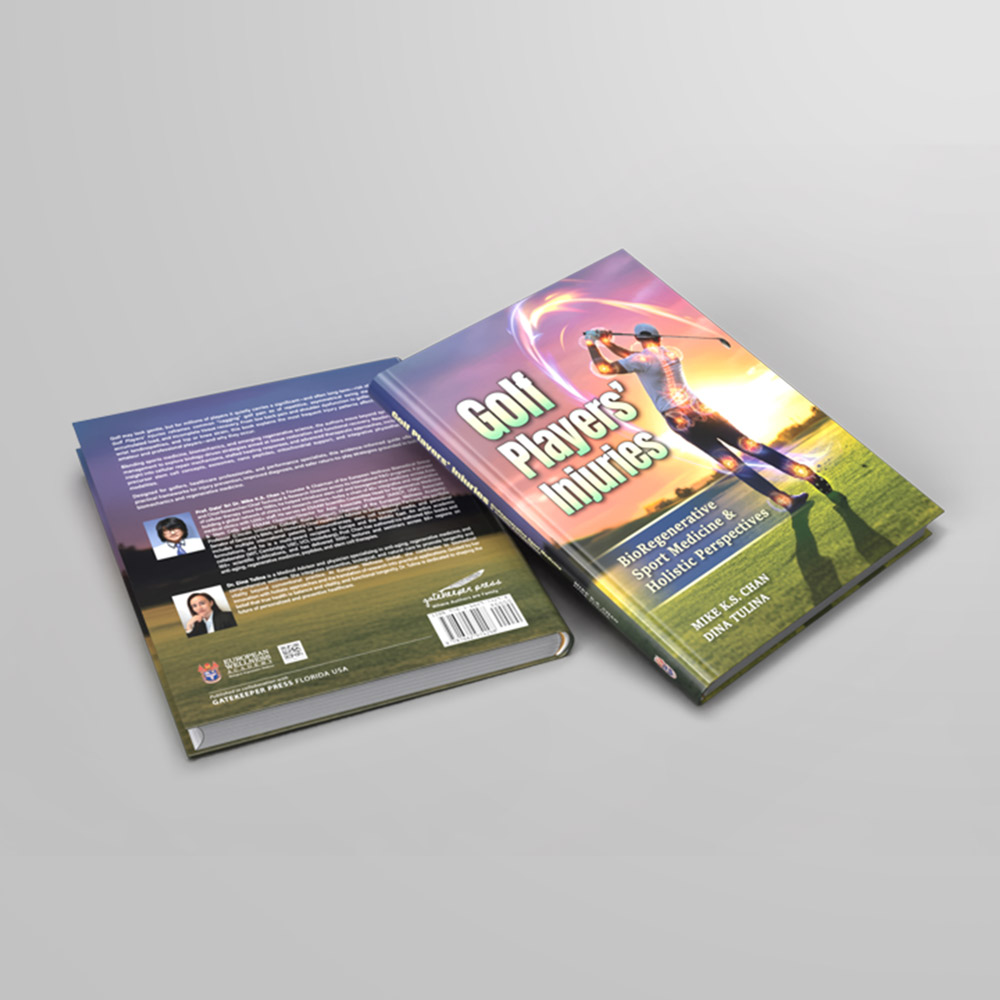 Select options This product has multiple variants. The options may be chosen on the product page
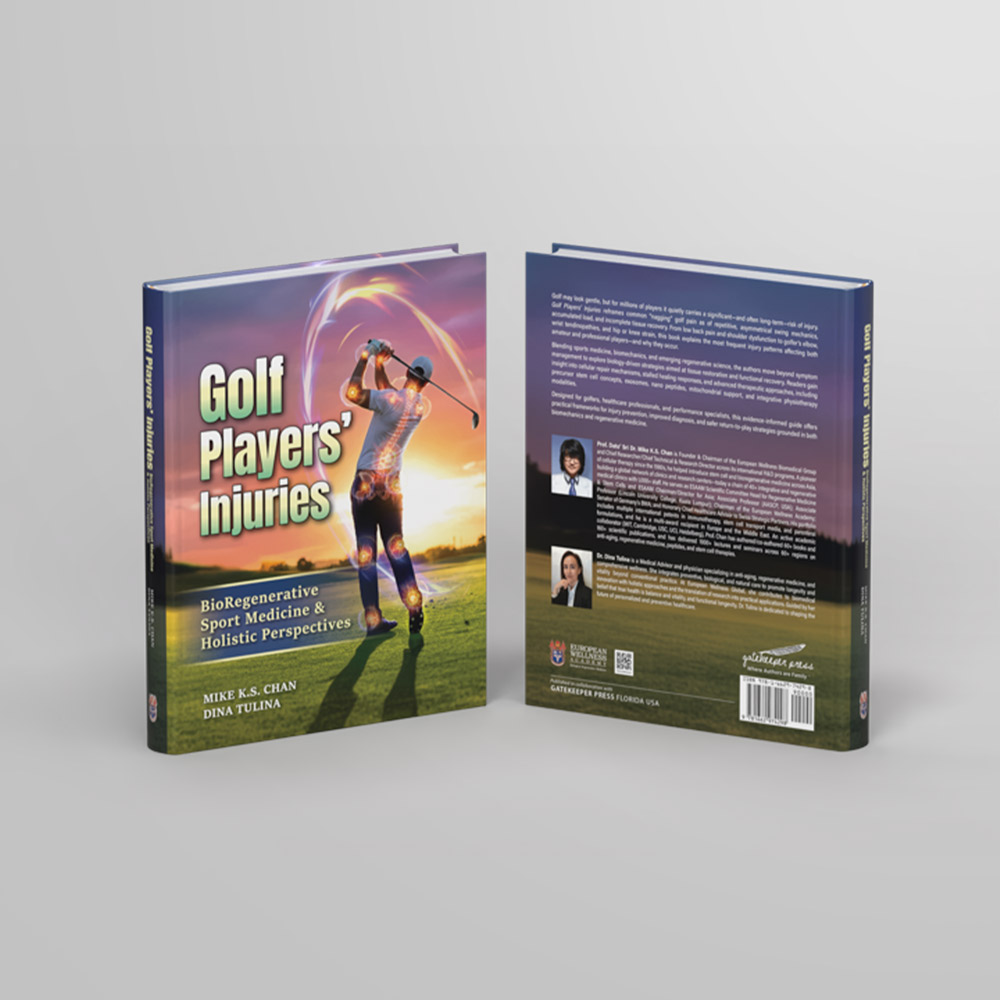
Golf Players’ Injuries: BioRegenerative Sport Medicine & Holistic Perspectives
Price range: $56.00 through $134.00 -
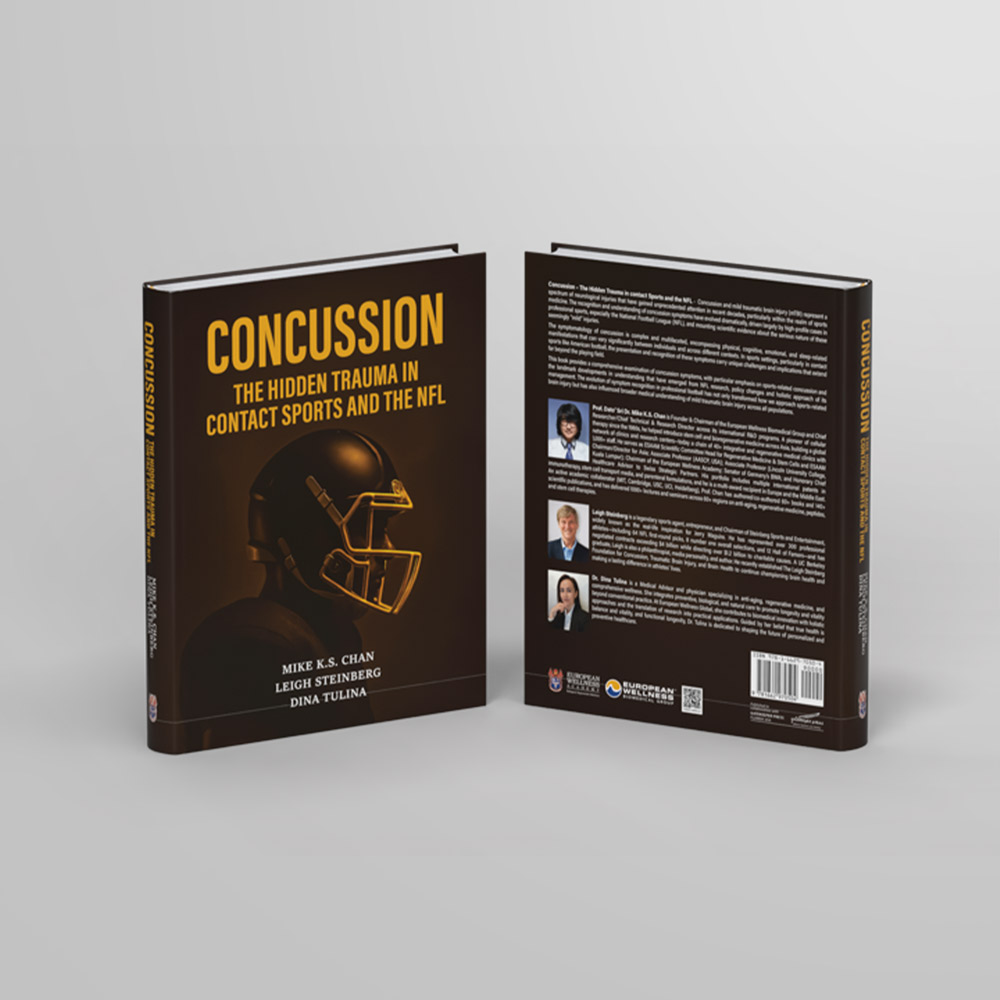
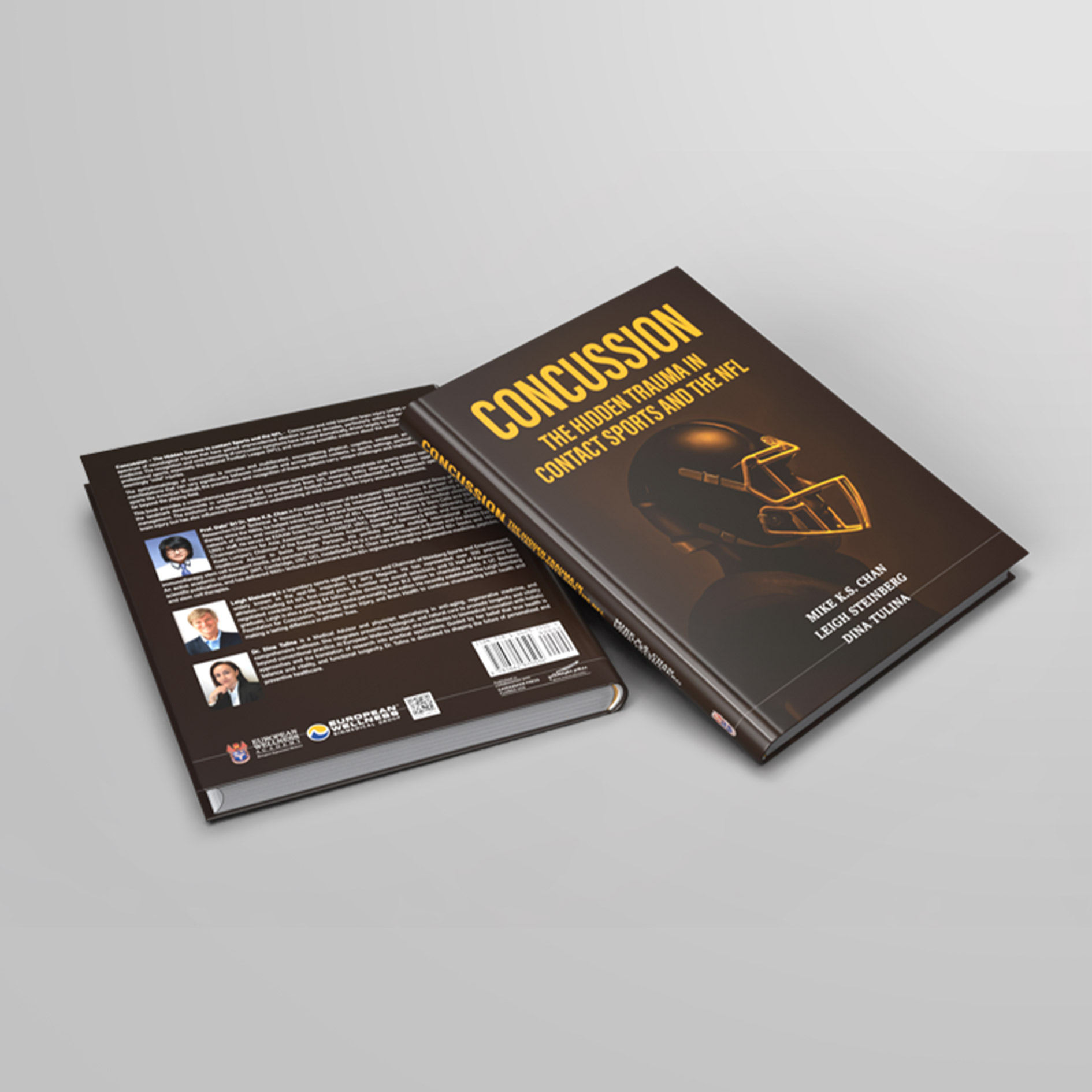 Select options This product has multiple variants. The options may be chosen on the product page
Concussion: The Hidden Trauma of Contact Sports and the NFL
Price range: $55.00 through $132.00
Related products
-
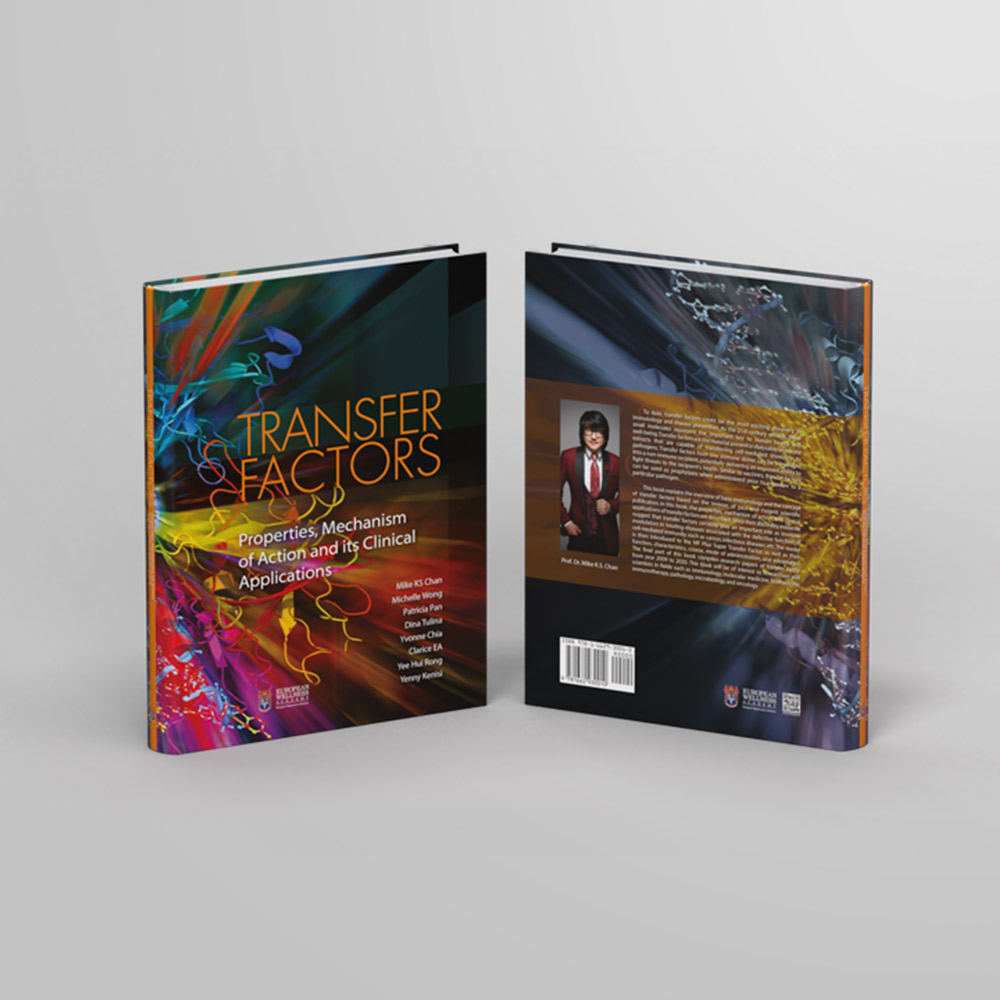
 Select options This product has multiple variants. The options may be chosen on the product page
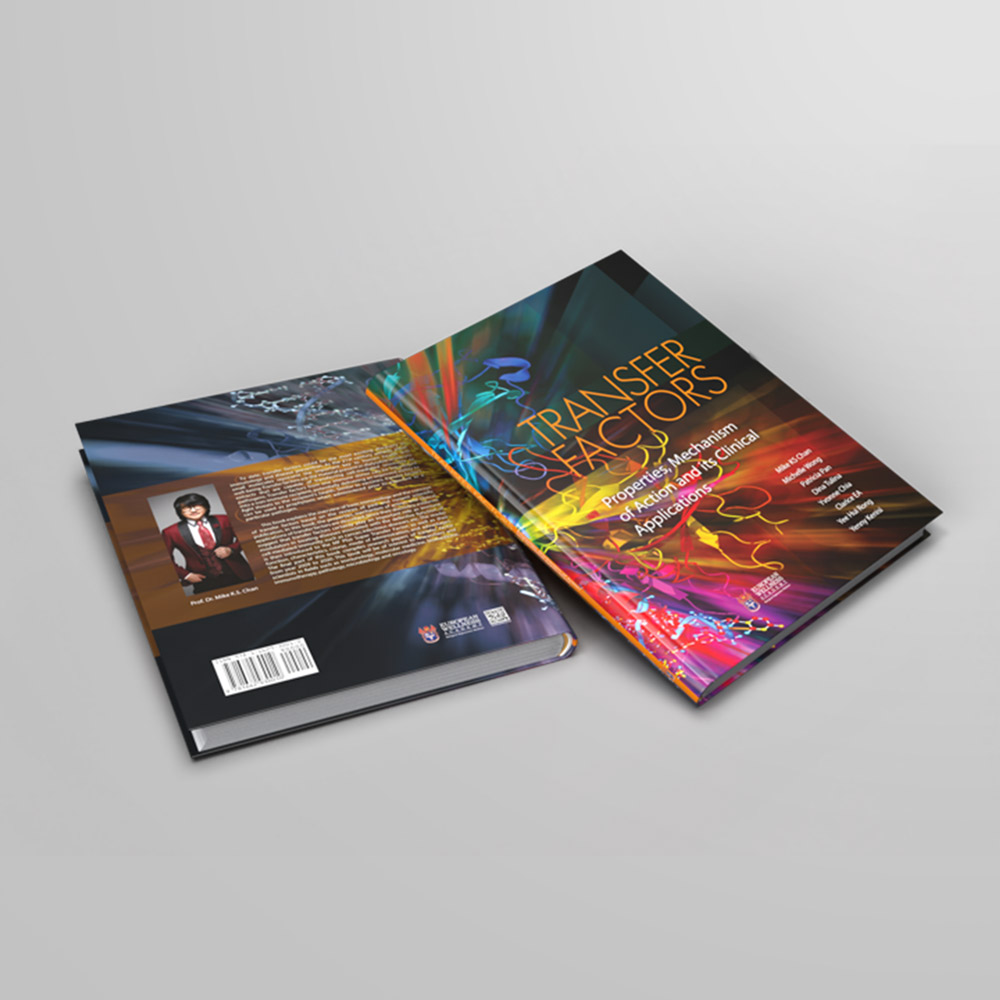
Transfer Factors: Properties, Mechanism of Action and its Clinical Applications
Price range: $49.00 through $99.00 -
 Select options This product has multiple variants. The options may be chosen on the product page
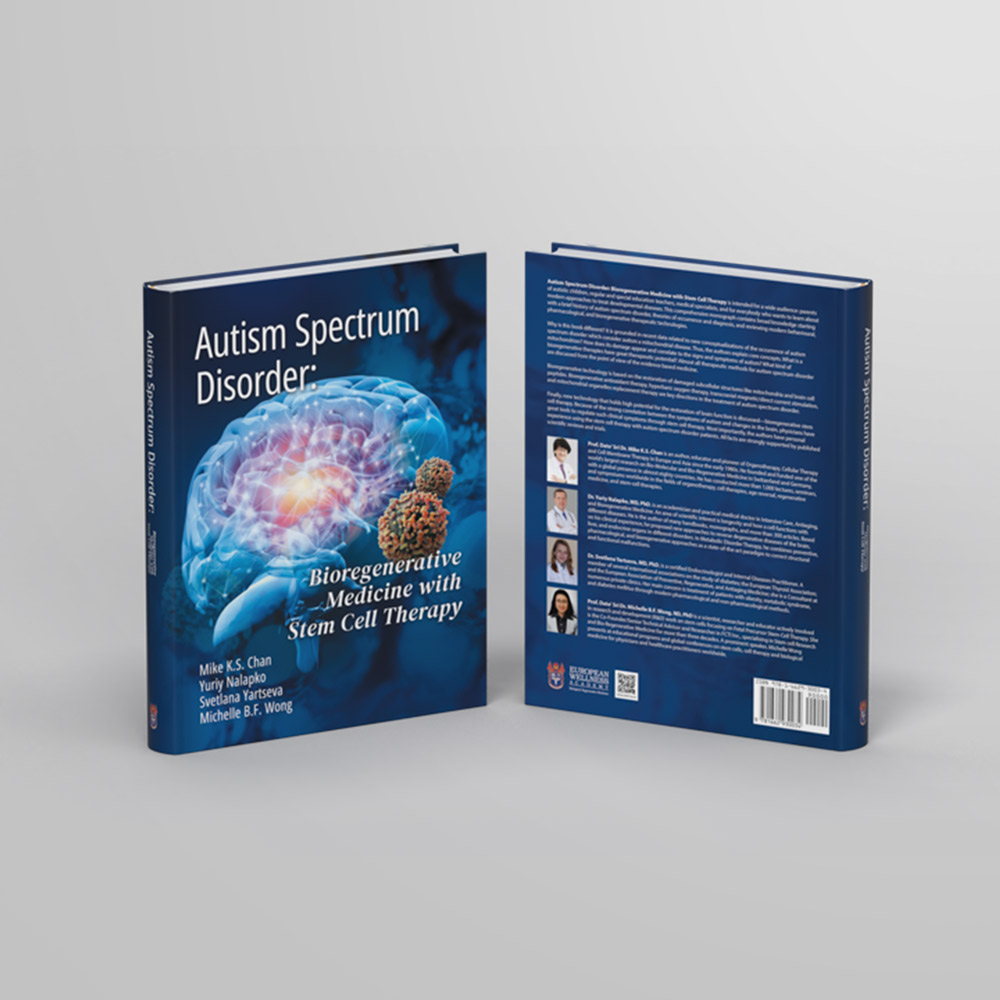
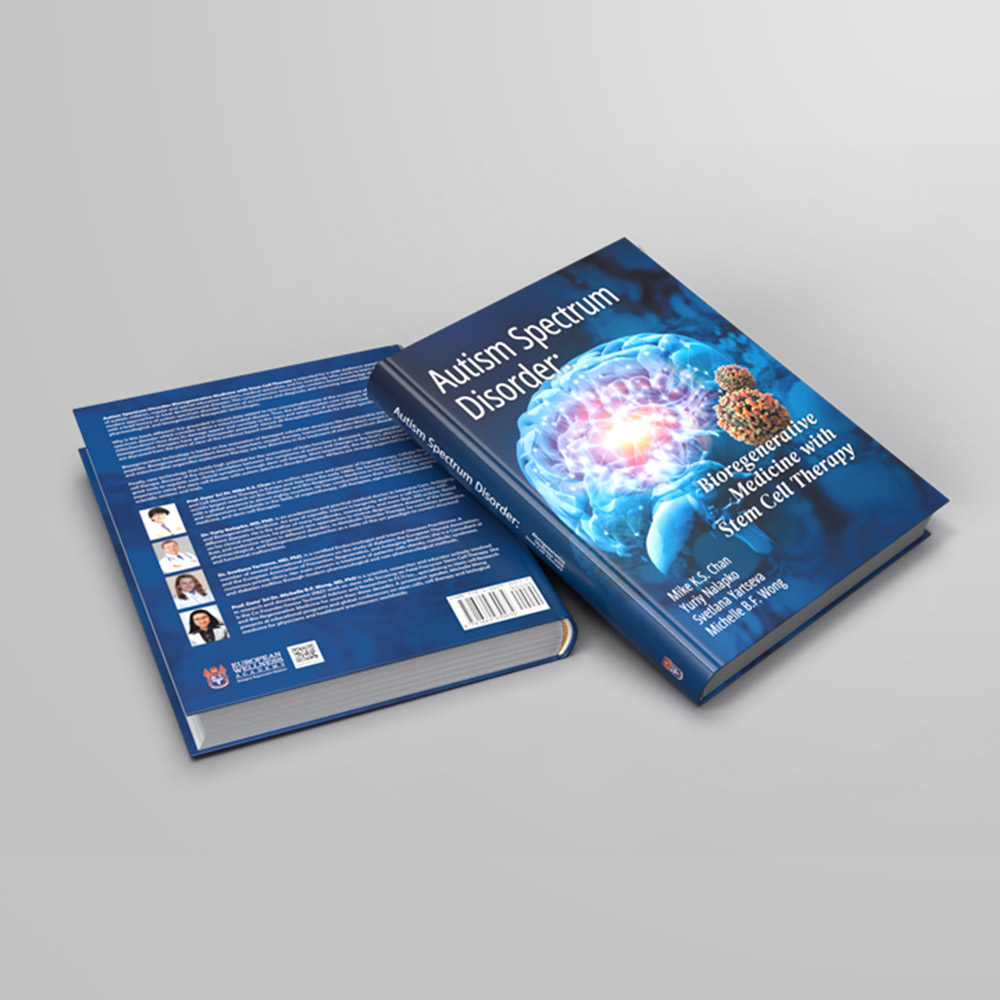
Autism Spectrum Disorder: Bioregenerative Medicine with Stem Cell Therapy
Price range: $75.00 through $120.00 -
 Select options This product has multiple variants. The options may be chosen on the product page
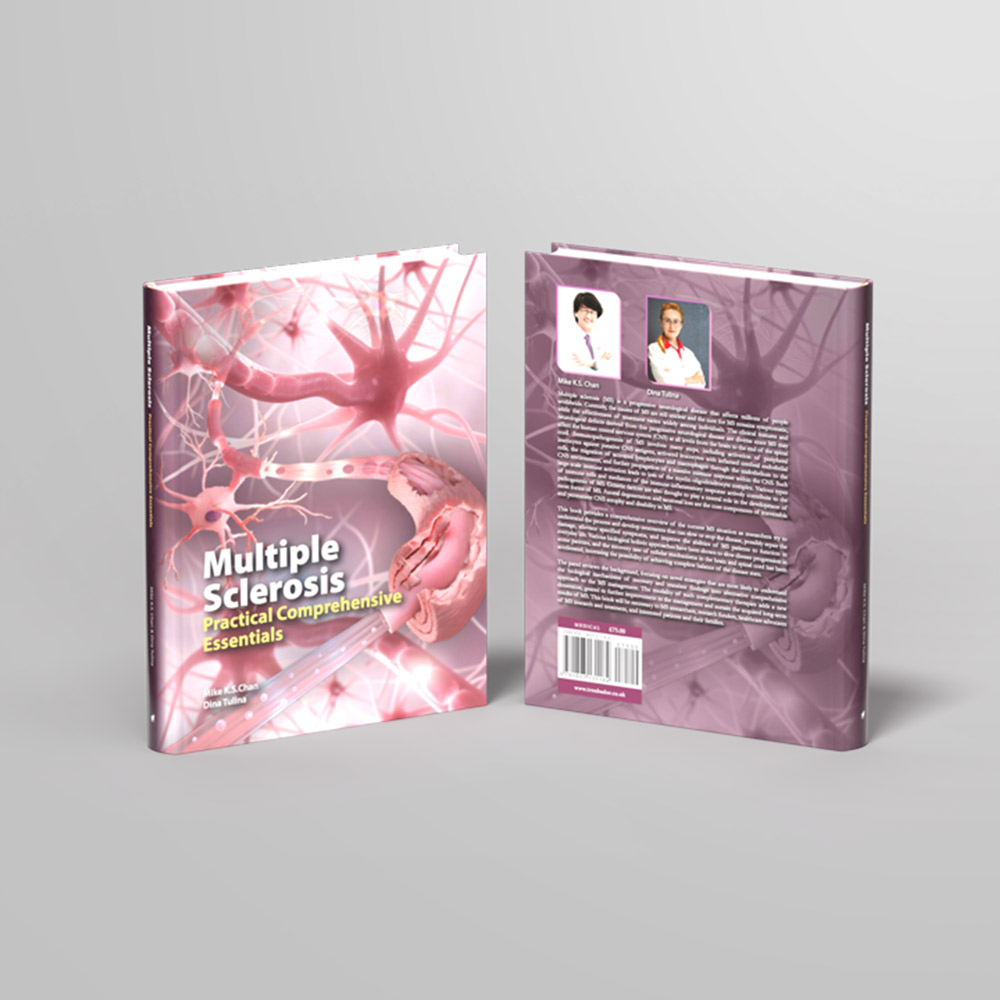
Multiple Sclerosis – Practical comprehensive Essentials
Price range: $55.00 through $110.00

Reviews
There are no reviews yet.