
Mountain-Climbing Preparation & Hypoxia Training
A Specialist Niche At EW-SSRC
From Mount Kinabalu to international high-altitude treks, mountain preparation demands more than general fitness. At EW-SSRC, our mountain-climbing niche brings together individual assessment, altitude-focused preparation, sports nutrition and recovery support. The focus is readiness for sustained effort, with a plan shaped around the climber and the intended route.
Prepare for the climb. Train for the altitude.
What Is Hypoxia Training?
Hypoxia training uses oxygen-reduced air to create a controlled low-oxygen breathing environment. It simulates part of the oxygen challenge of altitude without travelling to the mountains. Real altitude also involves lower air pressure, terrain and weather; these cannot be fully recreated by breathing equipment.
The Altitude-Preparation Highlight
The Altitude Zone catalogue features simulated-altitude capability, intermittent hypoxia sessions at rest, and active hypoxia during exercise. It also includes blood oxygen saturation (SpO₂) monitoring. These are relevant tools for a personalised preparation approach, with the exposure level and session format selected after individual assessment.
A Personalised Preparation Pathway
The Altitude Zone catalogue features simulated-altitude capability, intermittent hypoxia sessions at rest, and active hypoxia during exercise. It also includes blood oxygen saturation (SpO₂) monitoring. These are relevant tools for a personalised preparation approach, with the exposure level and session format selected after individual assessment.

Assess
Review health history, previous altitude experiences, current conditioning and the planned ascent. Identify individual considerations before selecting any low-oxygen exposure.

Prepare
Where clinically appropriate, incorporate controlled hypoxia into a wider programme of endurance preparation, pacing, nutrition and hydration. Rest-based and exercise-based formats serve different purposes and should be individually selected.

Recover
Review fatigue and the response to training, with recovery support and follow-up to inform the next stage of preparation.
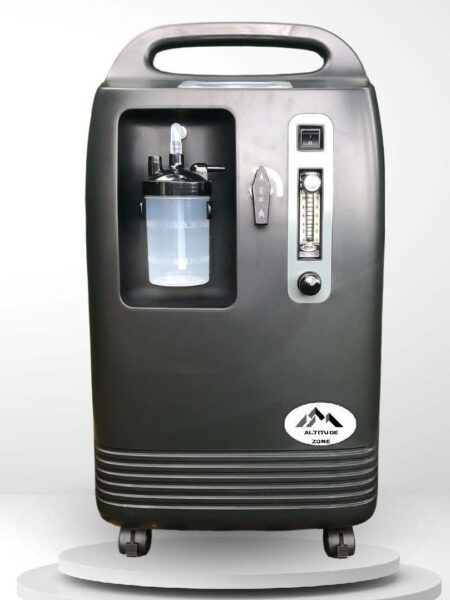
Hypoxia Generator AZN VO2MAX
Hypoxia training is complementary preparation, not a guarantee of acclimatisation, altitude-illness prevention or summit success. Brief sessions do not replace gradual ascent and time to acclimatise on the mountain. Fitness alone does not protect against altitude illness. Medical suitability, itinerary planning and symptom awareness remain essential.
Technical Specifications
| Simulated Altitude | 800 – 7,500 m |
| Hypoxic Output | 8.2 – 18.7 % O₂ |
| Hyperoxic Outlet | 78 – 92 % O₂ |
| Hyperoxic Air Delivery Rate | 10 L/min |
| Hypoxic Air Delivery Rate | 100 L/min |
AZN VO2MAX IHHT PACK
For Intermittent Hypoxia In Exercise And Rest
Train smarter, not harder.
This pack is perfect for athletes who want to improve their performance without the need to sleep in hypoxia.
Recommended for:
- Red blood cell production.
- Intermittent hypoxia sessions at rest (IHHT), ideal for activating the parasympathetic nervous system and speeding up recovery before or after training.
- Active hypoxia training during exercise, promoting vascularization and mitochondrial efficiency in the muscle to improve VO₂max.
- Progressive adaptation for competitions or training at altitude without excessive impact on the nervous system.
Intermittent hypoxia is an excellent tool for maintaining an effective hypoxic stimulus throughout the season, with sessions typically lasting around 40 minutes.
AZN VO2MAX VICTORY PACK
For Intermittent Hypoxia And During Sleep
Train while you sleep.
Recommended for:
- Maximum production of red blood cells.
- If you don’t have time in your daily routine for an intermittent hypoxia session, hypoxia during sleep can provide the perfect stimulus to your body without losing a minute.
- Active hypoxia training during exercise promotes vascularization and mitochondrial efficiency in the muscle to improve VO₂max.
- Sleeping in simulated altitude enhances capillarization, improves tolerance to prolonged efforts, and supports adaptation to high-altitude competitions.
The combination of intermittent hypoxia and hypoxia during sleep is definitely a winning combination.
Preparation Is Not A Shortcut To Acclimatisation
Hypoxia training is complementary preparation, not a guarantee of acclimatisation, altitude-illness prevention or summit success. Brief sessions do not replace gradual ascent and time to acclimatise on the mountain. Fitness alone does not protect against altitude illness. Medical suitability, itinerary planning and symptom awareness remain essential.