



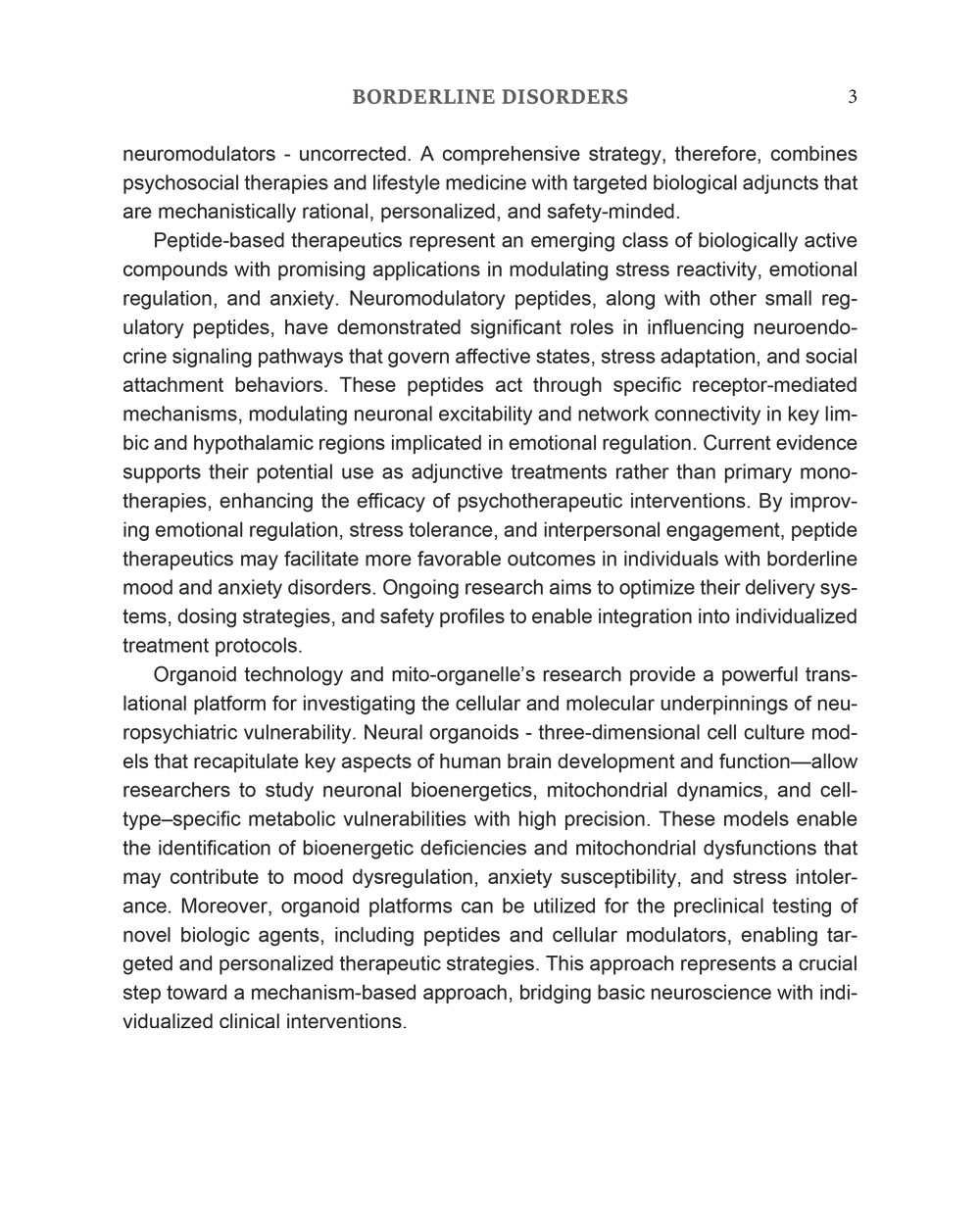

Neuroregeneration and Novel Insights in Borderline Emotional Disorders in Regenerative Medicine
Price range: $49.00 through $118.00
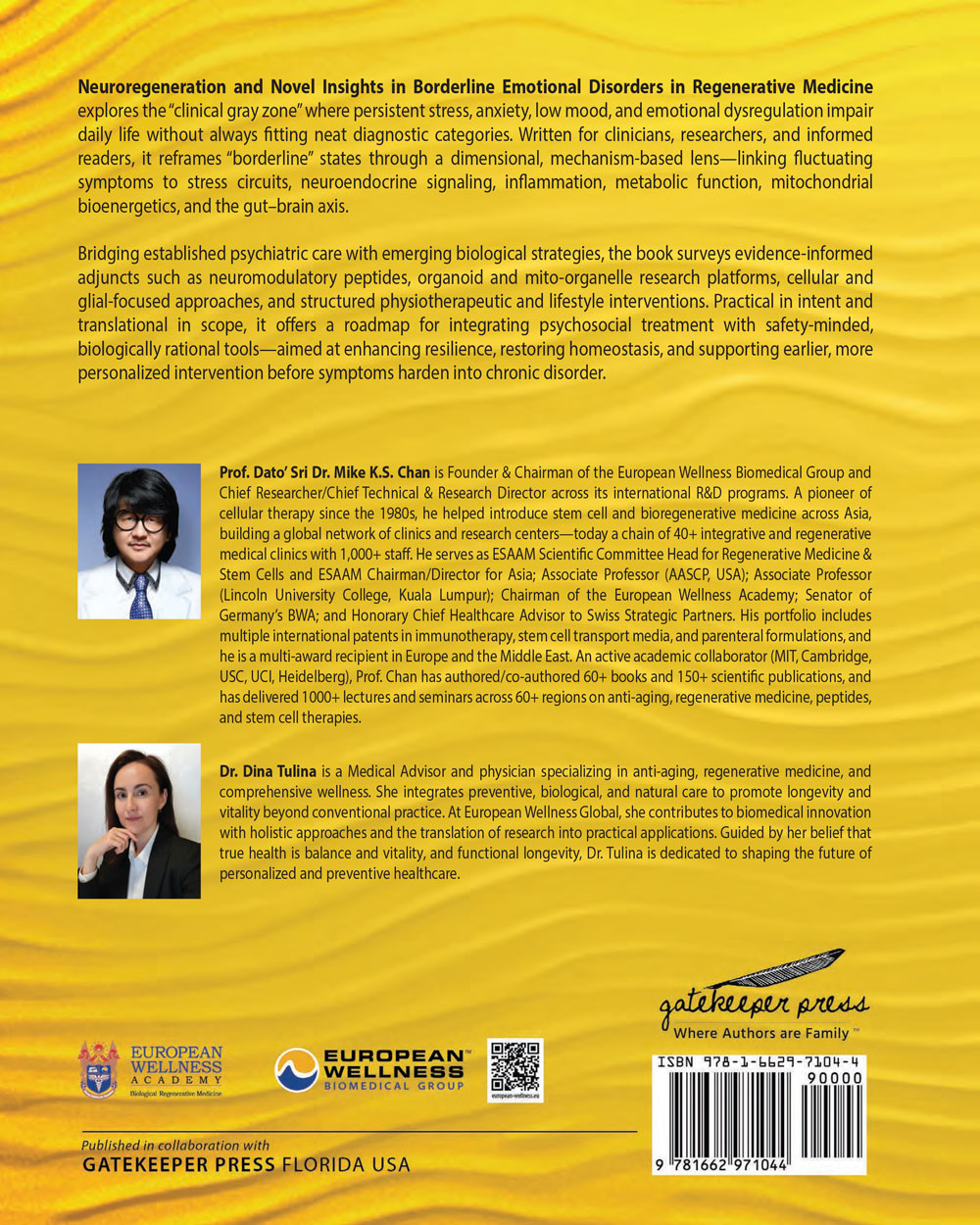
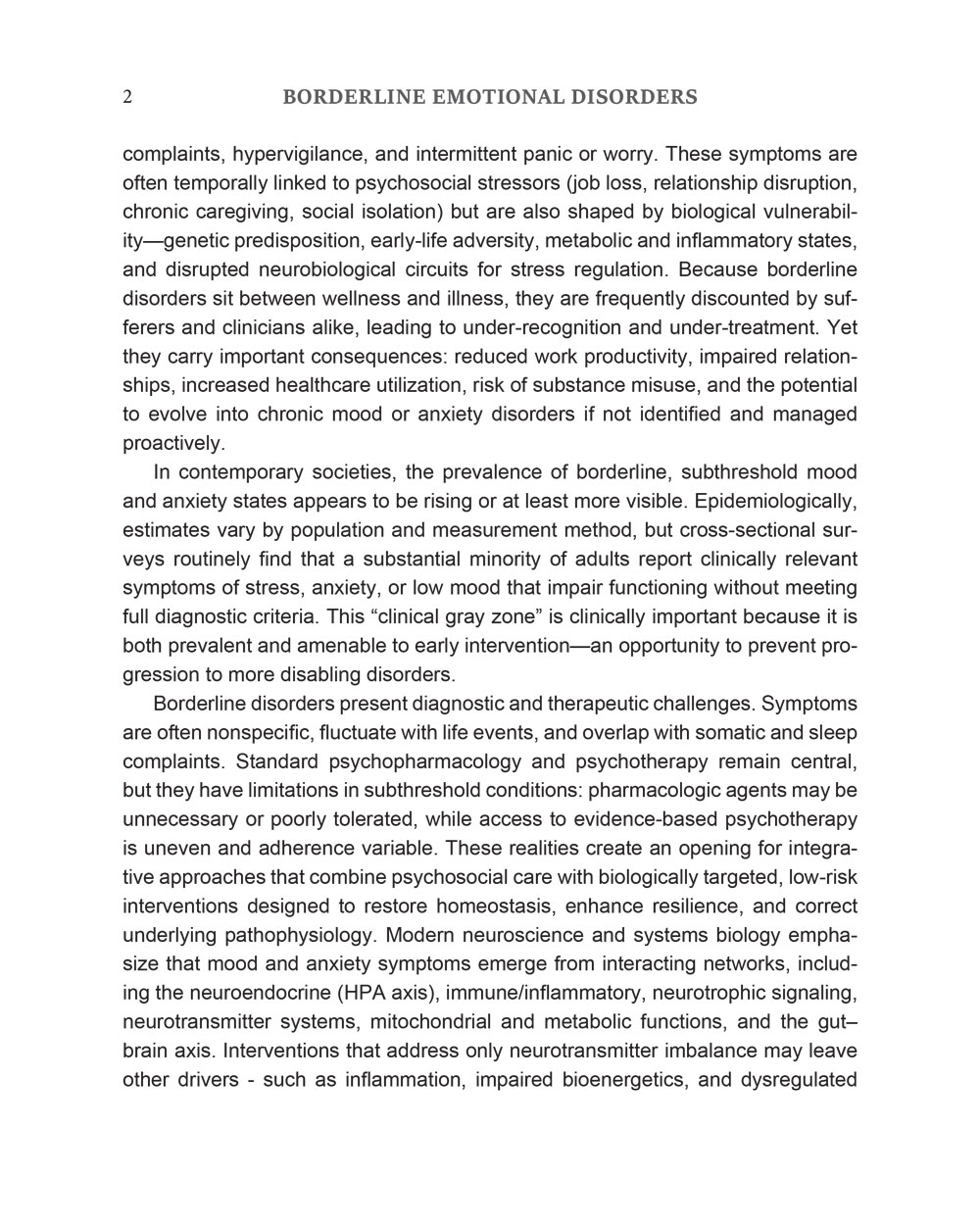
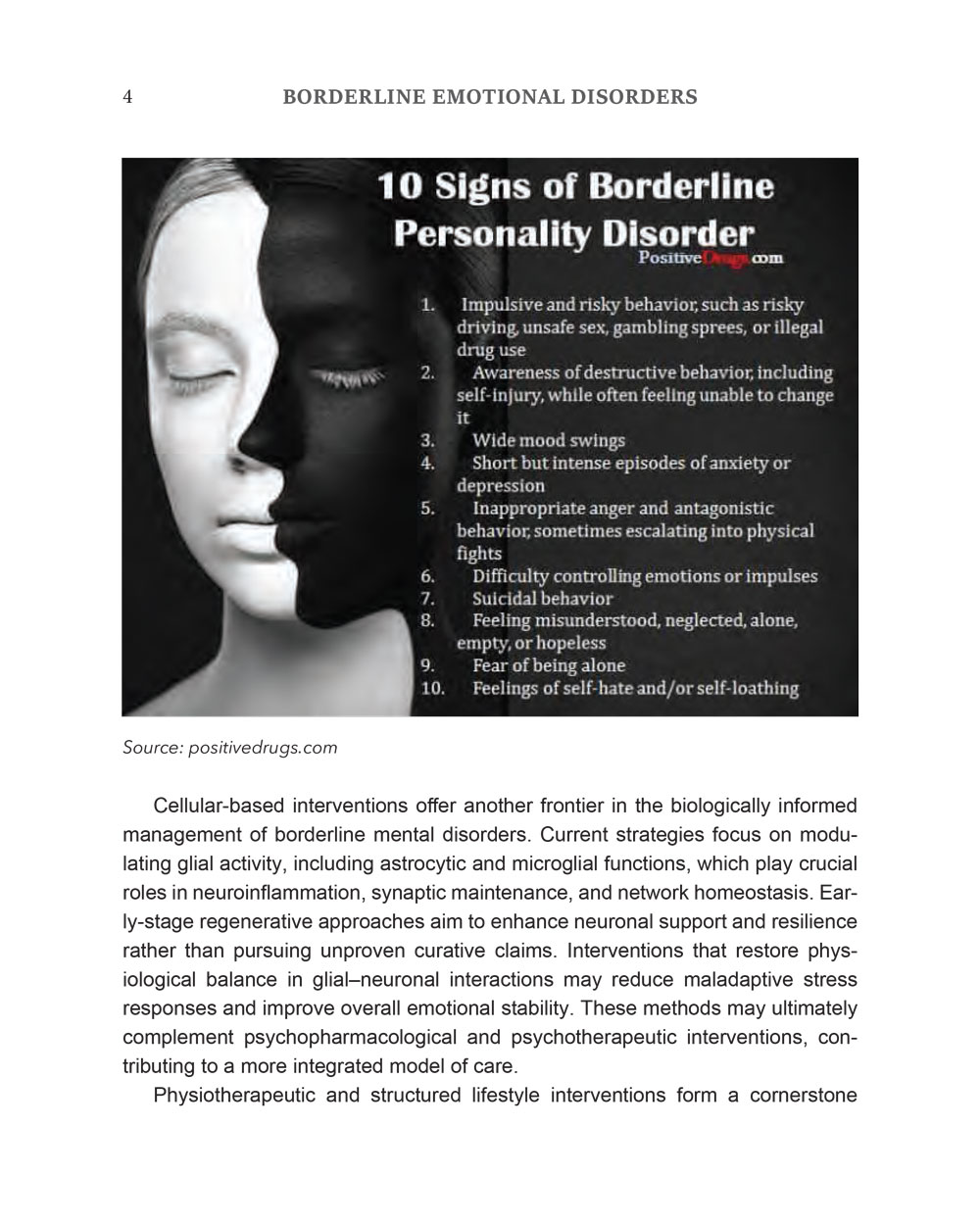
Neuroregeneration and Novel Insights in Borderline Emotional Disorders in Regenerative Medicine explores the “clinical gray zone” where persistent stress, anxiety, low mood, and emotional dysregulation impair daily life without always fitting neat diagnostic categories. Written for clinicians, researchers, and informed readers, it reframes “borderline” states through a dimensional, mechanism-based lens—linking fluctuating symptoms to stress circuits, neuroendocrine signaling, inflammation, metabolic function, mitochondrial bioenergetics, and the gut–brain axis.
Bridging established psychiatric care with emerging biological strategies, the book surveys evidence-informed adjuncts such as neuromodulatory peptides, organoid and mito-organelle research platforms, cellular and glial-focused approaches, and structured physiotherapeutic and lifestyle interventions. Practical in intent and translational in scope, it offers a roadmap for integrating psychosocial treatment with safety-minded, biologically rational tools—aimed at enhancing resilience, restoring homeostasis, and supporting earlier, more personalized intervention before symptoms harden into chronic disorder.
Description
Authors
Prof. Dr. Mike K.S. Chan and Dr. Dina Tulina
Published by
EUROPEAN WELLNESS ACADEMY – Medical Research
ISBN: 9781662971044
eISBN: 9781662972843
Author Bio:
Prof. Dato’ Sri Dr. Mike K.S. Chan is Founder & Chairman of the European Wellness Biomedical Group and Chief Researcher/Chief Technical & Research Director across its international R&D programs. A pioneer of cellular therapy since the 1980s, he helped introduce stem cell and bioregenerative medicine across Asia, building a global network of clinics and research centers—today a chain of 40+ integrative and regenerative medical clinics with 1,000+ staff. He serves as ESAAM Scientific Committee Head for Regenerative Medicine & Stem Cells and ESAAM Chairman/Director for Asia; Associate Professor (AASCP, USA); Associate Professor (Lincoln University College, Kuala Lumpur); Chairman of the European Wellness Academy; Senator of Germany’s BWA; and Honorary Chief Healthcare Advisor to Swiss Strategic Partners. His portfolio includes multiple international patents in immunotherapy, stem cell transport media, and parenteral formulations, and he is a multi-award recipient in Europe and the Middle East. An active academic collaborator (MIT, Cambridge, USC, UCI, Heidelberg), Prof. Chan has authored/co-authored 60+ books and 150+ scientific publications, and has delivered 1000+ lectures and seminars across 60+ regions on anti-aging, regenerative medicine, peptides, and stem cell therapies.
Dr. Dina Tulina is a Medical Advisor and physician specializing in anti-aging, regenerative medicine, and comprehensive wellness. She integrates preventive, biological, and natural care to promote longevity and vitality beyond conventional practice. At European Wellness Global, she contributes to biomedical innovation with holistic approaches and the translation of research into practical applications. Guided by her belief that true health is balance and vitality, and functional longevity, Dr. Tulina is dedicated to shaping the future of personalized and preventive healthcare.
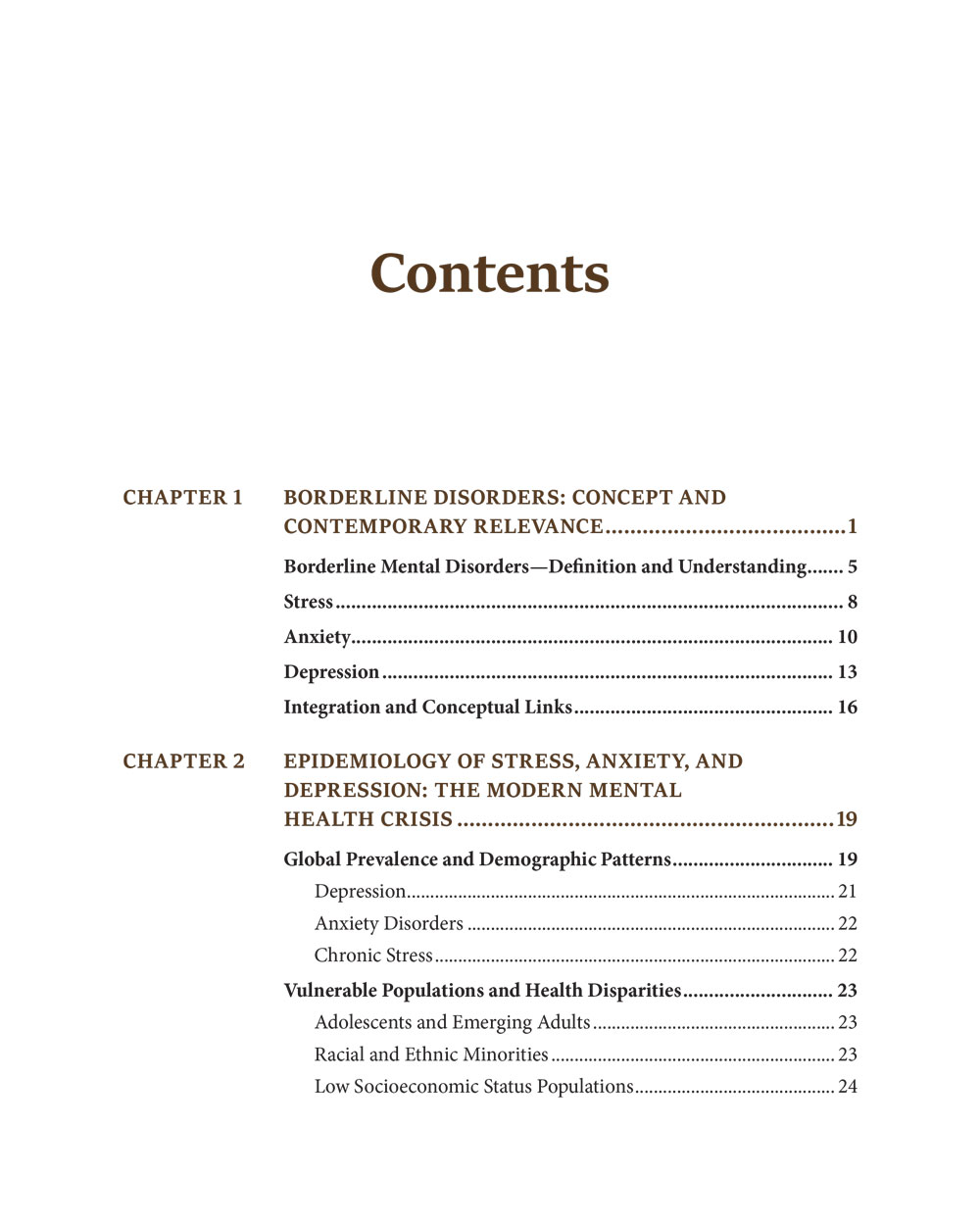
Table of Content
| CHAPTER 1 BORDERLINE DISORDERS: CONCEPT AND CONTEMPORARY RELEVANCE | 1 |
| Borderline Mental Disorders—Definition and Understanding | 5 |
| Stress | 8 |
| Anxiety | 10 |
| Depression | 13 |
| Integration and Conceptual Links | 16 |
| CHAPTER 2 EPIDEMIOLOGY OF STRESS, ANXIETY, AND DEPRESSION: THE MODERN MENTAL HEALTH CRISIS | 19 |
| Global Prevalence and Demographic Patterns | 19 |
| Depression | 21 |
| Anxiety Disorders | 22 |
| Chronic Stress | 22 |
| Vulnerable Populations and Health Disparities | 23 |
| Adolescents and Emerging Adults | 23 |
| Racial and Ethnic Minorities | 23 |
| Low Socioeconomic Status Populations | 24 |
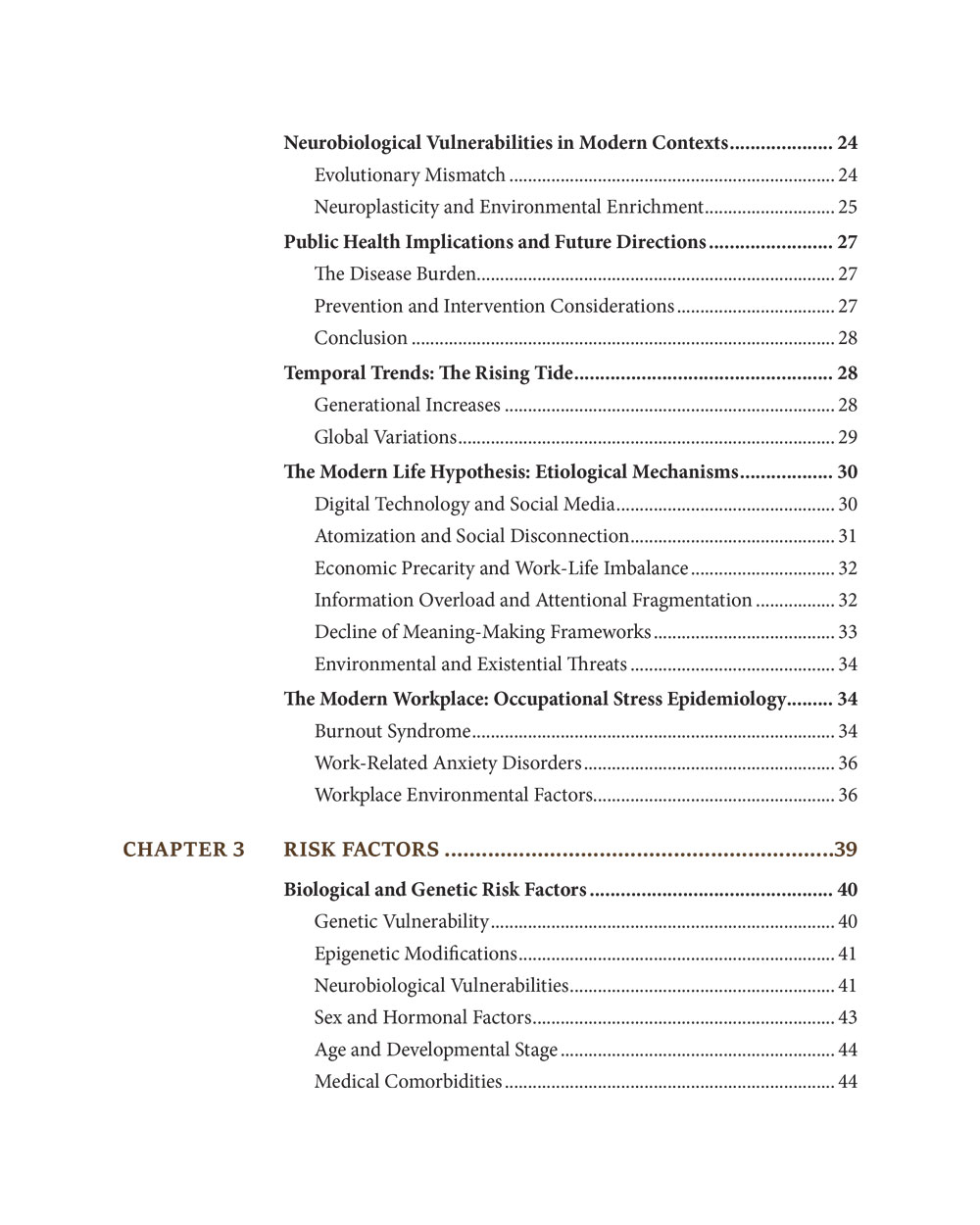
| Neurobiological Vulnerabilities in Modern Contexts | 24 |
| Evolutionary Mismatch | 24 |
| Neuroplasticity and Environmental Enrichment | 25 |
| Public Health Implications and Future Directions | 27 |
| The Disease Burden | 27 |
| Prevention and Intervention Considerations | 27 |
| Conclusion | 28 |
| Temporal Trends: The Rising Tide | 28 |
| Generational Increases | 28 |
| Global Variations | 29 |
| The Modern Life Hypothesis: Etiological Mechanisms | 30 |
| Digital Technology and Social Media | 30 |
| Atomization and Social Disconnection | 31 |
| Economic Precarity and Work-Life Imbalance | 32 |
| Information Overload and Attentional Fragmentation | 32 |
| Decline of Meaning-Making Frameworks | 33 |
| Environmental and Existential Threats | 34 |
| The Modern Workplace: Occupational Stress Epidemiology | 34 |
| Burnout Syndrome | 34 |
| Work-Related Anxiety Disorders | 36 |
| Workplace Environmental Factors | 36 |
| CHAPTER 3 RISK FACTORS | 39 |
| Biological and Genetic Risk Factors | 40 |
| Genetic Vulnerability | 40 |
| Epigenetic Modifications | 41 |
| Neurobiological Vulnerabilities | 41 |
| Sex and Hormonal Factors | 43 |
| Age and Developmental Stage | 44 |
| Medical Comorbidities | 44 |
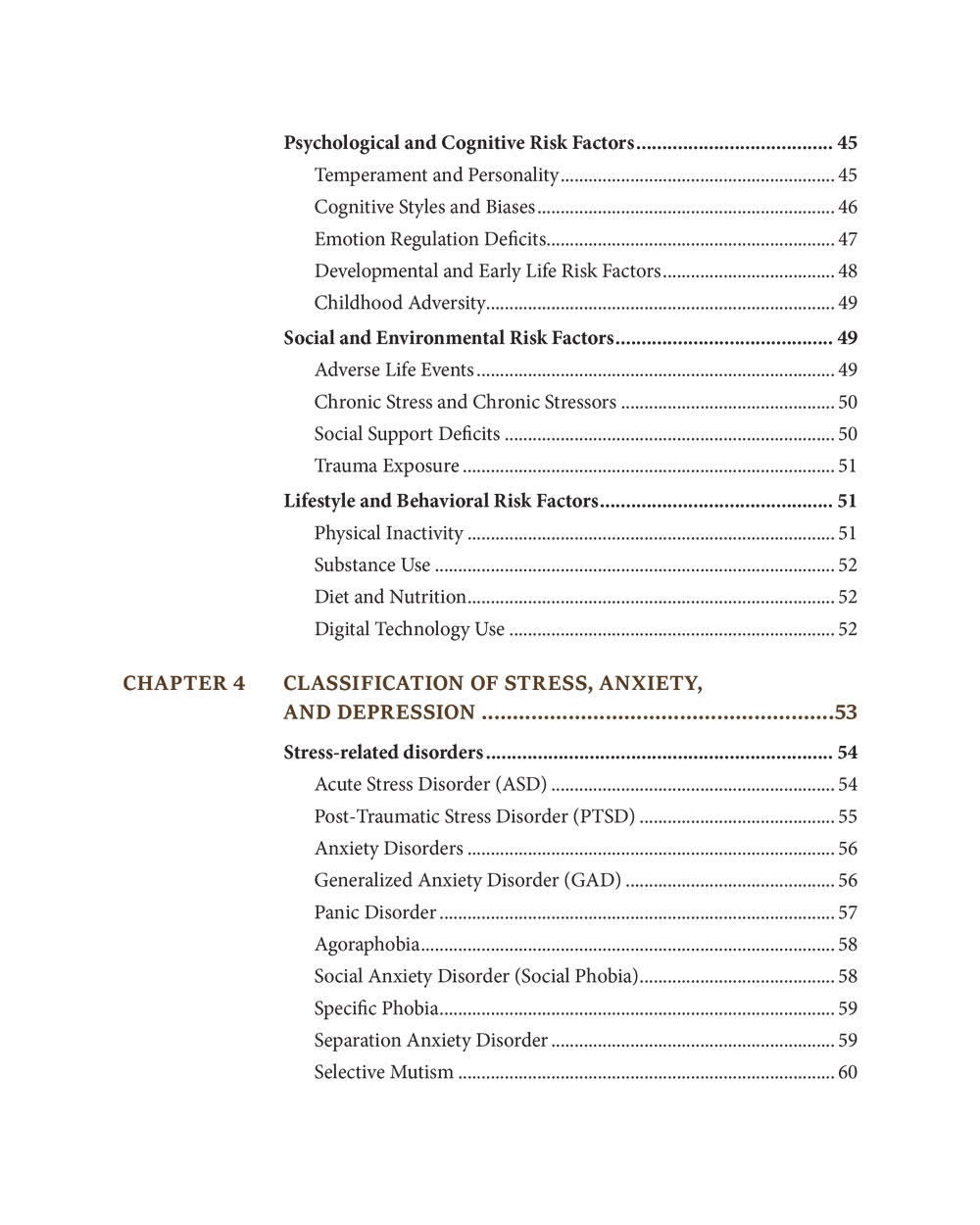
| Psychological and Cognitive Risk Factors | 45 |
| Temperament and Personality | 45 |
| Cognitive Styles and Biases | 46 |
| Emotion Regulation Deficits | 47 |
| Developmental and Early Life Risk Factors | 48 |
| Childhood Adversity | 49 |
| Social and Environmental Risk Factors | 49 |
| Adverse Life Events | 49 |
| Chronic Stress and Chronic Stressors | 50 |
| Social Support Deficits | 50 |
| Trauma Exposure | 51 |
| Lifestyle and Behavioral Risk Factors | 51 |
| Physical Inactivity | 51 |
| Substance Use | 52 |
| Diet and Nutrition | 52 |
| Digital Technology Use | 52 |
| CHAPTER 4 CLASSIFICATION OF STRESS, ANXIETY, AND DEPRESSION | 53 |
| Stress-related disorders | 54 |
| Acute Stress Disorder (ASD). | 54 |
| Post-Traumatic Stress Disorder (PTSD) | 55 |
| Anxiety Disorders | 56 |
| Generalized Anxiety Disorder (GAD) | 56 |
| Panic Disorder | 57 |
| Agoraphobia | 58 |
| Social Anxiety Disorder (Social Phobia) | 58 |
| Specific Phobia | 59 |
| Separation Anxiety Disorder | 59 |
| Selective Mutism | 60 |
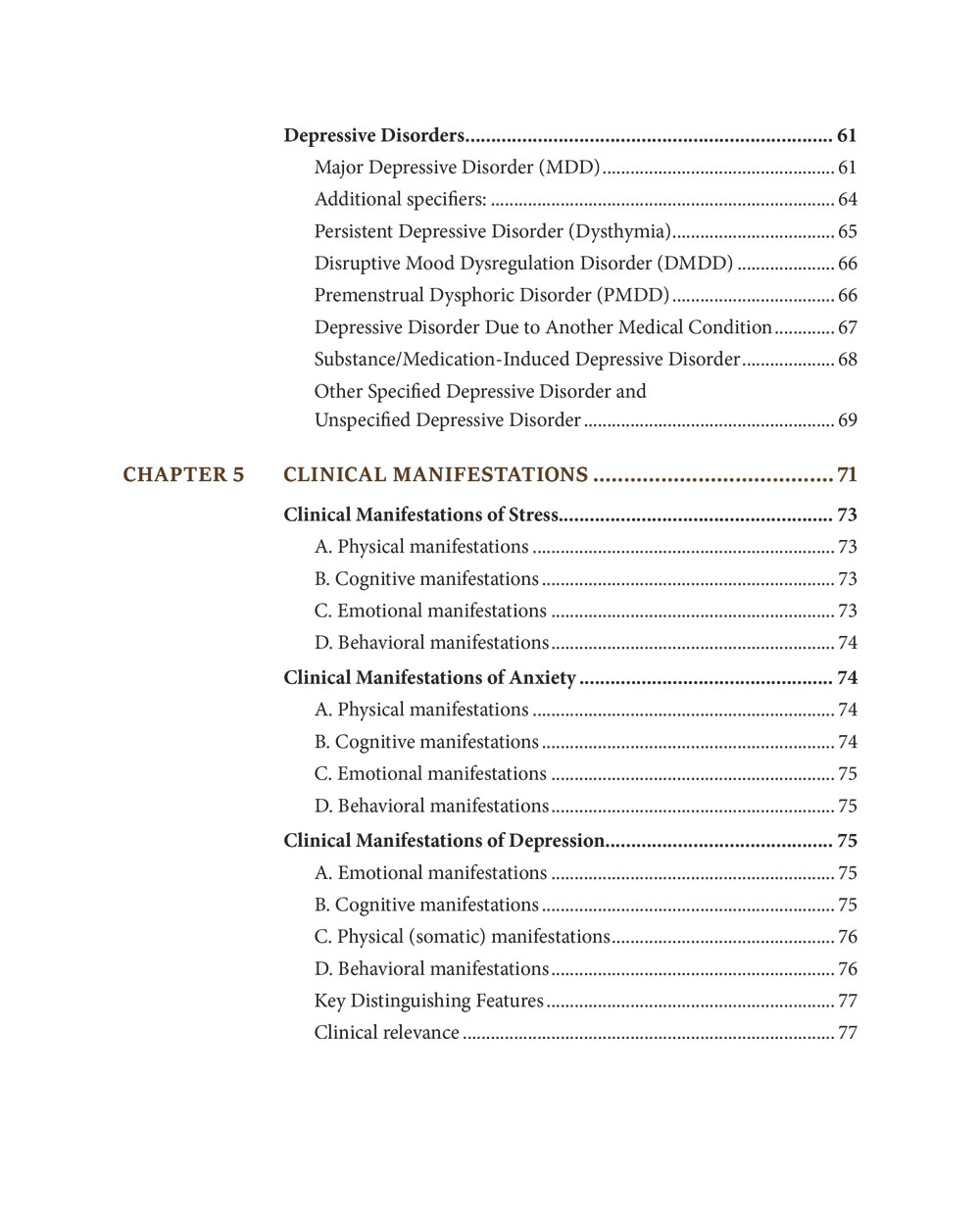
| Depressive Disorders | 61 |
| Major Depressive Disorder (MDD) | 61 |
| Additional specifiers | 64 |
| Persistent Depressive Disorder (Dysthymia) | 65 |
| Disruptive Mood Dysregulation Disorder (DMDD) | 66 |
| Premenstrual Dysphoric Disorder (PMDD). | 66 |
| Depressive Disorder Due to Another Medical Condition | 67 |
| Substance/Medication-Induced Depressive Disorder | 68 |
| Other Specified Depressive Disorder and Unspecified Depressive Disorder | 69 |
| CHAPTER 5 CLINICAL MANIFESTATIONS | 71 |
| Clinical Manifestations of Stress | 73 |
| A. Physical manifestations | 73 |
| B. Cognitive manifestations | 73 |
| C. Emotional manifestations | 73 |
| D. Behavioral manifestations | 74 |
| Clinical Manifestations of Anxiety | 74 |
| A. Physical manifestations | 74 |
| B. Cognitive manifestations | 74 |
| C. Emotional manifestations | 75 |
| D. Behavioral manifestations | 75 |
| Clinical Manifestations of Depression | 75 |
| A. Emotional manifestations | 75 |
| B. Cognitive manifestations | 75 |
| C. Physical (somatic) manifestations | 76 |
| D. Behavioral manifestations | 76 |
| Key Distinguishing Features | 77 |
| Clinical relevance | 77 |
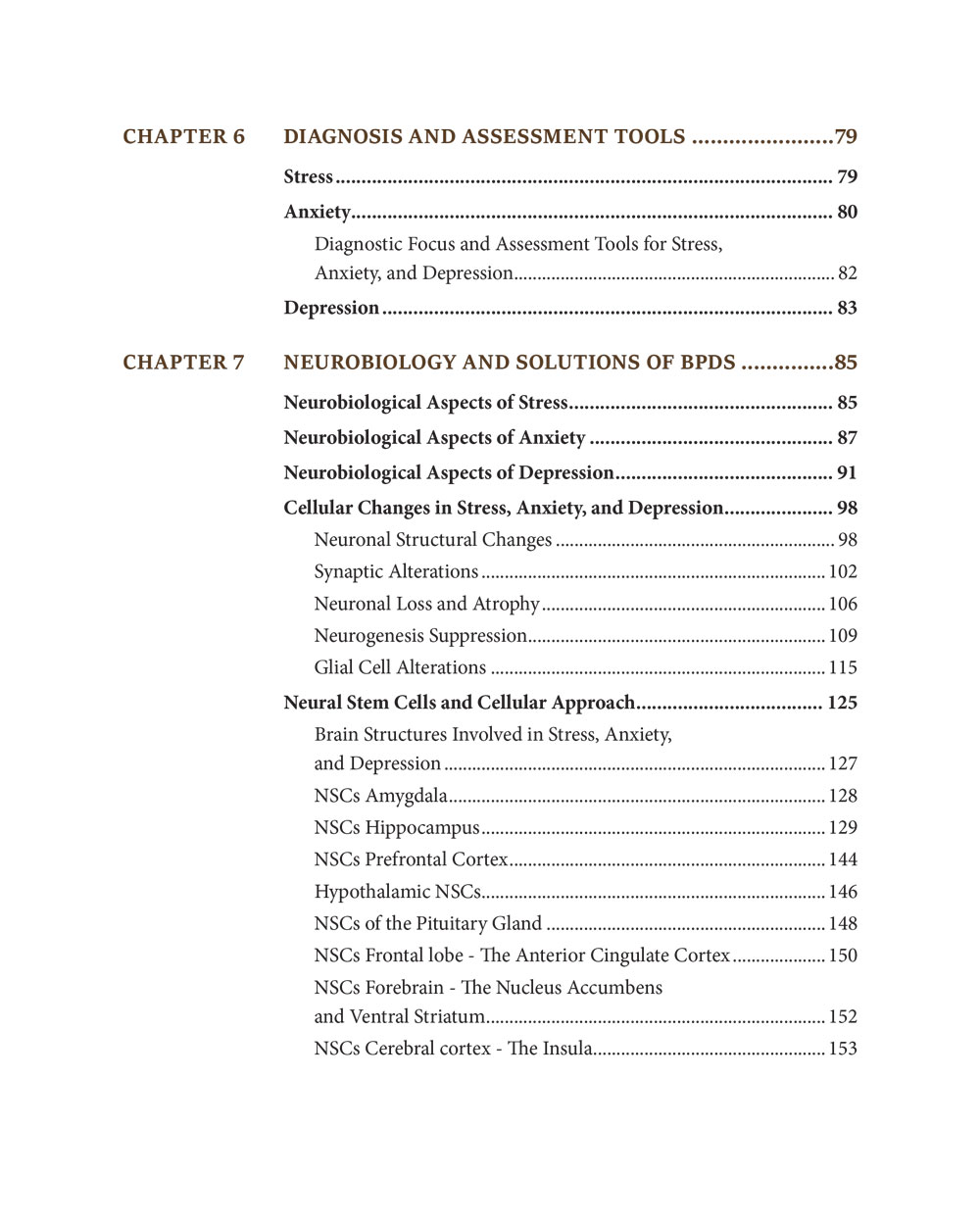
| CHAPTER 6 DIAGNOSIS AND ASSESSMENT TOOLS | 79 |
| Stress | 79 |
| Anxiety | 80 |
| Diagnostic Focus and Assessment Tools for Stress, Anxiety, and Depression | 82 |
| Depression | 83 |
| CHAPTER 7 NEUROBIOLOGY AND SOLUTIONS OF BPDS | 85 |
| Neurobiological Aspects of Stress | 85 |
| Neurobiological Aspects of Anxiety | 87 |
| Neurobiological Aspects of Depression | 91 |
| Cellular Changes in Stress, Anxiety, and Depression | 98 |
| Neuronal Structural Changes | 98 |
| Synaptic Alterations | 102 |
| Neuronal Loss and Atrophy | 106 |
| Neurogenesis Suppression | 109 |
| Glial Cell Alterations | 115 |
| Neural Stem Cells and Cellular Approach | 125 |
| Brain Structures Involved in Stress, Anxiety, and Depression | 127 |
| NSCs Amygdala | 128 |
| NSCs Hippocampus | 129 |
| NSCs Prefrontal Cortex | 144 |
| Hypothalamic NSCs | 146 |
| NSCs of the Pituitary Gland | 148 |
| NSCs Frontal lobe – The Anterior Cingulate Cortex | 150 |
| NSCs Forebrain – The Nucleus Accumbens and Ventral Striatum | 152 |
| NSCs Cerebral cortex – The Insula | 153 |
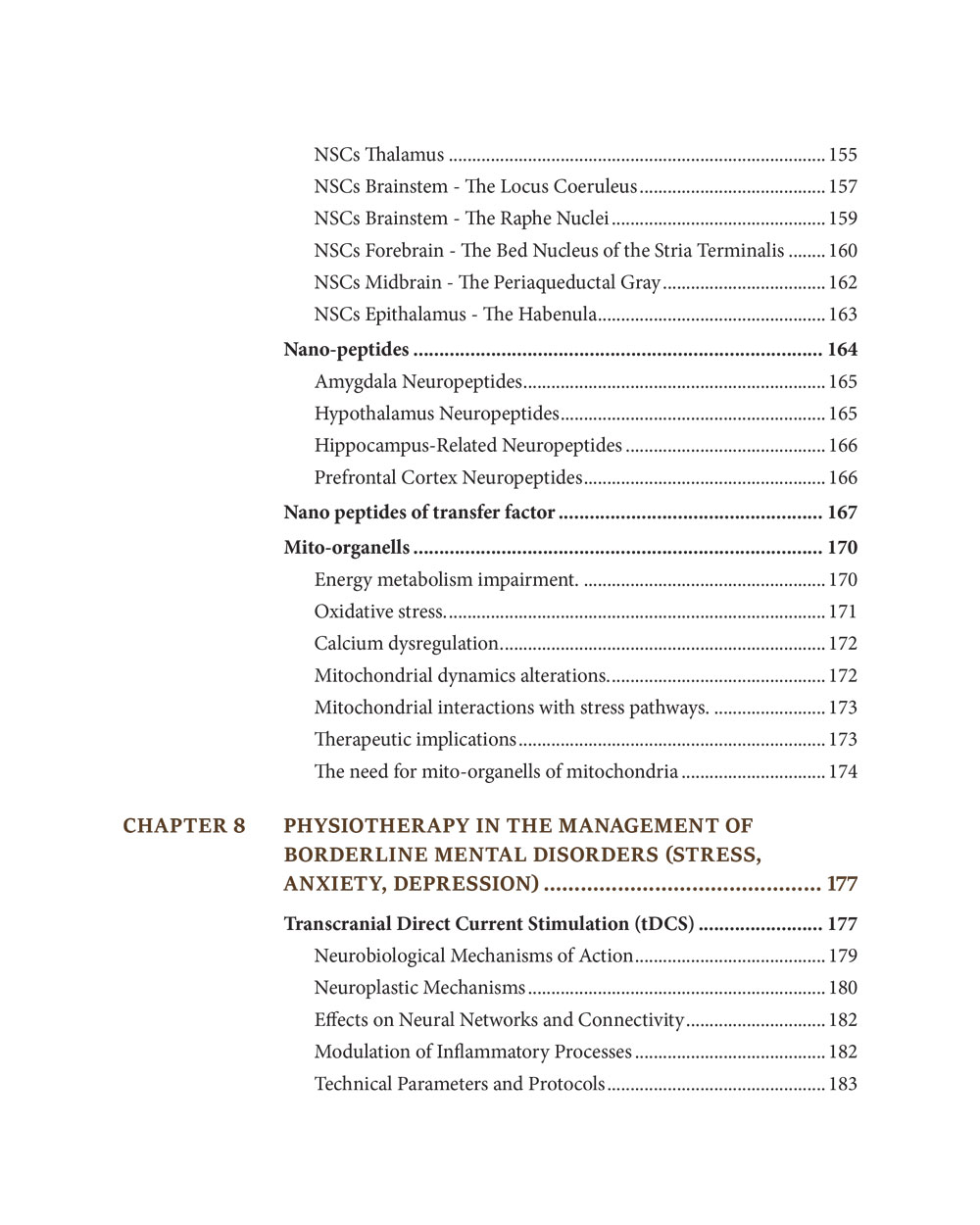
| NSCs Thalamus | 155 |
| NSCs Brainstem – The Locus Coeruleus | 157 |
| NSCs Brainstem – The Raphe Nuclei | 159 |
| NSCs Forebrain – The Bed Nucleus of the Stria Terminalis | 160 |
| NSCs Midbrain – The Periaqueductal Gray | 162 |
| NSCs Epithalamus – The Habenula | 163 |
| Nano-peptides | 164 |
| Amygdala Neuropeptides | 165 |
| Hypothalamus Neuropeptides | 165 |
| Hippocampus-Related Neuropeptides | 166 |
| Prefrontal Cortex Neuropeptides | 166 |
| Nano peptides of transfer factor | 167 |
| Mito-organells. | 170 |
| Energy metabolism impairment | 170 |
| Oxidative stress | 171 |
| Calcium dysregulation | 172 |
| Mitochondrial dynamics alterations | 172 |
| Mitochondrial interactions with stress pathways | 173 |
| Therapeutic implications | 173 |
| The need for mito-organells of mitochondria | 174 |
| CHAPTER 8 PHYSIOTHERAPY IN THE MANAGEMENT OF BORDERLINE MENTAL DISORDERS (STRESS, ANXIETY, DEPRESSION) | 177 |
| Transcranial Direct Current Stimulation (tDCS) | 177 |
| Neurobiological Mechanisms of Action | 179 |
| Neuroplastic Mechanisms | 180 |
| Effects on Neural Networks and Connectivity | 182 |
| Modulation of Inflammatory Processes | 182 |
| Technical Parameters and Protocols | 183 |
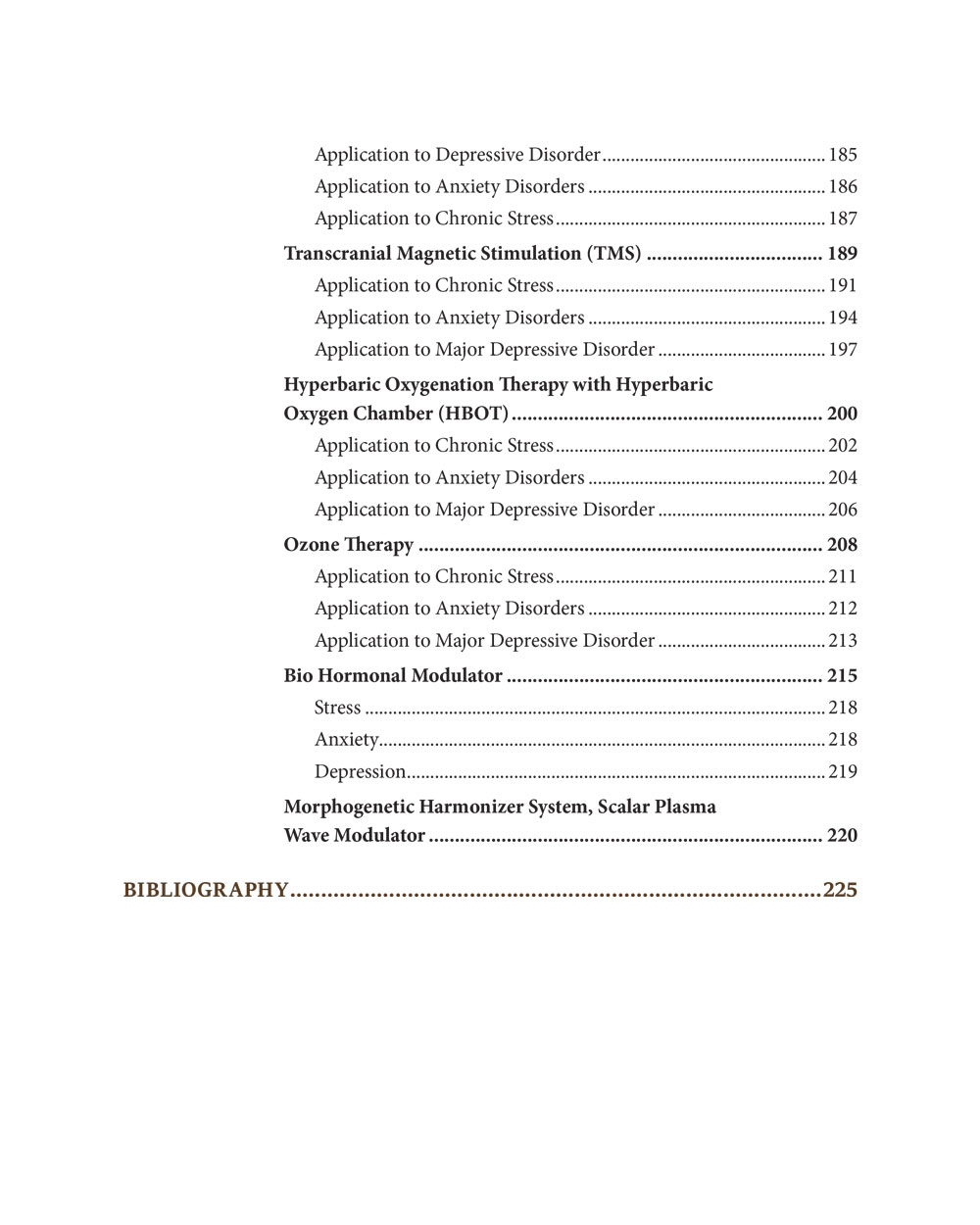
| Application to Depressive Disorder | 185 |
| Application to Anxiety Disorders | 186 |
| Application to Chronic Stress | 187 |
| Transcranial Magnetic Stimulation (TMS) | 189 |
| Application to Chronic Stress | 191 |
| Application to Anxiety Disorders | 194 |
| Application to Major Depressive Disorder | 197 |
| Hyperbaric Oxygenation Therapy with Hyperbaric Oxygen Chamber (HBOT) | 200 |
| Application to Chronic Stress | 202 |
| Application to Anxiety Disorders | 204 |
| Application to Major Depressive Disorder | 206 |
| Ozone Therapy | 208 |
| Application to Chronic Stress | 211 |
| Application to Anxiety Disorders | 212 |
| Application to Major Depressive Disorder | 213 |
| Bio Hormonal Modulator | 215 |
| Stress | 218 |
| Anxiety | 218 |
| Depression | 219 |
| Morphogenetic Harmonizer System, Scalar Plasma Wave Modulator | 220 |
| BIBLIOGRAPHY | 225 |
Additional information
| Weight | N/A |
|---|---|
| Select Book Type | Printed English (Hardcover), eBook English, Printed English (Hardcover) + eBook English, eBook Chinese Simplified (简体)* + eBook English, eBook Chinese Traditional (繁体)* + eBook English, eBook Spanish* + eBook English, eBook Japanese* + eBook English, eBook Vietnamese* + eBook English, eBook Thai* + eBook English, eBook Arabic* + eBook English, eBook Korean* + eBook English, eBook Indonesian* + eBook English, eBook Portuguese* + eBook English |
Only logged in customers who have purchased this product may leave a review.
You may also like…
-
 Select options This product has multiple variants. The options may be chosen on the product page
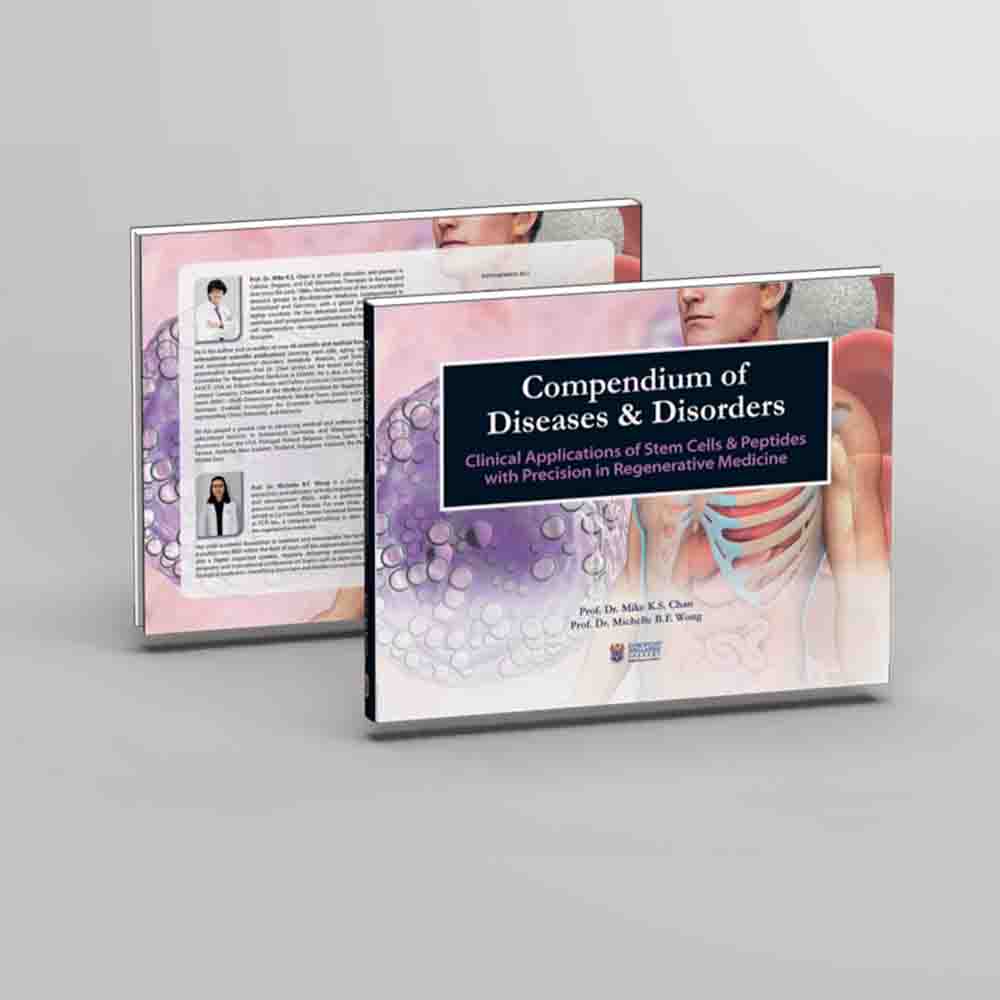
Compendium of Diseases & Disorders – Clinical Applications of Stem Cells & Peptides with Precision in Regenerative Medicine
Price range: $75.00 through $180.00 -
 Select options This product has multiple variants. The options may be chosen on the product page
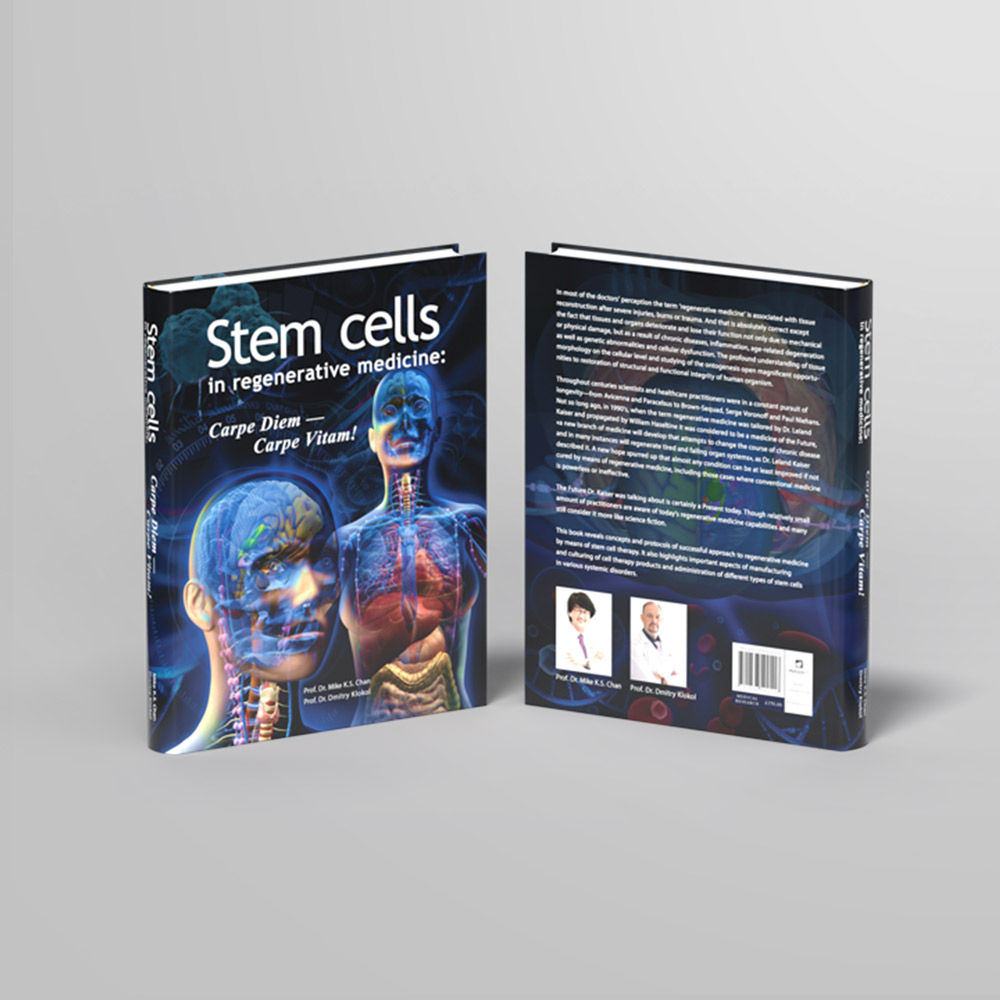
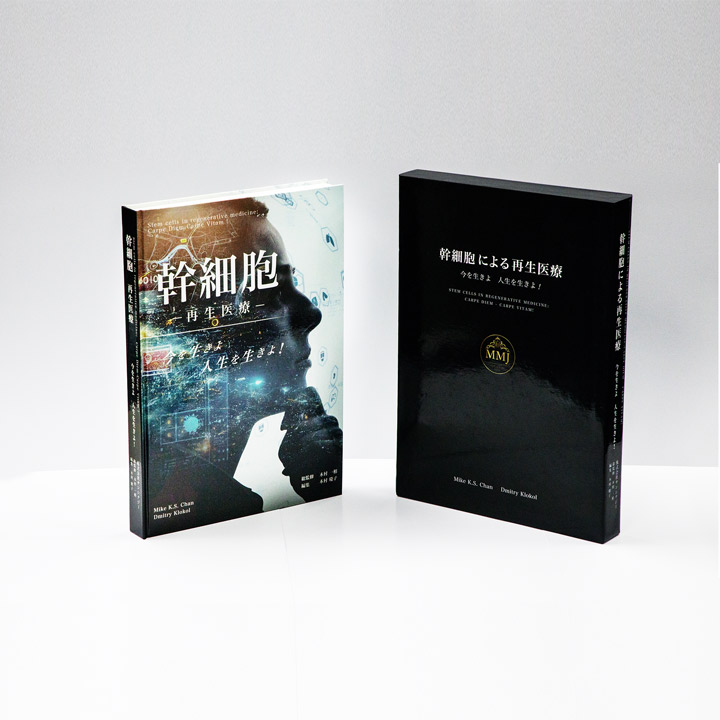
Stem Cells in Regenerative Medicine: Carpe Diem – Carpe Vitam!
Price range: $100.00 through $190.00
Related products
-

 Select options This product has multiple variants. The options may be chosen on the product page
Thymus Therapy: The Past, Present and Future
Price range: $80.00 through $160.00 -

 Select options This product has multiple variants. The options may be chosen on the product page
Autism Spectrum Disorder, Integrative Approach
Price range: $55.00 through $110.00


Reviews
There are no reviews yet.