
European Wellness is elated to announce our participation in the 31st Macao International Trade and…

When the Beautiful Game Breaks the Body — and How Science Is Putting It Back Together
Official Launch of the Football Handbook in Regenerative Sport Medicine for the FIFA World Cup 2026
There is no sporting event on earth quite like the FIFA World Cup. Every four years, the planet pauses. Billions of eyes fix upon a single tournament that distils the full spectrum of human athletic excellence into a matter of weeks — and with the FIFA World Cup 2026 now upon us, hosted across the United States, Canada, and Mexico in the grandest edition of the tournament ever staged, the timing of this landmark publication could not be more significant.
It is with great pride and a deep sense of purpose that the Handbook of Football in Regenerative Sport Medicine: Injuries, Pain Management, Recovery, Performance, Endurance and Stamina, Rehabilitation, Regeneration, and Longevity — authored by Prof.
Mike K.S. Chan and Dr. Glen Alvin — is officially launched in conjunction with the FIFA World Cup 2026. This is not a coincidence. It is a statement of intent. At the very moment when the world’s greatest footballers take to the pitch under the most intense scrutiny and physical pressure the sport can produce, this handbook arrives to address the most urgent and underserved challenge in football — the health, recovery, and biological longevity of the athletes who make the beautiful game possible.
Football is not merely a sport. It is a global institution — watched by billions, played by millions, and increasingly, studied with the same intensity it demands of those who play it. Yet for all its beauty, football is also a sport that breaks bodies. Hamstrings tear. Knees buckle. Brains absorb repeated blows. And the modern game, with its relentless fixture schedules, intercontinental travel, and commercial pressures, has made the physical toll heavier than ever before. At a World Cup, these pressures are amplified to their absolute maximum — players arriving from exhausting domestic seasons, competing in intense heat and humidity, with the weight of nations on their shoulders and no margin for biological failure.
This is precisely the context in which the handbook speaks with the greatest urgency. A comprehensive, scientifically rigorous, and clinically practical work, it challenges the traditional paradigm of athlete care and offers a forward-looking vision grounded in regenerative science — one that is as relevant to the World Cup medical teams treating players in the tournament’s final stages as it is to the club physicians managing their recovery in the weeks that follow.
As a clinician and researcher who has been involved in cellular therapy and regenerative medicine since the 1980s, Prof. Dato Sri Dr. Mike Chan brings to this handbook more than four decades of frontline experience. Having travelled around the world treating world-class footballers, celebrities, heads of state, and highly influential individuals, he brings a perspective that is uniquely his own — one that bridges the laboratory and the locker room, the cellular and the clinical. This is not a book written from the sidelines. It is a work forged in the reality of elite performance medicine, and launched at the moment when that medicine matters most.
The Hidden Cost of Playing the World’s Most Popular Game
To understand why this handbook matters, one must first appreciate the scale of the problem it addresses. Football is the world’s most popular sport, with over 265 million registered players globally. But it is also one of the most physically demanding, and the injury burden it places on athletes is staggering.
The handbook opens with a frank assessment of modern football’s physiological realities. Elite players today face fixture congestion — the scheduling of matches in rapid succession — that leaves minimal time for biological recovery. Research cited throughout the book demonstrates that when recovery periods between matches fall below four days, the incidence of soft tissue injuries increases significantly. Hamstring strains, adductor tears, and calf injuries are particularly sensitive to accumulated fatigue and shortened recovery windows.
To put this in everyday terms: imagine running a marathon on Monday, then being asked to run another on Thursday, and another the following Sunday — while also flying across time zones, managing media obligations, and performing at the highest possible level each time. That, in essence, is the reality of a modern elite footballer during a congested fixture period.
The consequences extend beyond the physical. The handbook devotes significant attention to the psychological and cognitive dimensions of this burden. Sleep quality is frequently compromised by late-night kick-offs, post-match physiological arousal, and travel schedules. Chronic sleep restriction impairs cognitive performance, mood regulation, and decision-making speed — all of which are critical in a sport where a fraction of a second can determine the outcome of a match. The book also addresses travel fatigue in depth, noting that a South American player competing in Europe may undertake multiple transatlantic journeys within a single season, arriving back at their club in a depleted state just days before a crucial fixture.
Regenerative medicine plays a central role in this evolution. Advances in stem cell therapy, biologics, exosome science, and cellular signalling pathways offer new opportunities to enhance tissue healing, accelerate recovery, and extend athletic healthspan. — Prof. Mike Chan
This is not alarmism. It is a clinical reality that the handbook confronts with both scientific rigour and practical wisdom. The solutions it proposes — revised match schedules, mandatory recovery periods, load monitoring technology, squad rotation strategies, and individualized sleep and hydration protocols — are grounded in evidence and applicable at every level of the game.
Pain-Free Is Not the Same as Match-Ready
One of the most important and practically consequential insights in the handbook concerns the distinction between medical readiness and performance readiness. This is a distinction that, in Prof. Mike Chan’s view, has been dangerously blurred in conventional sports medicine — and the consequences have been severe.
The traditional model of return-to-play has long relied on a simple criterion: if the player is pain-free and has passed basic functional tests, they are cleared to compete. But pain-free, the handbook argues compellingly, does not equate to match-ready. And the data supports this position unequivocally.
Consider the case of anterior cruciate ligament (ACL) reconstruction. Following surgery, athletes frequently demonstrate persistent deficits in quadriceps strength, neuromuscular control, and movement symmetry — even after meeting conventional return-to-play criteria. Studies cited in the handbook show that returning to pivoting sports without adequate strength restoration is associated with a secondary injury risk of 23 to 30 percent. For younger athletes, this figure is even higher. The graft tissue used to reconstruct the ACL undergoes a biological maturation process — termed “ligamentization” — that can take 12 to 24 months, yet many athletes are cleared to return to competition within six to nine months. The mismatch between biological readiness and competitive demand is a recipe for reinjury.
The same principle applies to muscle injuries. After a hamstring strain, structural and functional deficits can persist long after the pain has resolved. Shortened muscle fascicle length following hamstring injury has been independently associated with increased reinjury risk. Eccentric strength deficits and impaired force production may remain evident even after the player has been declared fit. A player who returns to full-speed sprinting before these deficits are corrected is, in biomechanical terms, running on a structurally compromised engine.
The handbook presents a compelling case study involving a 24-year-old professional footballer who sustained a recurrent hamstring injury requiring surgery. Rather than relying on time-based criteria alone, his rehabilitation team used a structured, criteria-based model — incorporating neuromuscular testing, MRI evaluation, GPS load monitoring, and progressive football-specific drills — before clearing him for competition. He returned to full team training after 12 weeks and was cleared for match play at 19 weeks post-surgery. He subsequently played 26 official matches without reinjury. This is what performance readiness, as opposed to mere medical clearance, looks like in practice.
The handbook’s recommendation is clear: return-to-play decisions must incorporate objective, sport-specific assessments of load tolerance and neuromuscular function. Clinicians must resist the pressure — from coaches, clubs, and players themselves — to clear athletes based on incomplete recovery. As the book states, the goal is not simply to get the player back on the pitch. It is to get them back in a condition where they can perform sustainably and without elevated reinjury risk.
The Science of Repair — Regenerative Medicine Meets the Football Pitch
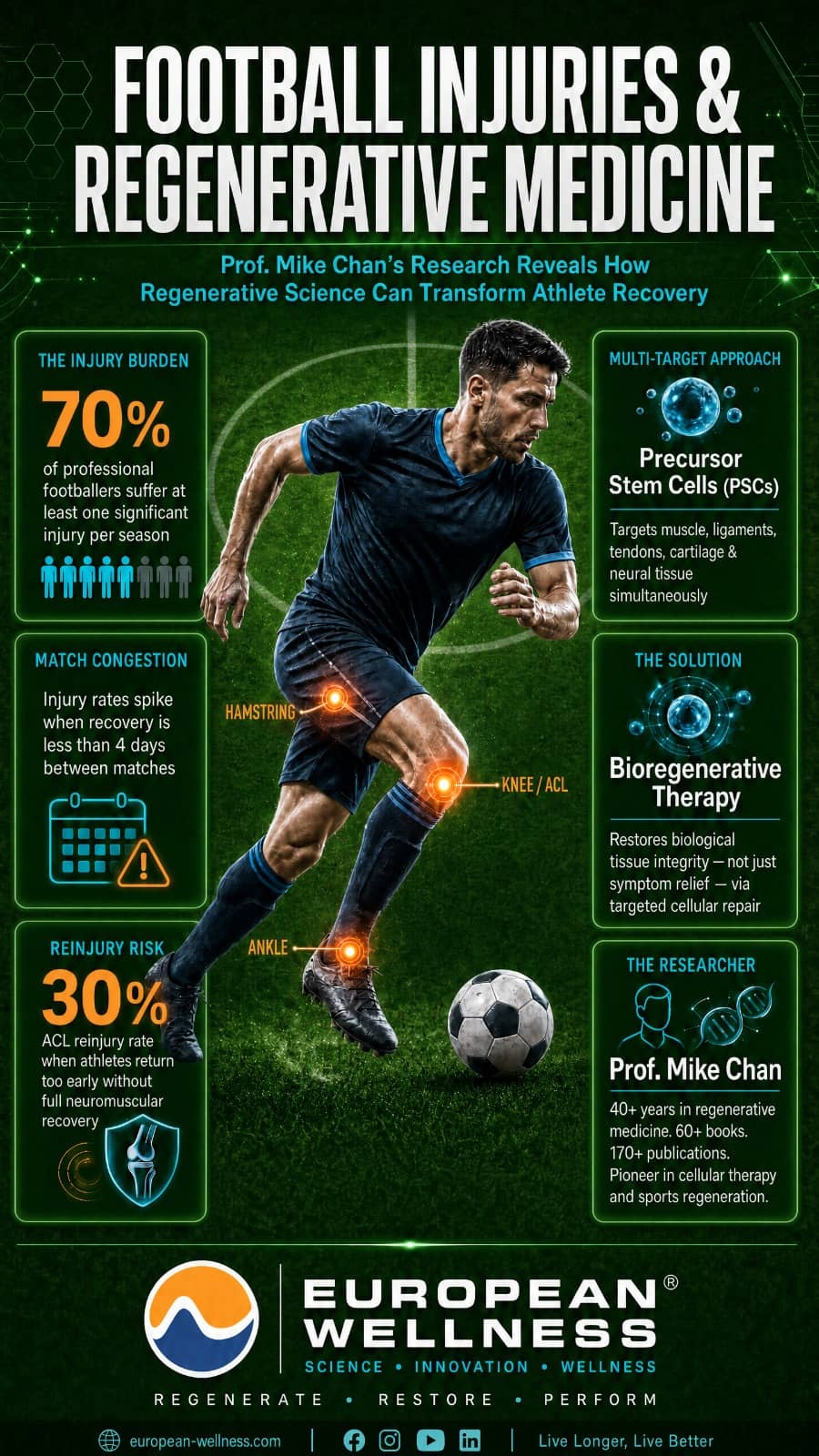
The most intellectually ambitious and clinically significant section of the handbook is its exploration of bioregenerative medicine as a solution to the limitations of conventional sports injury treatment. This is where Prof. Mike Chan’s decades of expertise in cellular therapy converge most powerfully with the specific demands of football medicine.
Conventional treatments — physiotherapy, pharmacological management, and surgical reconstruction — can restore functional capacity, but they cannot guarantee complete biological regeneration of damaged tissues. In many cases, healing occurs through fibrotic scar formation, which compromises the mechanical properties of the repaired tissue and increases the risk of reinjury. The scar tissue that forms after a hamstring tear, for example, is structurally inferior to the original muscle fibre. It is less elastic, less strong, and more prone to re-tearing under the explosive demands of elite football.
Bioregenerative medicine offers a fundamentally different approach. Rather than simply managing symptoms or reconstructing damaged structures, it aims to stimulate the body’s own repair mechanisms at the cellular and molecular level — promoting true biological regeneration rather than scar-based healing.
The handbook focuses particularly on the therapeutic potential of targeted organ-specific precursor stem cells (PSCs). Unlike general stem cell treatments, which use undifferentiated cells that may behave unpredictably, PSCs are lineage-restricted cells already committed to specific tissue developmental pathways. This targeted approach is central to Prof. Mike Chan’s philosophy of regenerative medicine, and it is articulated with characteristic precision in the handbook:
All 400+ cell types across the 78 organs have their own unique blueprints, just as each individual has distinct thumbprints, fingerprints, and tongue prints. In the case of stem cells and other cells, each possesses unique molecular signatures, including specific molecules, proteins, amino acid sequences, transcription factors, and glycation rate frequencies. — Prof. Mike Chan
To translate this into layman’s terms: the human body is not a uniform machine. Every tissue — muscle, ligament, tendon, cartilage, neural tissue — is biologically distinct, with its own molecular identity and repair requirements. A stem cell therapy that works for one tissue type may not be appropriate for another. The PSC approach recognizes this complexity and tailors the regenerative intervention to the specific tissue that has been damaged.
In practical terms, when an elite footballer suffers an ACL rupture, targeted precursor stem cells can be deployed to the site of injury, where they secrete bioactive molecules — including vascular endothelial growth factor (VEGF), hepatocyte growth factor (HGF), and insulin-like growth factor-1 (IGF-1) — that promote vascularization, reduce inflammatory damage, stimulate collagen synthesis, and support ligament remodelling. Think of it as sending a specialized biological repair crew directly to the injury site, equipped with the precise tools needed to rebuild the damaged structure from the inside out.
The handbook also explores the role of exosomes — small extracellular vesicles that act as intercellular signalling mediators — and therapeutic peptides that enhance angiogenesis and support tissue healing. These emerging technologies represent a significant expansion of the therapeutic toolkit available to sports medicine practitioners, and the handbook provides a thorough and accessible account of the science underpinning them.
Beyond acute injury management, the handbook addresses the concept of biological longevity engineering — the idea that football medicine must move beyond treating injuries as isolated events and begin protecting the athlete’s biological systems from accelerated wear over the course of a career. This involves monitoring biological age (which reflects the functional condition of tissues and organs) rather than simply chronological age, tracking regenerative capacity through biomarker panels and imaging, and intervening proactively before overt injury develops.
Football medicine must protect the brain before it protects the result. When we do that well, we do more than manage injury. We defend the athlete’s future. — Prof. Mike Chan
This philosophy extends to the handbook’s treatment of concussion — one of the most serious and underappreciated risks in modern football. The book argues that concussion must be understood not merely as an acute event but as a condition with long-term neurological implications. Repeated subconcussive exposures from heading, for example, may contribute to cumulative neurological burden over time. The handbook advocates for a conservative, medically supervised return-to-play process following concussion, with careful attention to neurocognitive recovery, vestibular rehabilitation, and psychological support.
A Framework for the Future of Football Medicine
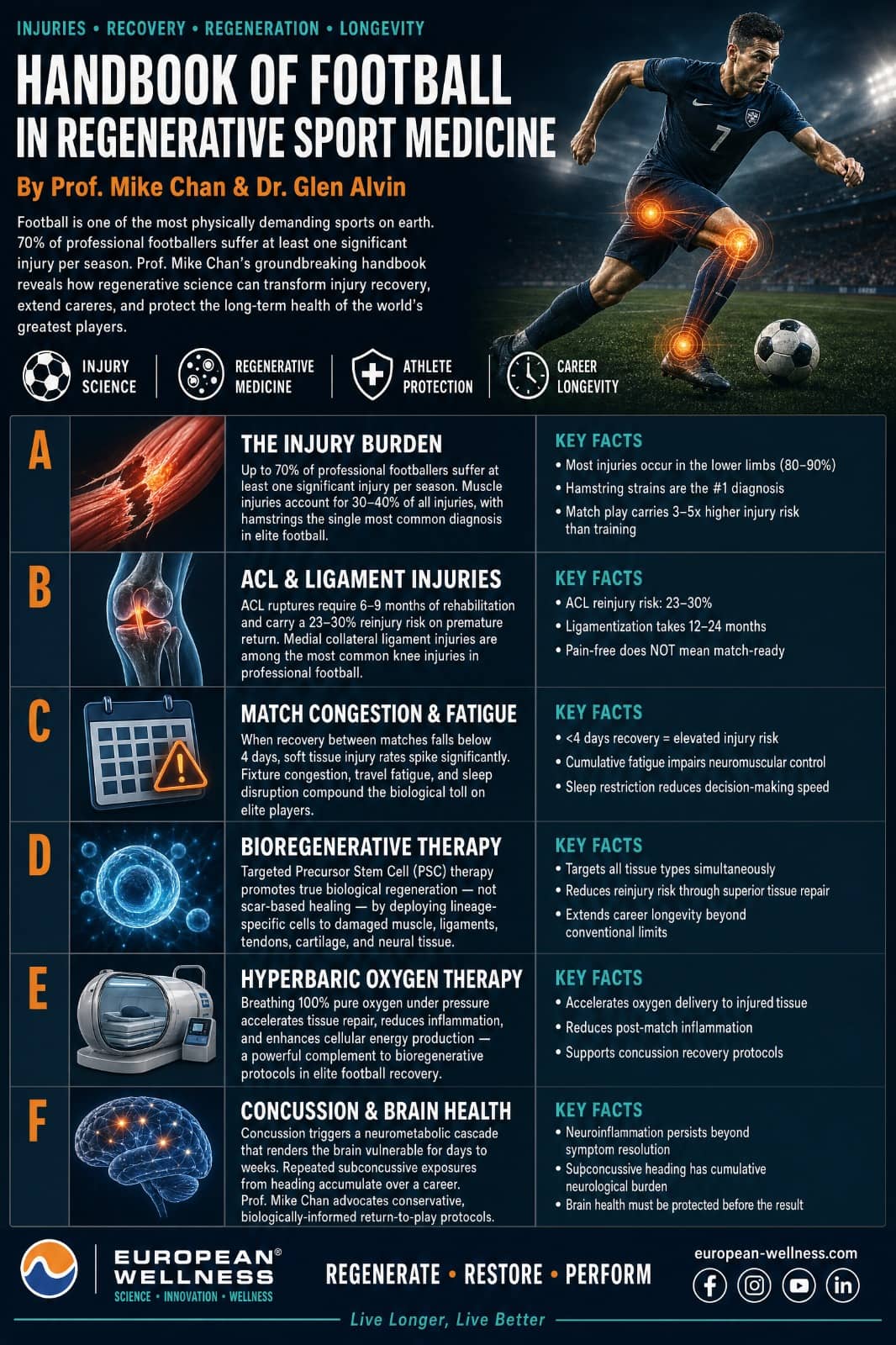
The Handbook of Football in Regenerative Sport Medicine is, at its core, a call to action. It challenges the football world — clubs, governing bodies, coaches, medical staff, and athletes themselves — to adopt a more sophisticated, biologically informed approach to athlete care.
The solutions it proposes are both practical and visionary. In the short term, they include structural reforms to match scheduling, evidence-based load management protocols, individualized return-to-play frameworks, and the integration of bioregenerative therapies into standard clinical practice. In the longer term, they point toward a model of football medicine in which biological longevity is treated as a strategic priority — not an afterthought.
The following table summarizes the key solutions and recommendations presented across the handbook’s thirteen chapters:
Challenge |
Recommended Solution |
| Match congestion and injury risk | Revised fixture schedules, mandatory recovery periods, squad rotation |
| Travel fatigue | Charter flights, sleep optimization, hydration protocols, circadian adjustment |
| Premature return-to-play | Criteria-based, performance-readiness frameworks with neuromuscular testing |
| Scar-based tissue healing | Precursor stem cell (PSC) therapy, exosome-based interventions, therapeutic peptides |
| Concussion and brain health | Conservative return-to-play, neurocognitive monitoring, vestibular rehabilitation |
| Career longevity | Biological age monitoring, regenerative capacity tracking, proactive intervention |
| Neurofatigue and cognitive load | Sleep protection, psychological support, reduced unnecessary exposure |
| Metabolic and immune health | Nutritional optimization, energy availability monitoring, inflammatory control |
Prof. Mike Chan’s central argument is that performance excellence and human longevity are not competing priorities. They are aligned objectives within a sustainable model of athlete care. The footballer who is protected, recovered, and biologically resilient is also the footballer who performs at the highest level for the longest time. The science of regenerative medicine, applied with clinical precision and ethical responsibility, is the bridge between these two goals.
This handbook is essential reading for anyone involved in the care and development of football athletes — from elite club physicians and physiotherapists to sports scientists, coaches, and performance practitioners. It is rigorous without being inaccessible, comprehensive without being overwhelming, and visionary without losing sight of practical reality. In a sport that demands so much of the human body, it is a timely and important contribution to the literature of sports medicine.
A Career Built Beside the World’s Greatest Players
What gives the Handbook of Football in Regenerative Sport Medicine its rare authority is not only its scientific rigour — it is the decades of direct, hands-on clinical experience with world-class footballers that Prof. Mike Chan brings to every page. Over more than four decades in regenerative medicine, Prof. Mike Chan has personally treated some of the finest professional footballers on the planet — players who have graced the world’s greatest stadiums, competed in World Cups and continental championships, and whose careers have been defined by the relentless physical demands that this handbook so thoroughly documents.
These are not ordinary patients. World-class footballers operate at the absolute frontier of human physical performance. Their bodies are subjected to forces, speeds, and volumes of loading that few other athletes ever encounter. When a world-class striker tears his hamstring days before a Champions League final, or when an international defender ruptures his ACL mid-season with a World Cup qualifier on the horizon, the margin for error in their medical care is essentially zero. The stakes — for the player, the club, and the nation — could not be higher. It is in precisely these moments that Prof. Mike Chan has been called upon, time and again, to deliver results that conventional medicine alone could not guarantee.
Throughout his career, Prof. Mike Chan has treated world-class footballers presenting with the full spectrum of injuries catalogued in this handbook — from acute hamstring tears and ACL ruptures to chronic Achilles tendinopathy, adductor-related groin pain, patellar tendinopathy, and the cumulative neurological burden of repeated concussive and subconcussive exposures. In each case, his approach has gone beyond symptom management and structural repair. His goal has always been true biological regeneration — restoring the tissue to its original functional integrity, not merely patching it well enough for the next match.
World-class footballers have sought out Prof. Mike Chan precisely because they understand that their bodies are their most valuable asset, and that conventional medicine — however competent — has its biological ceiling. Physiotherapy can rehabilitate. Surgery can reconstruct. But neither can guarantee that the repaired hamstring will be as strong, as elastic, and as resilient as the original. Neither can reverse the molecular-level degradation that accumulates in tendons, ligaments, and cartilage over a decade of elite competition. Bioregenerative medicine, as practised by Prof. Mike Chan, addresses these limitations directly — using targeted Precursor Stem Cell (PSC) therapy, exosome-based signalling, and biological longevity protocols to stimulate the body’s own repair mechanisms at the cellular level.
The results that Prof. Mike Chan has achieved with world-class footballers speak for themselves. Players who came to him with career-threatening injuries — injuries that had failed to respond adequately to conventional treatment — have returned to the highest level of professional competition with restored tissue quality, reduced reinjury risk, and extended career longevity. Senior players in the latter stages of their careers, whose biological age had begun to outpace their chronological years due to the accumulated wear of elite football, have been able to sustain peak performance for seasons beyond what their bodies would otherwise have permitted.
This is the clinical reality that animates every chapter of the handbook. When Prof. Mike Chan writes about the inadequacy of scar-based healing, the dangers of premature return-to-play, or the transformative potential of bioregenerative therapies, he does so as a physician who has sat across the treatment table from some of the world’s greatest footballers — men whose careers, and in some cases whose lives, depended on the quality of the medicine they received. The handbook is, in the deepest sense, a gift to the football world from a clinician who has given decades of his professional life to the health and longevity of its finest players.
Inside the Book — A Chapter-by-Chapter Guide
For readers who wish to navigate the handbook’s full scope, the following section provides a structured overview of each chapter, accompanied by an infographic summary. The handbook is organized into thirteen chapters, each addressing a distinct dimension of football medicine — from the physiological realities of the modern game to the most advanced frontiers of regenerative science.
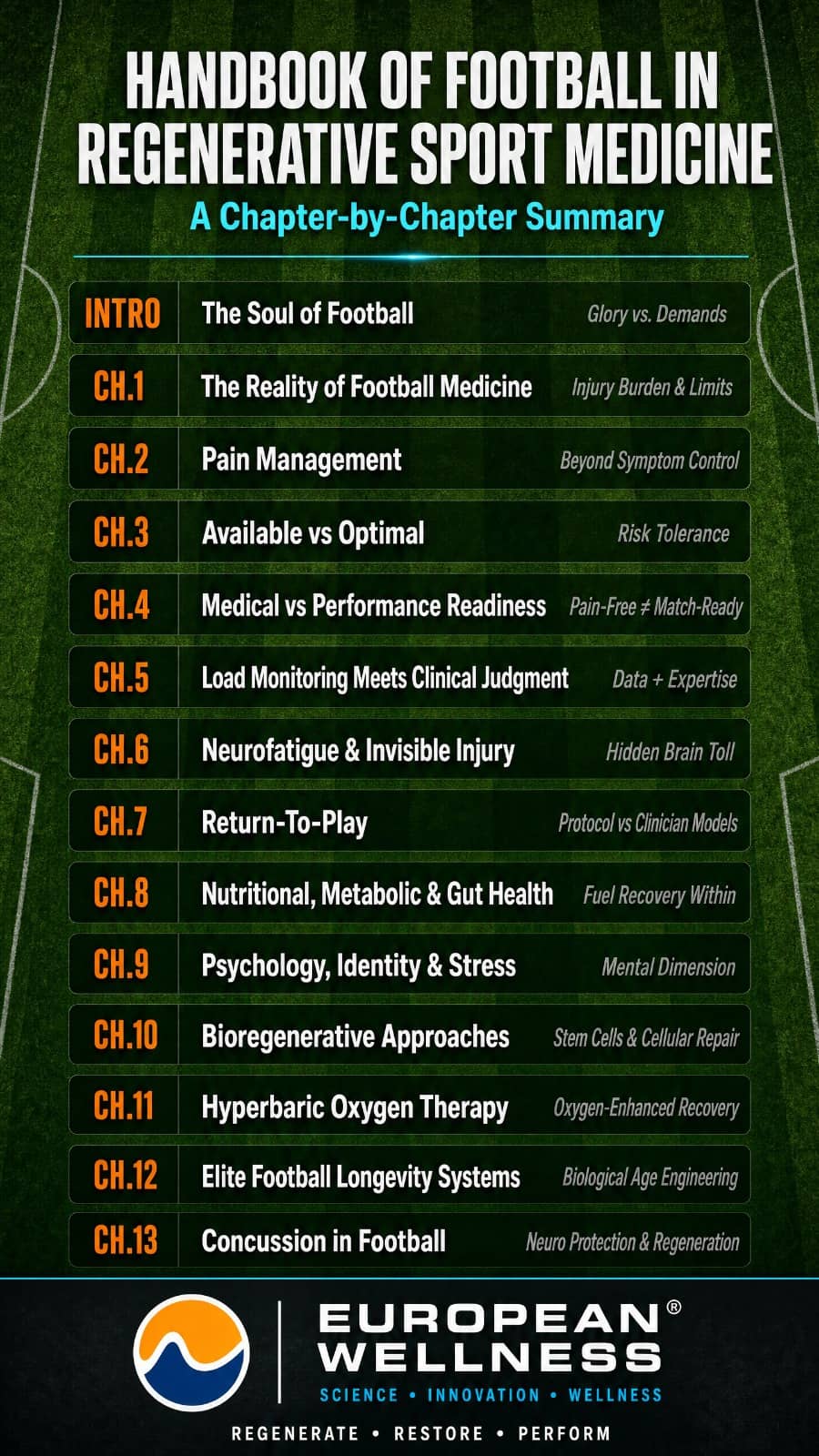
Intro Section — The Soul of Football The introductory section frames the emotional and cultural context of the sport, contrasting the glory of iconic World Cup moments with the immense physical and physiological demands placed on those who play at the highest level. It sets the stage for the medical and scientific discussion that follows.
Chapter 1 — The Reality of Football Medicine This chapter establishes the foundational injury burden of elite football. It quantifies the scale of the problem — up to 70% of professional footballers suffer at least one significant injury per season — and examines the physiological limits imposed by congested fixture schedules, travel demands, and inadequate recovery windows.
Chapter 2 — Pain Management Chapter 2 challenges the conventional over-reliance on analgesics and symptom suppression. It advocates for pain management strategies that respect the body’s biological warning signals while integrating regenerative therapies to address the root cause of pain and promote genuine tissue healing, rather than simply masking discomfort.
Chapter 3 — Available vs Optimal This chapter examines the concept of risk tolerance in professional football — the constant tension between a player being medically “available” to play and being in a truly “optimal” state of biological readiness. It highlights how commercial and competitive pressures often push medical teams to accept higher risk tolerances, with long-term consequences for athlete health.
Chapter 4 — Medical Readiness vs Performance Readiness Building on Chapter 3, this section clarifies the critical distinction between being pain-free and being match-ready. Clinical clearance does not automatically equate to the neuromuscular and cardiovascular capacity required for elite competition. Rushing players back based solely on the absence of pain significantly elevates the risk of reinjury.
Chapter 5 — Load Monitoring Meets Clinical Judgment Chapter 5 addresses the modern reliance on data analytics, GPS tracking, and wearable technology in football. While load monitoring provides valuable objective data, the chapter argues that it must be balanced with nuanced clinical judgment — data alone cannot capture a player’s subjective fatigue, psychological state, or subtle biomechanical compensations.
Chapter 6 — Neurofatigue, Central Load and Invisible Injury This chapter explores the hidden cognitive toll of elite football, defining “central load” as the cumulative neurocognitive demand placed on the central nervous system by constant decision-making, emotional stress, and repeated high-intensity efforts. It also addresses the “invisible injury” of sub-concussive impacts from repetitive heading, which can induce neuroinflammation even without acute concussion symptoms.
Chapter 7 — Return-To-Play Chapter 7 evaluates the contrasting approaches to the return-to-play process — protocol-driven models that rely on standardized criteria versus clinician-led models that emphasize individualized, context-sensitive judgment. The chapter advocates for a blended approach where protocols provide a safe framework, but clinical expertise guides the final nuanced decisions.
Chapter 8 — Nutritional, Metabolic and Gut Health This chapter emphasizes that nutrition is the foundation of performance and recovery. It details the energy requirements of elite players, the importance of metabolic flexibility, and the critical role of gut health in systemic inflammation and nutrient absorption. Targeted nutritional strategies are presented as essential for fuelling the body’s regenerative processes from within.
Chapter 9 — Psychology, Identity and Performance Stress Chapter 9 examines the mental dimension of injury risk and recovery. It explores how athletic identity influences a player’s response to injury — often leading to a reluctance to report symptoms or a rush to return — and discusses kinesiophobia (fear of reinjury), which can alter movement biomechanics and increase the risk of subsequent injuries. Integrated psychological support during rehabilitation is strongly advocated.
Chapter 10 — Bioregenerative Approaches for Football Medicine A cornerstone chapter of the handbook, Chapter 10 introduces advanced regenerative therapies including Precursor Stem Cells (PSCs), exosomes, and targeted cellular repair mechanisms. It explains the molecular pathways through which these therapies repair muscle, ligaments, tendons, and cartilage at the cellular level — moving treatment beyond symptom management to actual biological restoration.
Chapter 11 — Hyperbaric Oxygen Therapy Chapter 11 explores Hyperbaric Oxygen Therapy (HBOT) as a strategic recovery and rehabilitation adjunct. By delivering oxygen under pressure, HBOT enhances cellular energetics, modulates inflammation, and supports tissue remodelling. The chapter positions HBOT not as a standalone cure, but as a valuable biological complement to traditional rehabilitation protocols.
Chapter 12 — Elite Football Medicine and Longevity Systems This chapter introduces the concept of “biological longevity engineering” — the idea that the goal of football medicine must evolve from merely returning players to the pitch to preserving their biological function across an entire career. It outlines the core pillars of longevity, including musculoskeletal resilience, neurocognitive health, metabolic efficiency, and immune control, advocating for integrated systems that protect athletes from accelerated biological ageing.
Chapter 13 — Concussion in Football The final chapter provides a comprehensive overview of concussion management within a regenerative medicine framework. It covers the neurometabolic pathophysiology of sport-related concussion, FIFA’s clinical governance and pitch-side protocols, and the shift from strict rest to active, symptom-guided rehabilitation. The chapter firmly prioritizes long-term neurocognitive protection over rapid return to play, placing brain health at the centre of football medicine’s ethical responsibilities.
Who This Book Is For — and Every Injury It Addresses
The Handbook of Football in Regenerative Sport Medicine is written for every professional who shares responsibility for the health, performance, and longevity of the football player. It speaks directly to footballers who want to understand the biology behind their injuries and recoveries; to coaches who must make daily decisions about training load, match readiness, and player management; to club managers navigating the tension between competitive demands and player welfare; and to medical teams — physicians, physiotherapists, sports scientists, nutritionists, and psychologists — who are on the frontline of injury prevention, diagnosis, and rehabilitation. Whether you are a first-team doctor at a top-flight club, a grassroots coach working with young players, or an athlete seeking to extend your career, this handbook offers evidence-based insights that are immediately applicable to your role.
As Prof. Mike Chan emphasizes throughout the book, football medicine is no longer the exclusive domain of clinicians. It is a shared responsibility. Coaches who understand injury mechanisms make better training decisions. Managers who appreciate biological recovery windows make better squad rotation choices. And athletes who are educated about their own physiology become active participants in their rehabilitation — not passive recipients of treatment.
A Complete Reference of Football Injuries Documented in This Book
The handbook provides one of the most thorough clinical inventories of football-related injuries available in sports medicine literature. These injuries are organized below into two primary categories — acute (traumatic) injuries and chronic (overuse) injuries — reflecting the two distinct pathways through which the game damages the body.
Acute (Traumatic) Injuries
Acute injuries occur suddenly, typically from a single high-impact event such as a collision, awkward landing, or explosive movement. They account for a significant proportion of time-loss injuries in professional football and are predominantly located in the lower limbs.
Injury |
Body Region |
Common Mechanism |
| Ankle Sprain | Ankle | Awkward landing, stepping on another player’s foot; stretching or tearing of lateral ankle ligaments |
| Hamstring Strain / Tear | Posterior thigh | Sudden sprinting or acceleration; muscle stretched beyond its limit |
| Quadriceps Strain / Tear | Anterior thigh | Explosive kicking or sprinting; overstretching of the quadriceps muscle group |
| Adductor (Groin) Strain | Inner thigh | Side-stepping, sudden direction changes, and powerful kicking movements |
| Calf Muscle Strain | Lower leg | Explosive push-off during sprinting or jumping |
| Anterior Cruciate Ligament (ACL) Tear | Knee | Sudden change of direction, awkward landing, or direct collision; causes knee instability |
| Medial Collateral Ligament (MCL) Injury | Knee | Valgus load from tackles or collisions; ranges from partial sprain to full rupture |
| Posterior Cruciate Ligament (PCL) Injury | Knee | Direct blow to the front of the knee or hyperextension |
| Meniscus Tear | Knee | Rotational loading, pivoting, and deceleration; often combined with ACL or MCL injury |
| Articular Cartilage Damage | Knee / Joint surfaces | Repetitive high-load stress and acute trauma; leads to focal defects or progressive degeneration |
| Patellar Dislocation | Knee | Dynamic knee valgus with external tibial rotation; lateral displacement of the kneecap |
| Bone Fractures | Tibia, fibula, foot bones | High-impact collisions or falls; particularly the tibia, fibula, and metatarsals |
| Muscle Contusion (Bruise) | Thigh, calf, shin | Direct impact during play; localized bleeding and tissue damage |
| Concussion / Head Injury | Brain | Direct blow to the head, face, neck, or body; initiates a neurometabolic cascade |
| Haematoma | Soft tissue | Direct trauma causing localized blood pooling within muscle or soft tissue |
Chronic (Overuse) Injuries
Chronic injuries develop progressively over time as a result of repetitive loading, inadequate recovery, and cumulative microtrauma. Unlike acute injuries, they may not cause immediate time-loss but can significantly impair performance and, if unmanaged, lead to more serious structural damage.
Injury |
Body Region |
Common Mechanism |
| Hamstring Tendinopathy | Posterior thigh / buttock | Repeated high-speed running and eccentric loading; degeneration of the proximal hamstring tendon |
| Patellar Tendinopathy (Jumper’s Knee) | Knee | Repetitive jumping, sprinting, and kicking; degeneration at the inferior pole of the patella |
| Achilles Tendinopathy | Heel / ankle | Repetitive running and sudden increases in training load; ranges from tendinitis to tendinosis to partial or complete rupture |
| Adductor-Related Groin Pain (Chronic) | Inner thigh / groin | Repeated side-stepping, kicking, and direction changes; chronic strain of the adductor muscle group |
| Iliotibial Band Syndrome (ITBS) | Outer knee | Friction of the iliotibial band over the lateral femoral condyle; associated with poor running mechanics |
| Shin Splints (Medial Tibial Stress Syndrome) | Shin | Repeated running on hard surfaces; inflammation of the bone and surrounding periosteal tissue |
| Bursitis (Prepatellar / Infrapatellar) | Knee | Repetitive kneeling, sliding, and contact with the playing surface; inflammation of the fluid-filled bursa |
| Stress Fractures | Metatarsals, tibia | Repetitive high-impact loading without adequate bone recovery; microfractures that accumulate over time |
| Osteitis Pubis / Pubic Symphysis Dysfunction | Pelvis / groin | Repeated kicking and directional loading; inflammation of the pubic symphysis joint |
| Plantar Fasciitis | Foot / heel | Repetitive loading of the plantar fascia; common in players with high training volumes |
| Neurofatigue and Central Nervous System Overload | Brain / CNS | Cumulative cognitive and emotional demands of elite football; impairs decision-making and recovery |
| Subconcussive Brain Injury (Cumulative) | Brain | Repeated heading and minor head impacts over a career; associated with long-term neurological burden |
Injury Distribution at a Glance
The handbook’s epidemiological data reveals a clear anatomical pattern. Approximately 80–90% of all injuries in elite football occur in the lower extremities, with the thigh (hamstring and quadriceps), ankle, knee, groin, and calf being the most frequently affected regions. Muscle injuries alone account for 30–40% of all injuries, with hamstring strains consistently identified as the single most prevalent diagnosis in elite football. Ligament injuries, while less frequent, tend to be more severe — ACL ruptures, for example, typically require six to nine months of rehabilitation and carry a reinjury risk of 23–30% upon premature return to play.
The book also highlights that approximately 50–60% of all injuries are non-contact in nature — meaning they are not caused by a tackle or collision, but by the player’s own movement under fatigue, neuromuscular dysfunction, or inadequate recovery. This is a critical finding for coaches and medical teams alike: the majority of football injuries are, in principle, preventable with the right systems in place.
Handbook of Football in Regenerative Sport Medicine
Prof. Dato’ Sri Dr. Mike Chan is the Founder and Chairman of the European Wellness Biomedical Group, Chief Researcher in Stem Cell and Bioregenerative Medicine, and the author of over 60 books and 170 scientific publications. He has delivered more than 1,000 lectures across 60+ regions and has pioneered the application of cellular therapy in sports medicine and regenerative healthcare.
Follow European Wellness:



Follow European Wellness Academy:
Follow Prof. Dato’ Sri Dr. Mike Chan:

Related Posts