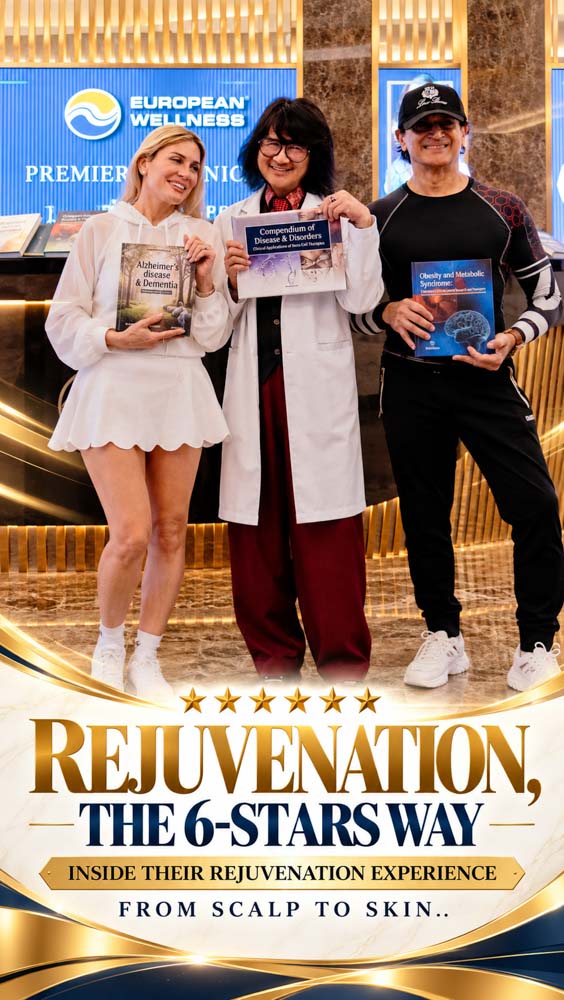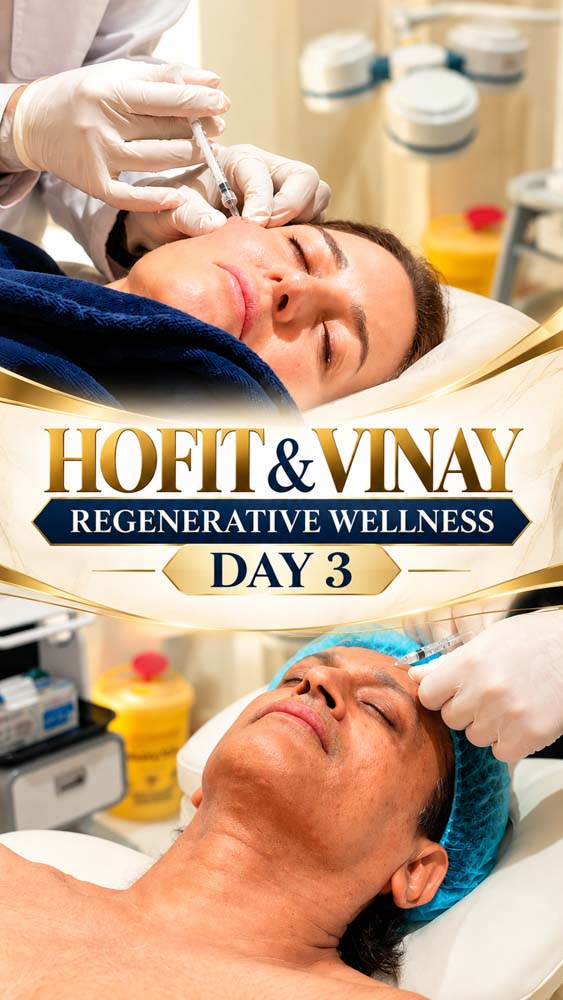
Hofit Golan and Vinay Kapoor’s 6-Stars Celebrities Program continues at European Wellness Premier Center (EWPC)…
From Brazil to Borneo: Dr. Jose Ebram Interviews Prof. Mike Chan on Precision Regenerative Medicine
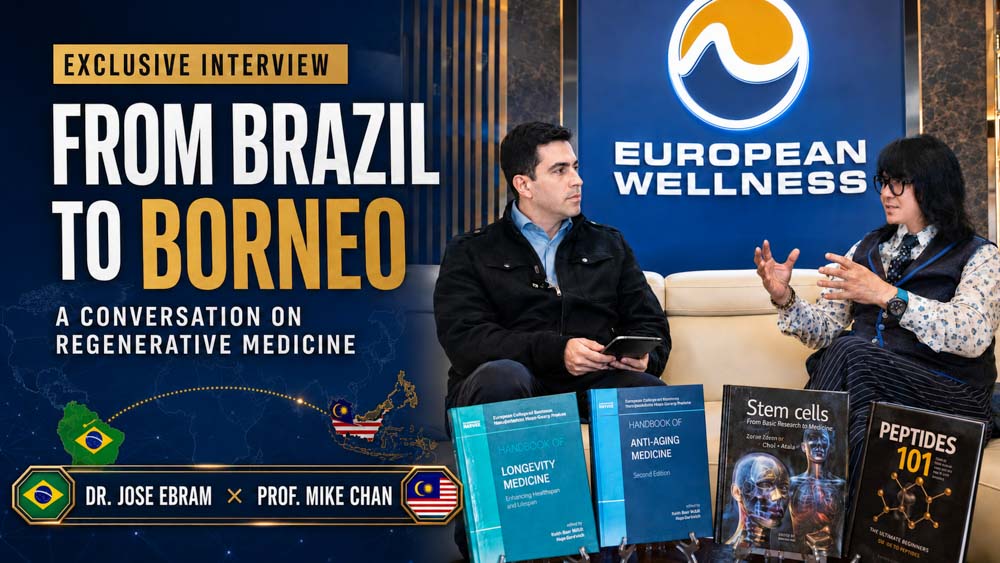
Brazilian physician Dr. Jose Ebram sat down with Prof. Dato’ Sri Dr. Mike Chan in Kota Kinabalu for an in-depth discussion on stem cells, treatment safety, and why greater precision is needed in regenerative medicine.
KOTA KINABALU, Sabah (July 29, 2026) — When Brazilian physician Dr. Jose Ebram returned to Malaysia for the second consecutive year, he came not only to attend an international medical workshop but also to seek answers directly from one of the field’s most experienced practitioners.
During an exclusive interview at the European Wellness Premier Centre in Kota Kinabalu, Dr. Ebram questioned Prof. Dato’ Sri Dr. Mike Chan about the principles, potential, and limitations of regenerative medicine.
Their wide-ranging conversation examined the differences between stem cell types, the importance of organ-specific approaches, safety considerations, and the role of medical education in developing this emerging field.
For Dr. Ebram, who traveled from São Paulo and came with a patient, at their request, to Malaysia for treatment, the interview was an opportunity to explore the scientific ideas behind European Wellness’ approach.
Among the conditions that attracted his interest were Alzheimer’s disease, Parkinson’s disease, and autism.
Precision Begins with Understanding the Cell
A central theme of the discussion was precision.
Prof. Mike said regenerative medicine should not be approached as though all stem cells perform the same function. Different cells have different biological characteristics, he explained, and the choice of therapy should be guided by the organ, tissue, and condition involved.
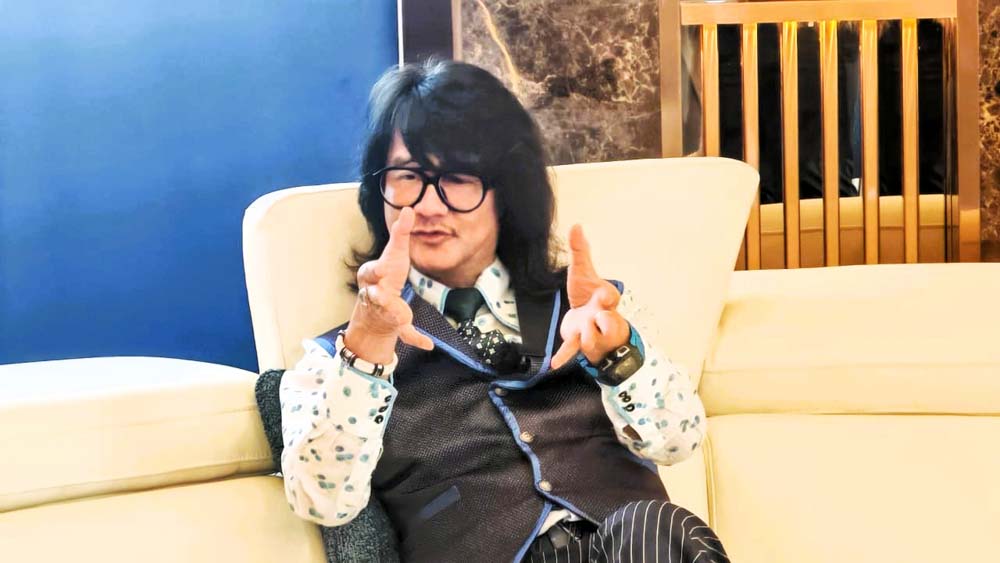
“Different types of stem cells have different characteristics,” he said. “It has to be very precise.”
He distinguished between multipotent cells, such as mesenchymal stem cells, and unipotent precursor or progenitor cells that follow a particular cellular lineage.
Mesenchymal stem cells are commonly obtained from sources such as bone marrow, fat, and umbilical-cord tissue. Prof. Mike said these cells may be useful in supporting tissue repair and cellular signaling, particularly in musculoskeletal applications.
However, he cautioned against assuming that one general cell type could automatically transform into every specialized cell required by the human body.
In his view, regenerative medicine should increasingly examine organ-specific precursor cells and related biological products.
“A liver for a liver, a kidney for a kidney, and a heart for a heart,” he said, summarizing the principle. “You have to give the right type of cells.”
Looking Beyond a Single Organ
Dr. Ebram also asked how regenerative medicine might be applied to chronic, degenerative, and age-related conditions.
Prof. Mike explained that older patients frequently present with several interconnected health problems rather than the deterioration of only one organ. A person with a neurological disorder, for example, may also experience declining immune function, reduced muscle and bone mass, hormonal changes, or metabolic problems.
This is why, he said, treatment planning should begin with a comprehensive assessment of the patient instead of concentrating exclusively on one diagnosis.
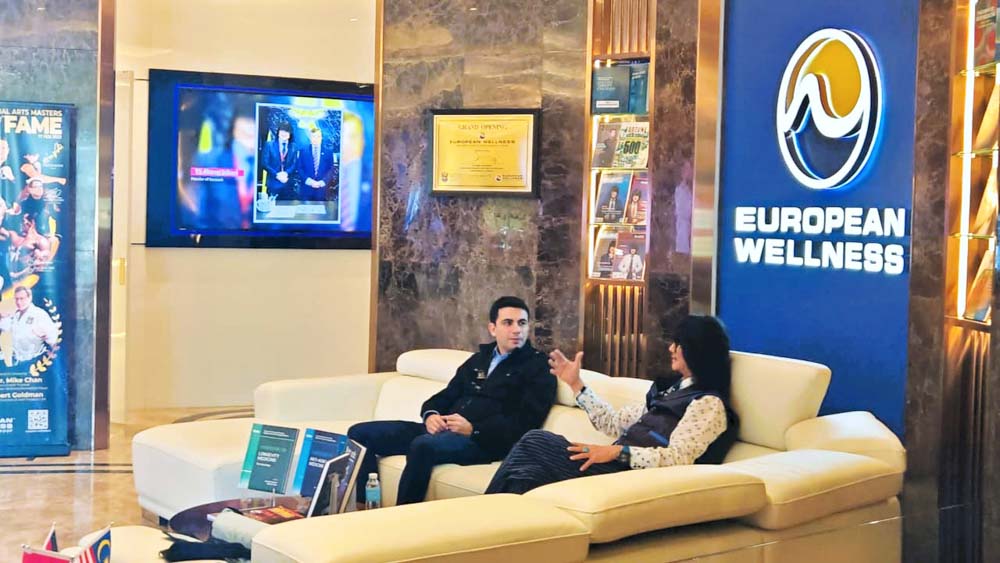
“You have to target every organ,” he said. “That is how I look at it.”
Prof. Mike described this as a systems-based approach to aging and disease. It considers how the brain, immune system, endocrine system, metabolism, muscles, and other organs influence one another.
He also stressed that regenerative interventions should not be presented as guaranteed cures. Outcomes can differ considerably according to the patient’s condition, age, disease progression, and the quality and suitability of the biological materials used.
Although Prof. Mike spoke optimistically about addressing conditions often described as difficult to treat, such claims remain areas of continuing scientific research and must be interpreted within the limits of available clinical evidence and applicable medical regulations.
Quality Matters More Than Cell Numbers
Another major subject raised by Dr. Ebram was safety.
Prof. Mike said discussions about stem cell therapy often focus heavily on the number of cells administered. In practice, he argued, quality, biological suitability, processing standards and laboratory handling may be more important than a large advertised cell count.
“It is not just the quantity of the cells,” he said. “It is the quality of the cells, which matters very much.”
He identified laboratory controls, trained scientists, experienced clinicians, and proper transportation as essential parts of a responsible program.
Living cellular materials are highly sensitive to temperature, storage, and handling conditions. Poor logistics or contamination could compromise their viability and potentially place patients at risk.
Prof. Mike also warned against products marketed as “stem cells” in ordinary capsules, powders, or creams. Living cells require carefully controlled conditions, he said, and consumers should be cautious about claims that do not explain the product’s composition, processing, and supporting evidence.
The freezing and thawing of cellular materials must also be carefully managed because the process can affect cell integrity and viability.
For these reasons, he said, patients and doctors should examine the credibility of the laboratory, its research record, its quality-control procedures, and the qualifications of the clinical team.
Safety Before Efficacy
Prof. Mike repeatedly returned to a fundamental medical principle: a proposed treatment must first be evaluated for safety before its possible effectiveness is considered.
“First in medicine, it must be safe,” he said. “Then we talk about efficacy.”
He said this requires cooperation between laboratory researchers and clinicians. Doctors may understand the patient’s medical needs, but scientists are needed to analyze, prepare, and verify biological materials.
A credible regenerative medicine program, therefore, cannot depend on a physician alone. It requires a multidisciplinary team supported by documentation, testing, research, and appropriate clinical oversight.
Prof. Mike said European Wellness has worked with academic and research partners to study its precursor cell preparations, peptides, and related biological materials. Nevertheless, research connected to a treatment provider should be critically evaluated, and individual therapies should be assessed against independent evidence and the regulations of the country where they are offered.
Education as the First Step
When Dr. Ebram asked about the availability of regenerative treatments outside Malaysia, Prof. Mike spoke about the rapid expansion of interest among physicians worldwide.
Having worked in regenerative and longevity medicine for more than four decades, he said he had lectured and collaborated with medical professionals across Asia, Europe, the Middle East, Africa, and the Americas.
Regulations, however, vary considerably between countries and even between jurisdictions within the same country. Some permit a wider range of clinical applications, while others restrict stem cell use to approved indications or formal research settings.
Prof. Mike said the long-term development of the field would depend on responsible regulation, qualified practitioners, and stronger professional education.
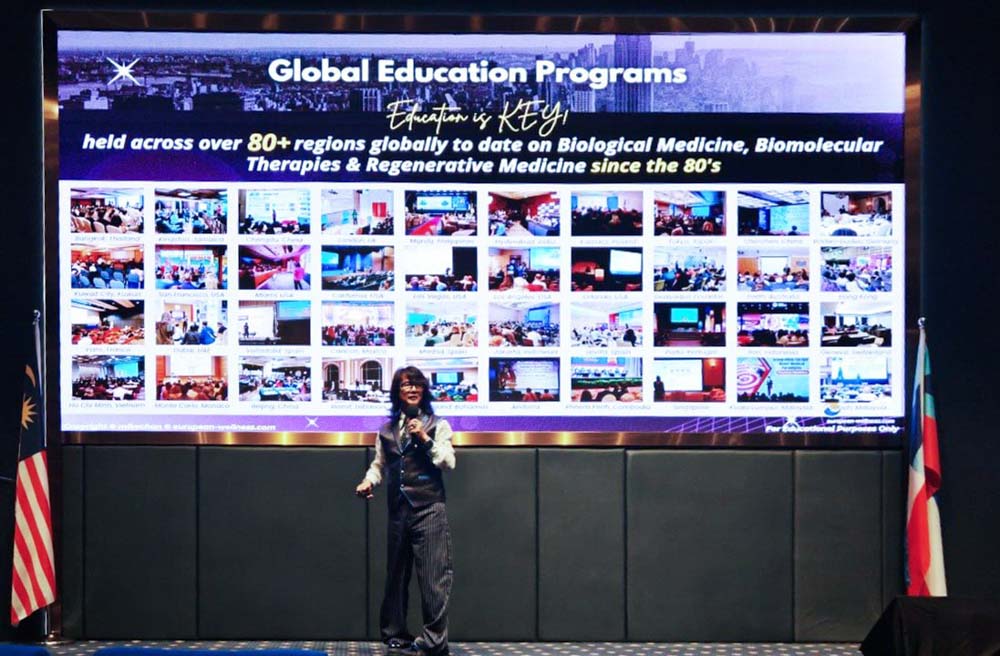
“Education is very important,” he said. “That is why I always believe my first step is education.”
The interview complemented Dr. Ebram’s participation in the European Wellness Academy’s three-day workshop on Longevity, Regenerative and Bio-Regenerative Medicine, held in Kota Kinabalu from July 30 to Aug. 1.
Dr. Ebram’s first exposure to European Wellness’ work came during a previous visit to Malaysia for the International Congress on Advanced Applications in Neurodevelopmental Disorders in 2025.
This time, he returned to examine the subject more closely, attend the training programme and observe how regenerative medicine is applied in a clinical setting.

For Dr. Ebram, the exchange represented something larger than a single interview. It formed part of a continuing effort to deepen his knowledge and explore how emerging medical approaches might eventually benefit patients in Brazil.
The encounter also reflected Kota Kinabalu’s growing role as a meeting point for international physicians interested in regenerative medicine, longevity science, and professional collaboration.
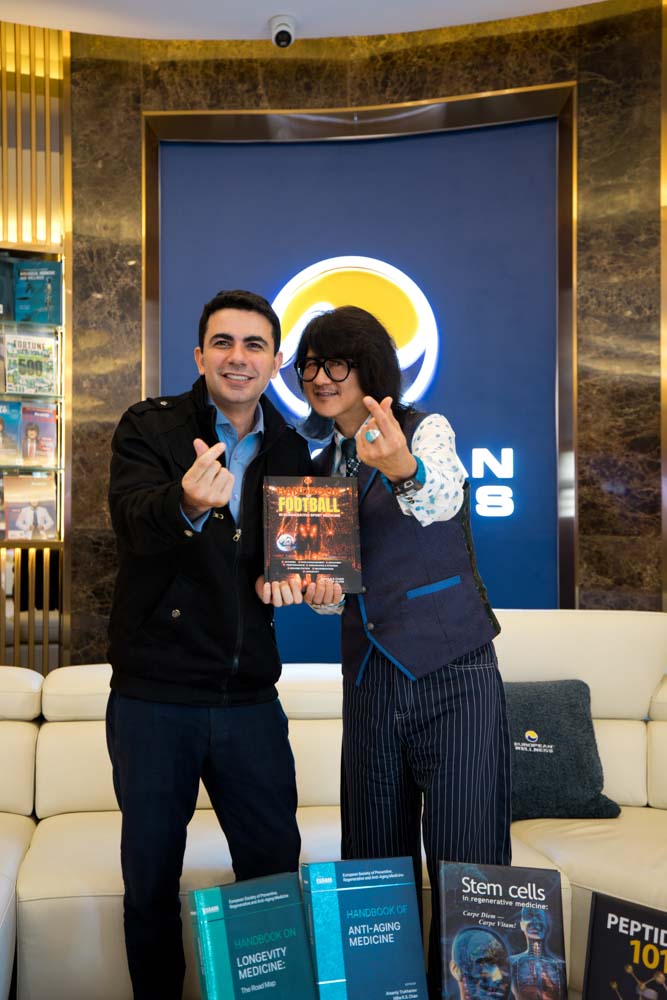
From Brazil to Borneo, the conversation between the two doctors carried a clear message: the future of regenerative medicine will depend not only on new technologies but also on scientific precision, responsible practice, and the willingness of medical professionals to keep learning.
Follow European Wellness:



Follow European Wellness Academy:
Follow Prof. Dato’ Sri Dr. Mike Chan:

Related Posts