
International entrepreneur and fashion personality Hofit Golan and global business leader, investor and author Vinay…
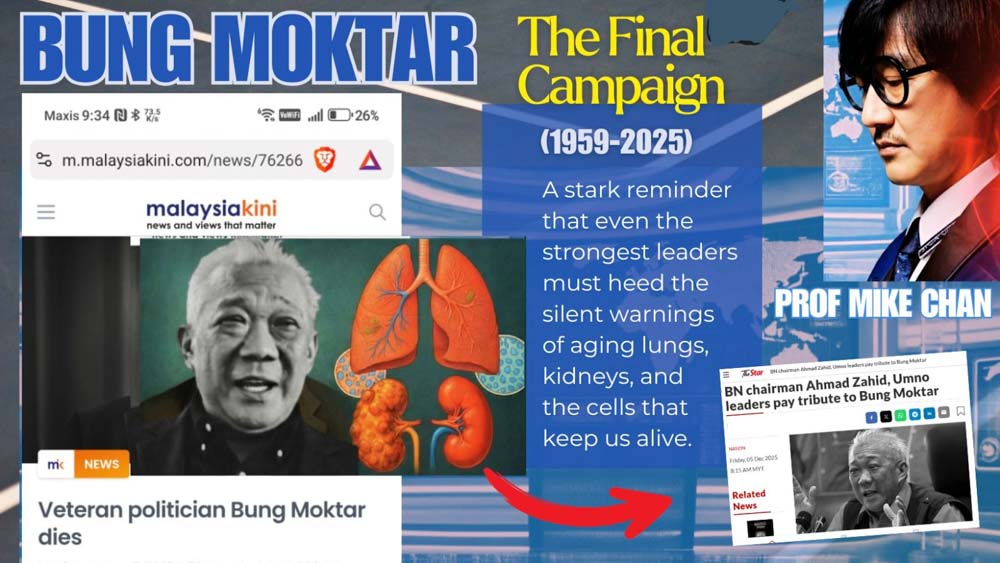
The Final Campaign: Bung Moktar’s Passing and the Silent Vulnerabilities That Affect the Strongest Among Us
The passing of Datuk Seri Bung Moktar Radin on December 5, 2025, offers more than a moment of mourning — it delivers a sobering reminder: while we chase position, power, and plans, God decides when the journey ends. Known for his strong voice in Sabah politics, Bung Moktar’s death is a personal loss felt by his supporters and constituents, and a clear call for reflection — especially for those who assume strength shields them from silent health threats.
On the night of his passing, Bung Moktar was receiving treatment at Gleneagles Hospital in Kota Kinabalu. He had been battling a serious lung infection and kidney failure, both of which worsened rapidly. What makes the case more concerning is that, despite showing signs of illness, he continued his re-election campaign during the 17th Sabah State Election — even as early as November 14, when symptoms were said to have already emerged.
Born on September 14, 1959, in Sukau, Kinabatangan, Bung Moktar’s political journey stretched across several decades. He entered public service as a youth leader in 1978 and rose to national recognition when he was elected as Kinabatangan Member of Parliament in 1999 — a seat he held continuously for over 25 years. He also served as Lamag assemblyman from 2020 until his death, winning re-election with a narrow majority in a six-way fight just weeks before his passing.
He served under seven Malaysian Prime Ministers, holding roles that included FELCRA Chairman, Deputy Chief Minister I of Sabah, and Works Minister. While he often courted controversy, his consistent focus on rural development and Sabah’s infrastructure made him a recognizable figure in Malaysia’s political sphere.
The Infection That Changed Everything
Although he was known for his bold demeanor and vigorous campaigning style, what eventually ended his life was not political defeat — it was the complications from a lung infection and progressive kidney failure. These conditions often strike silently, especially in individuals over 60, and escalate quickly when left unchecked.
As Prof. Mike Chan, a pioneer in regenerative and cellular medicine, points out:
“Politicians, like everyone else, must face the fact that organs begin to deteriorate earlier than we feel. Lungs and kidneys age quietly — and if unchecked, infection or inflammation can become fatal.”
In this case, the infection may have begun in mid-November — yet Bung Moktar chose to push on with public appearances and campaigning. The cumulative stress, compromised immunity, and internal organ strain likely tipped the balance too far.
Not Just Aging — But Ignored Aging
Many assume aging begins when symptoms appear. In truth, our lungs begin aging at 20, and kidneys can start declining by age 50 to 55. These shifts happen internally, often without obvious signs, until a trigger — like infection, stress, or overwork — pushes a weakened system into crisis.
“We cannot afford to ignore the early cellular decline,” says Prof. Mike Chan. “By the time symptoms arise, especially in older adults, damage may already be advanced.”
This is why he advocates organ-specific bioregenerative therapy: a targeted medical approach using precursor stem cells to restore and repair individual organs like the kidneys and lungs — long before irreversible collapse occurs.
A Wake-Up Call
While many saw Bung Moktar as a bold figure in politics, it’s crucial to understand that status, strength, and stamina are not shields against aging organs or infections. Even leaders — especially those in high-stress roles — need to prioritize their health.
Prof. Mike Chan emphasizes:
“Leadership is not only about serving the people. It must also include serving your own longevity — your lungs, your kidneys, your immune system. Without them, the mission ends.”
He further explains that regenerative protocols are not promotional, but practical:
“These therapies are built on understanding which organ is aging and how to intervene early — using the right precursor cells, peptides, and biological tools. Every dart must hit the right target.”
In Bung Moktar’s case, this message rings particularly true. Continued campaigning during active infection may have exacerbated internal inflammation and weakened vital organs further.
The Legacy and the Lesson
Bung Moktar Radin’s decades of service shaped infrastructure and policy across Sabah. His unapologetic style made him a standout in Parliament and in local governance. But his final chapter delivers a quiet truth: even the most relentless lives are still governed by biology.
Health must never be taken for granted — especially not by those entrusted with leading others.
As Prof. Mike Chan reflects:
“The lesson here isn’t only about death. It’s about delay. Had early regenerative support been in place, the body might have resisted longer. But time must be on your side — and only awareness can buy that time.”
BIODATA | Datuk Seri Bung Moktar bin Radin
Full Name: Bung Moktar bin Radin
Born: 14 September 1959, Sukau, Kinabatangan, Sabah
Died: 5 December 2025, Gleneagles Hospital, Kota Kinabalu
Age: 66
Political Career:
- USNO Kinabatangan Youth Chief (1978)
- UMNO Member since 1991
- UMNO Kinabatangan Division Chief (1996–2025)
- MP for Kinabatangan (1999–2025)
- Member of Sabah State Legislative Assembly for Lamag (2020–2025)
- Deputy Chief Minister I of Sabah
- Sabah Minister of Works (2020–2023)
- FELCRA Chairman (2013–2018)
- Chairman of Sabah UMNO & Sabah Barisan Nasional
- Served under 7 Prime Ministers of Malaysia
Family:
- Spouse: Zizie Ezette (m. 2009)
- Children: Aaric Zayn Izette, Nayla Nurjenna, Aalisa Belle Izette Bung Moktar
Education:
- SMK Sandakan
- Universiti Kebangsaan Malaysia
- Legacy: A champion of rural Sabah, infrastructure development, and federal representation.
Follow European Wellness:



Follow European Wellness Academy:
Follow Prof. Dato’ Sri Dr. Mike Chan:

Related Posts