European Wellness is elated to announce our participation in the 31st Macao International Trade and…
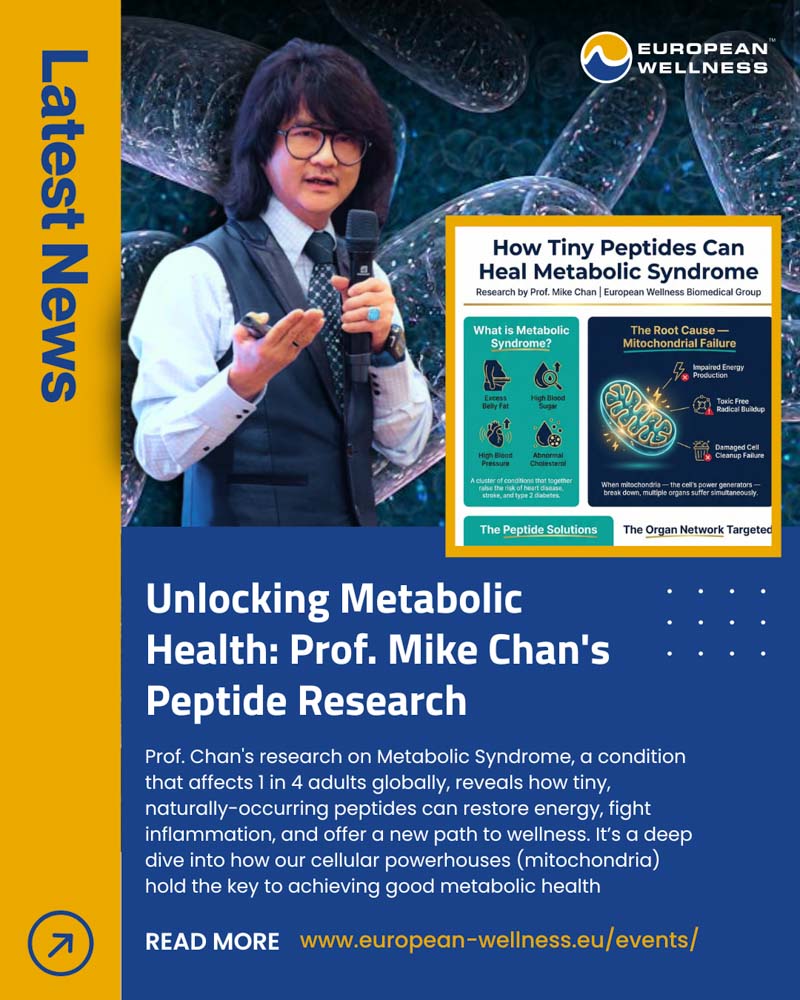
Prof. Mike Chan Illuminates a Path to Better Metabolic Health
In the intricate world of medical research, certain studies stand out for their potential to shift our understanding of complex diseases. A recent paper co-authored by Prof. Mike Chan, a distinguished scientist and the Founder and Chairman of the European Wellness Biomedical Group, does just that. Prof. Mike Chan — a Malaysian-born researcher with over 40 years of experience in stem cells, immunology, and bioregenerative medicine — has dedicated his career to uncovering the biological roots of chronic illness and developing targeted therapies that address those roots directly. His latest study, published in the American Journal of Biomedical Science & Research in March 2026, delves into the complexities of Metabolic Syndrome (MetS), a condition that affects roughly one in four adults worldwide. This article explores the key insights from this research, centering on Prof. Mike Chan’s pivotal role and the promising solutions it presents for a healthier future.
Metabolic Syndrome is More Than Just a Single Disease
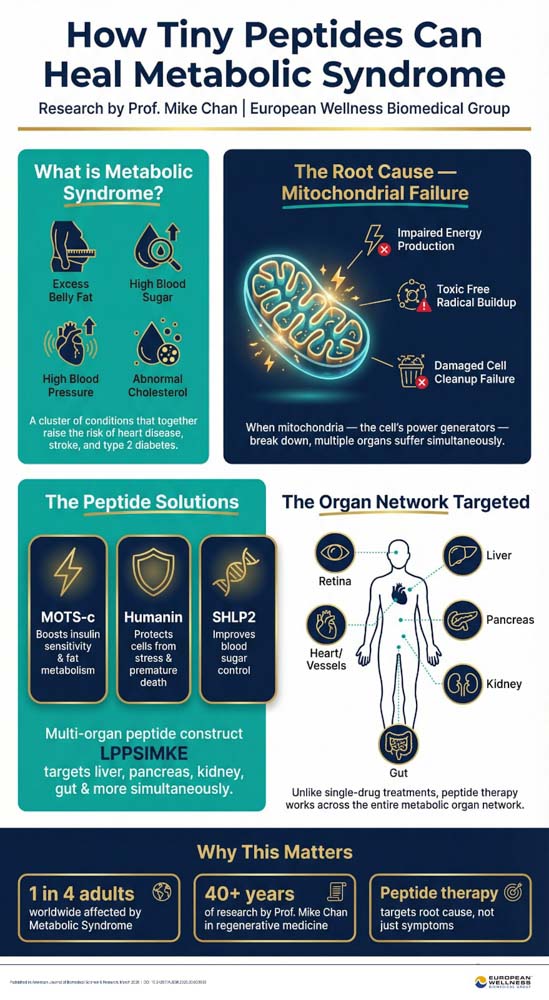
Metabolic Syndrome is not a single ailment but a cluster of conditions that occur together, increasing the risk of heart disease, stroke, and type 2 diabetes. Think of it like a car with multiple, interconnected problems — a faulty engine, worn-out brakes, and a failing electrical system. Individually, each issue is a concern, but together they spell disaster. Similarly, MetS is characterized by a combination of high blood pressure, high blood sugar, excess body fat around the waist, and abnormal cholesterol or triglyceride levels. For years, medical science has tackled these symptoms individually, prescribing separate medications for blood pressure, blood sugar, and cholesterol. However, the research by Prof. Mike Chan and his colleagues proposes a more unified and fundamental cause: a failure in our cells’ powerhouses, the mitochondria.
Mitochondria are microscopic structures found inside nearly every cell in the body. Their primary job is to convert the food we eat into usable energy, much like a power station converting fuel into electricity. When these tiny power stations malfunction — producing less energy, generating harmful waste products, and failing to renew themselves — the effects ripple outward across multiple organs simultaneously. Prof. Mike Chan’s research makes the compelling case that this widespread mitochondrial breakdown is the shared upstream driver of all the conditions we bundle together under the label of Metabolic Syndrome, a concept he explores further in his book, Obesity and Metabolic Syndrome: Bioregenerative Medicine with Stem Cell Therapy.
Tiny Peptides May Hold the Key to Restoring Cellular Energy
The study highlights a fascinating class of natural molecules as potential therapeutic agents: mitochondrial-derived peptides (MDPs). These are small proteins encoded directly within the mitochondria’s own genetic material, and they act as internal messengers that help the body sense stress, coordinate repair, and restore energy balance. Prof. Mike Chan’s research draws particular attention to three of these peptides and what each one does in practice.
The first, MOTS-c, has been shown in studies to improve the body’s sensitivity to insulin — the hormone responsible for regulating blood sugar. Poor insulin sensitivity is one of the hallmarks of MetS, and restoring it is central to breaking the cycle of metabolic dysfunction. Think of insulin as a key and the body’s cells as locks; in MetS, the locks become stiff and unresponsive. MOTS-c essentially oils those locks, allowing insulin to do its job again. The second peptide, Humanin, acts as a cellular bodyguard. It suppresses a process called apoptosis — the premature self-destruction of stressed cells — and helps protect the insulin-producing beta cells of the pancreas, the delicate lining of blood vessels, and the cells of the retina from damage caused by chronic metabolic stress. The third, SHLP2, has demonstrated the ability to improve blood sugar control by working through the brain’s hypothalamus, suggesting that mitochondrial signals can influence whole-body metabolism from the top down.
Beyond these individual peptides, Prof. Mike Chan’s research introduces the concept of multi-organ peptide constructs — specifically a formulation referred to as LPPSIMKE, which draws on biological material from the liver, pancreas, placenta, stomach, intestinal mucosa, kidney, and eye. Rather than targeting a single organ or pathway, this construct is designed to deliver coordinated signals across the entire network of organs that collectively sustain metabolic health. It is the difference between patching one hole in a leaking boat and reinforcing the entire hull.
A Future of Personalized Medicine for Metabolic Disorders is on the Horizon
One of the most significant contributions of Prof. Mike Chan’s research is the framework it provides for a more personalized approach to treating MetS. Rather than prescribing the same combination of drugs to every patient, clinicians could one day use advanced diagnostics — measuring circulating peptide levels, mitochondrial oxygen consumption, and specific inflammatory markers — to identify precisely which aspects of mitochondrial function have broken down in a given individual. Treatment could then be tailored accordingly, administering the specific peptides or peptide combinations most likely to restore balance in that patient’s unique metabolic profile.
This vision aligns closely with Prof. Mike Chan’s broader philosophy, developed over four decades of clinical and research work across Europe and Asia. Having treated heads of state, elite athletes, and patients from every walk of life, Prof. Mike Chan has long maintained that sustainable health requires addressing the biological mechanisms of disease, not merely suppressing its outward signs. His work with the European Wellness Biomedical Group — which spans research and development, biopharmaceutical manufacturing, physician education, and clinical centers across more than 80 countries — reflects that conviction at an institutional scale. Readers interested in his broader approach can explore his guide, Discovering a Healthier You: Prof. Mike Chan’s Guide to Understanding and Managing Your Weight.
The study is candid about the work that remains. Rigorous clinical trials incorporating pharmacokinetic data, mitochondrial functional endpoints, and randomized outcomes are still needed to confirm the safety and efficacy of peptide-based therapies in human populations. Nevertheless, the mechanistic foundation that Prof. Mike Chan and his co-authors have assembled is scientifically robust, biologically plausible, and practically actionable as a basis for the next generation of metabolic medicine.
In conclusion, the research spearheaded by Prof. Mike Chan offers a compelling new narrative for understanding and treating Metabolic Syndrome. By focusing on the central role of mitochondrial health and the therapeutic potential of naturally occurring peptides, it provides a scientifically grounded framework for developing more effective and targeted interventions. This work not only deepens our understanding of a condition that affects hundreds of millions of people worldwide, but also charts a credible course toward therapies that treat the disease at its source rather than managing its consequences.
Further Reading & References
- Chan, M. K. S., Wong, M. B. F., Casazza, K., & Lakey, J. R. T. (2026). Targeting Mitochondrial Bioenergetic Failure in Metabolic Syndrome: Translational Roles of Mitochondrial and Multi-Organ Peptides. American Journal of Biomedical Science & Research, 30(4). https://doi.org/10.34297/AJBSR.2026.30.003933
- Chan, M. K. S., Nalapko, Y., & Yartseva, S. (2022). Obesity and Metabolic Syndrome: Bioregenerative Medicine with Stem Cell Therapy. European Wellness Academy.
- Chan, M. K. S., Sardar, S. A., Rahim, M. S. A., Wong, M. B. F., Nalapko, Y., Yefimov, S., Skutella, T., & Lakey, J. R. T. (2025). Metabolic Syndrome Prevention Protocol: Musculoskeletal and Peripheral Nervous System Modalities. Journal of Neurological Sciences and Research, 5(1).
- Chan, M. K. S., Wong, M. B. F., Nalapko, Y., Casazza, K., Klokol, D., Nishkumai, O., Jenkins, I., & Lakey, J. R. T. (2025). Klotho, Obesity, and Inflammation: A Triad of Metabolic Regulation. American Journal of Biomedical Science & Research, 25(6).
- Lakey, J. R. T., Alexander, M., Chan, M. K. S., Nalapko, Y., Wong, M. B. F., & Cox, D. C. T. (2024). Advances in Stem Cell and Regenerative Therapies in Autoimmune and Metabolic Diseases: Implications for Healthy Longevity. International Journal of Translational Science, 2024(2).
- Chan, M. K. S. Discovering a Healthier You: Prof. Mike Chan’s Guide to Understanding and Managing Your Weight. European Wellness Academy.
- Chan, M. K. S., Casazza, K., Wong, M. B. F., Klokol, D., & Lakey, J. R. T. (2026). Metabolic Syndrome as a Multisystem Network Disorder: Therapeutic Potential of Regenerative Peptide Biology. Neurology – Research & Surgery, 9(1).
Follow European Wellness:



Follow European Wellness Academy:
Follow Prof. Dato’ Sri Dr. Mike Chan:

Related Posts