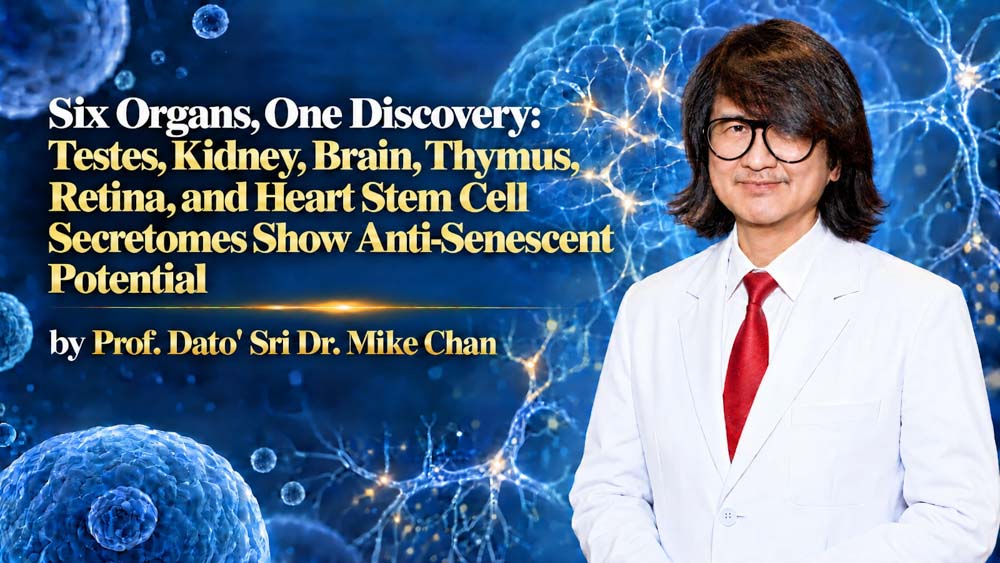
Cellular ageing is often spoken about as though it were a single clock ticking down…

Stem Cell Breakthrough Offers Hope for Spinal Cord Injury Patients
Pioneering Study from Keio University Shows Promise
In a pioneering clinical study, Japanese scientists from Keio University have reported that stem cell treatments have led to improved motor functions in patients with spinal cord injuries, offering new hope for effective therapies for paralysis resulting from such injuries. [1]
The research team utilized induced pluripotent stem cells (iPS), which are mature cells reprogrammed to a juvenile state capable of differentiating into various cell types. In this study, iPS-derived neural stem cells were implanted into the spinal cords of four patients. After a year of monitoring, two patients exhibited improved motor function scores, and no serious adverse events were observed in any of the participants.
Expert Insights from a Regenerative Medicine Pioneer
Prof. Mike Chan, founder and chairman of European Wellness Biomedical Group, hailed the study as a monumental advancement in regenerative medicine. Having treated numerous high-profile individuals, from celebrities to heads of state, Prof. Chan brings a wealth of experience to the field.
“This breakthrough underscores the transformative potential of stem cell therapies in addressing previously irreversible conditions like spinal cord injuries,” he said.
Prof. Chan emphasized the significance of targeting multiple aspects of the nervous system in treatment protocols. “A comprehensive approach involves not only the spinal cord but also the central nervous system, cerebellum, and peripheral muscles to achieve optimal recovery,” he explained. “By addressing these interconnected systems, we can enhance neural regeneration and functional restoration.”
He further elaborated on the multifaceted benefits of stem cell therapy, stating, “Beyond neuronal regeneration, stem cells have the capacity to modulate inflammation, promote remyelination, and create a conducive environment for neural repair.” This holistic approach aligns with the comprehensive protocols outlined in the Compendium of Diseases & Disorders handbook.
Implications for the Future
The positive outcomes from this study suggest that stem cell therapy could become a viable treatment option for spinal cord injuries, a condition that has long lacked effective interventions. The absence of serious adverse events further supports the safety of this approach, paving the way for larger clinical trials and potential widespread application.
Prof. Mike Chan expressed optimism about the future of regenerative medicine. “Continued research and clinical trials will be crucial to validate these findings and facilitate the integration of stem cell therapies into standard medical practice,” he noted. “This study brings us one step closer to transforming the lives of patients with spinal cord injuries.”
Conclusion
The Keio University study marks a significant step toward developing effective treatments for paralysis due to spinal cord injuries. With further research and collaboration, stem cell therapies hold the promise of revolutionizing the field of regenerative medicine and offering hope to countless individuals affected by such debilitating conditions.
For more information on advancements in stem cell therapies and their applications in regenerative medicine, visit the European Wellness Biomedical Group’s website.
Explore European Wellness Biomedical Group’s vision restoration programs and discover how regenerative medicine is transforming lives.
References
Follow European Wellness:



Follow European Wellness Academy:
Follow Prof. Dato’ Sri Dr. Mike Chan:

Related Posts