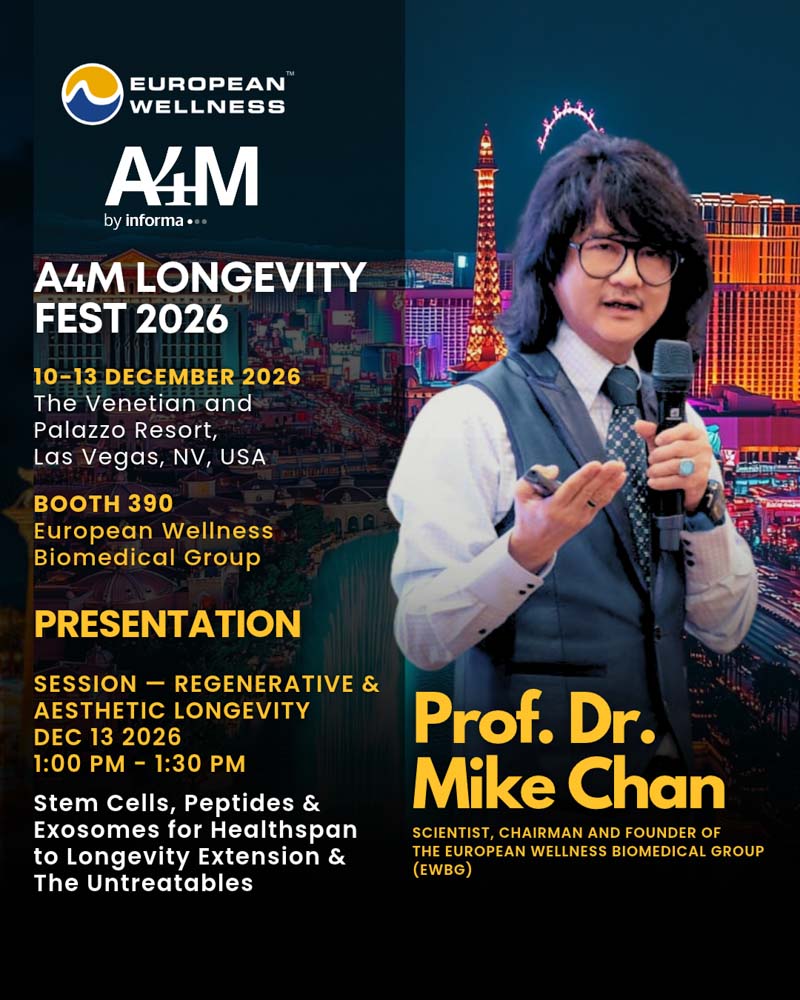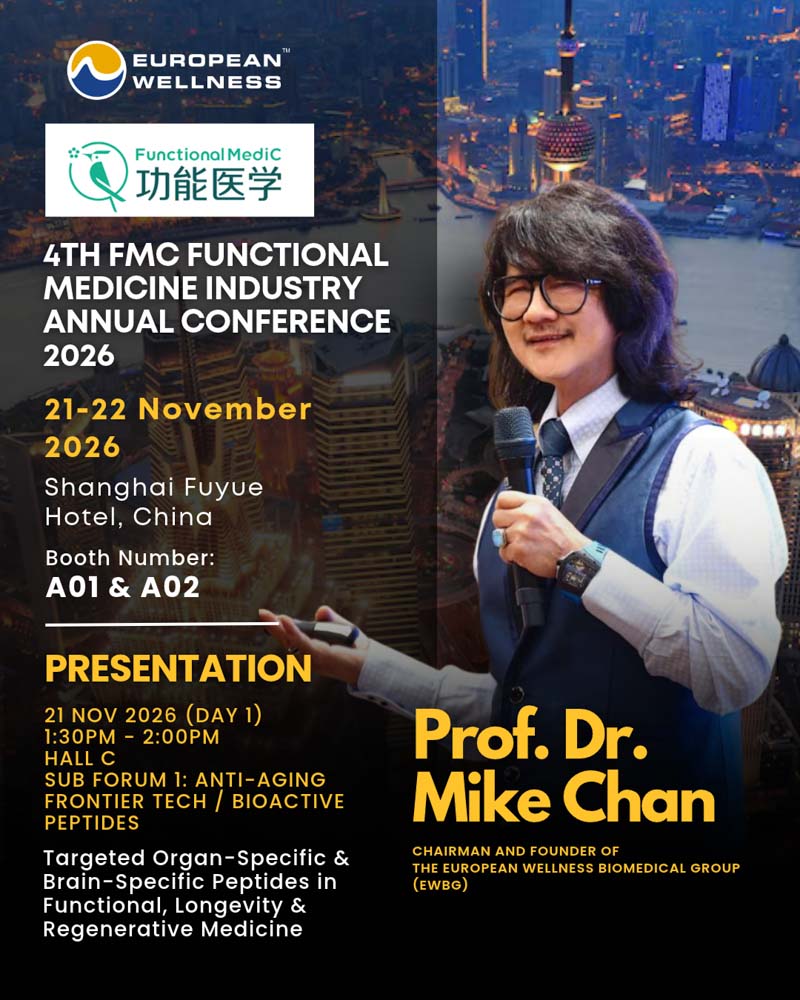
Get ready for a thrilling showcase of innovation and discovery! European Wellness is excited to…
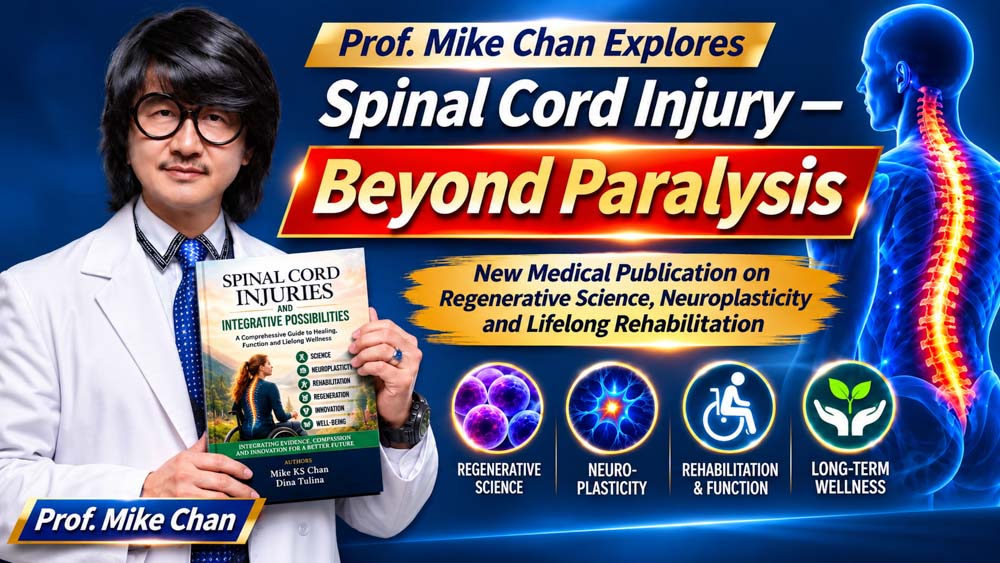
Beyond Paralysis: Prof. Mike Chan Explores New Frontiers in Spinal Cord Injury Recovery
KUALA LUMPUR, Malaysia (Nov 19, 2026) – Once regarded almost exclusively as an irreversible neurological tragedy, spinal cord injury is being reframed by modern neuroscience and integrative medicine as a dynamic, multisystem condition with measurable potential for functional adaptation and lifelong wellness.
A 2026 medical guide, Spinal Cord Injuries and Integrative Possibilities: A Comprehensive Guide to Healing, Function and Lifelong Wellness, co-authored by regenerative medicine specialist Professor Dato’ Sri Dr. Mike K.S. Chan and Dr. Dina Tulina, brings together clinical diagnostics, rehabilitation, cellular biology, and emerging therapeutic technologies for clinicians, researchers, students, and families.
Beyond the Initial Shock: A Multisystem View
Damage to the spinal cord interrupts motor, sensory, and autonomic pathways between the brain and body, affecting systems far beyond movement—including breathing, circulation, digestion, bladder and bowel control, bone density, and mental health.
The book highlights two distinct stages of injury: an immediate mechanical primary insult followed by a secondary biological cascade of inflammation, ischemia, oxidative stress, excitotoxicity, mitochondrial dysfunction, and demyelination that can expand damage over days, weeks, and even months. At the same time, improved trauma care, surgical stabilization, and rehabilitation mean more people are living long lives with chronic spinal cord conditions, making lifelong health maintenance and secondary complication prevention vital.
Diagnosis, Classification, and Lifelong Care
Early recognition, spinal precautions, primary trauma stabilization (the ABCDE approach), standardized neurological grading via the International Standards for Neurological Classification of Spinal Cord Injury (ISNCSCI/ASIA), and complementary imaging such as CT and MRI form the backbone of early care.
Rather than treating spinal cord injury as a static lesion, the authors emphasize a continuous multidisciplinary model spanning acute hospital stabilization, early and lifelong rehabilitation, psychological and vocational support, and active wellness. They also note a shifting global picture: while high-energy trauma in younger people remains significant, aging populations and low-energy falls or degenerative conditions are increasingly driving spinal cord disorders worldwide.
Stem Cells, Nano-Peptides, and Mitochondria
A central theme of the volume is moving from viewing recovery solely through structural replacement toward optimizing the biological environment through neuroprotection, neuroplasticity, remyelination, angiogenesis, and immune balance.
In the book, Prof. Mike Chan outlines an integrative, organ- and system-aware perspective that looks at targeted cellular roles, bioactive nano-peptides, and mitochondrial health. Discussing cellular and regenerative strategies, Chan highlights how stem cells act largely through broader signaling rather than simple cell replacement alone:
“In the context of SCI, SCs are increasingly recognized not simply as replacement cells, but as dynamic biological regulators that influence the injured microenvironment through extensive cellular communication and molecular signaling.”
Expanding on that paracrine communication role in tissue repair and recovery, Chan writes:
“Current evidence suggests that the greatest biological contribution of SCs may arise from their paracrine activity, whereby they release a broad spectrum of growth factors, cytokines, chemokines, extracellular vesicles, microRNAs, and bioactive proteins. These molecules regulate inflammation, neuronal survival, angiogenesis, mitochondrial function, extracellular matrix remodeling, synaptic plasticity, and endogenous repair mechanisms. Consequently, contemporary regenerative neuroscience increasingly views SCs as biologicals that modify the injury microenvironment rather than merely replacing damaged neurons.”
Chan also underscores how cellular recovery depends on coordinated action across multiple interconnected biological systems rather than a single isolated switch:
“Rather than acting through a single pathway, SCs influence multiple interconnected biological systems that collectively determine the microenvironment of the injured spinal cord.”
Addressing the high energy demands of the injured central nervous system and the role of cellular powerhouses, Chan notes:
“Modern neurobiology increasingly recognizes mitochondria not merely as energy-producing organelles but as central regulators of cellular resilience, neuroplasticity, inflammation, vascular adaptation, and tissue repair. Their biological functions influence nearly every stage of SCI, from the acute injury response to long-term neurological adaptation.”
And on preserving cellular energy and resilience over time, Chan emphasizes:
“Preserving mitochondrial integrity and supporting mitochondrial homeostasis are now regarded as fundamental components of the biological processes that underpin neurological resilience, cellular adaptation, and long-term functional recovery following spinal cord injury.”
Physiotherapy and Emerging Modalities
The book underscores that physiotherapy is far more than passive stretching or basic mobility—it drives activity-dependent neuroplasticity, motor learning, cardiovascular and respiratory conditioning, and prevention of contractures, pressure injuries, and osteoporosis across acute, subacute, and chronic stages.
Alongside conventional rehabilitation and assistive technologies—such as functional electrical stimulation, robotics, virtual reality, and exoskeletons—the authors examine investigational and adjunctive modalities including hyperbaric oxygen therapy (HBOT), medical ozone–oxygen therapy, and transcranial direct current stimulation (tDCS), while noting that clinical evidence for several emerging biological and device-based approaches remains evolving and requires careful, individualized medical guidance.
Key Takeaways for Readers
- Multisystem impact: Spinal cord injury affects breathing, circulation, metabolism, bladder and bowel function, skin, and mental well-being—not just movement or sensation.
- Microenvironment matters: Modern neurobiology emphasizes neuroprotection, neuroplasticity, immune balance, and mitochondrial health alongside structural care.
- Lifelong rehabilitation: Structured physiotherapy and interdisciplinary care across acute, subacute, and chronic phases help preserve function, prevent complications, and support independence.
- Evidence and balance: While regenerative and neuromodulatory tools hold promise, many novel interventions remain investigational and should be pursued alongside proven care and professional medical advice.
Get Your Copy Today
Spinal Cord Injuries and Integrative Possibilities
References
- Chan, M. K. S., & Tulina, D. (2026). Spinal Cord Injuries and Integrative Possibilities: A Comprehensive Guide to Healing, Function and Lifelong Wellness. Gatekeeper Press / European Wellness Academy. ISBN: 978-1-6629-8227-9 (hardcover), 978-1-6629-8228-6 (eISBN); LCCN: 2026955554; DOI: https://doi.org/10.69669/yg3910.
- Key studies and sources cited in the excerpted sections:
- Ahuja, C. S., Wilson, J. R., Nori, S., et al. (2017). Traumatic spinal cord injury. Nature Reviews Disease Primers, 3, 17018. https://doi.org/10.1038/nrdp.2017.18.
- Bayram-Weston, Z., et al. (2022). Nervous system 4: the peripheral nervous system. Nursing Times, 118(6).
- Belov Kirdajova, D., Kriska, J., Tureckova, J., & Anderova, M. (2020). Ischemia-triggered glutamate excitotoxicity from the perspective of glial cells. Frontiers in Cellular Neuroscience, 14, 51.
- Cheng, Y., Wang, R., Zhou, X., Jiang, H., Li, M., & Wei, X. (2025). Nanocarrier-mediated drug delivery systems for spinal cord injury treatment. Frontiers in Bioengineering and Biotechnology, 13, 1660264.
- Chopra, M., & Kumar, H. (2025). Navigating the complexities of spinal cord injury: an overview of pathology, treatment strategies and clinical trials. Drug Discovery Today, 30(6).
- Courtine, G., & Sofroniew, M. V. (2019). Spinal cord repair: advances in biology and technology. Nature Medicine, 25, 898–908.
- Hu, X., Xu, W., Ren, Y., et al. (2023). Spinal cord injury: molecular mechanisms and therapeutic interventions. Signal Transduction and Targeted Therapy, 8, 245.
- Kim, M., Jeong, W., Jang, S., Park, J. H., Bae, Y., & Lee, S. W. (2025). Spinal cord injury epidemiology and causes: a worldwide analysis with 2050 projections. Healthcare, 13(20), 2552.
- Liao, Z., Bao, Q., Saijilahu, Chimedtseren, C., Tumurbaatar, K., & Saijilafu. (2025). Research progress on biomaterials for spinal cord repair. International Journal of Nanomedicine, 20, 1773–1787.
- Lu, Y., Shang, Z., Zhang, W., et al. (2024). Global incidence and characteristics of spinal cord injury since 2000–2021: a systematic review and meta-analysis. BMC Medicine, 22, 285. https://doi.org/10.1186/s12916-024-03514-9.
- Müller-Jensen, L., Ploner, C. J., Kroneberg, D., & Schmidt, W. U. (2021). Clinical presentation and causes of non-traumatic spinal cord injury: an observational study in emergency patients. Frontiers in Neurology, 12, 701927.
- Olushanu, M. (2025). A comprehensive overview of spinal cord injury (SCI) experimental models. Premier Journal of Neuroscience, 3, 100008.
- Slater, P. G., Domínguez-Romero, M. E., Villarreal, M., et al. (2022). Mitochondrial function in spinal cord injury and regeneration. Cellular and Molecular Life Sciences, 79, 239.
Follow European Wellness:



Follow European Wellness Academy:
Follow Prof. Dato’ Sri Dr. Mike Chan:

Related Posts