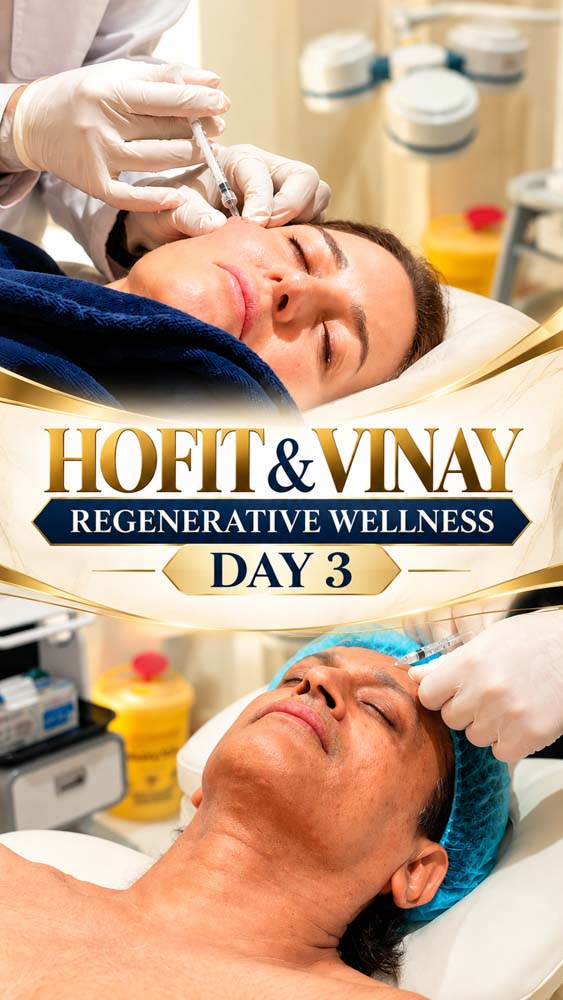
Immerse yourself in a glamorous landscape of emerging trends and lucrative opportunities at Cosmoprof Asia…
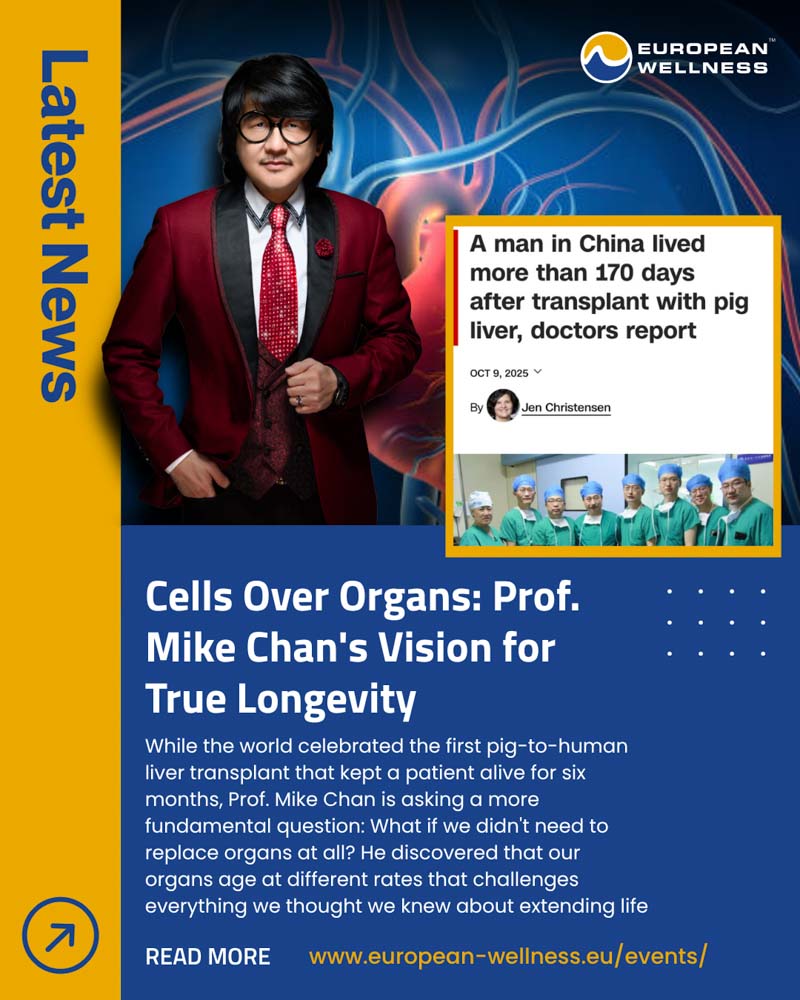
Prof. Mike Chan Shows Why Cellular Regeneration Holds More Promise Than Organ Transplants for Human Longevity
In a recent medical development, a 71-year-old man in China lived for nearly six months after receiving a liver, transplanted from a genetically modified pig. This case is the world’s first of its kind for therapeutic use in a living person, and highlights both the potential and the significant challenges of using animal organs to solve the critical shortage of human organs for transplantation. While the patient ultimately succumbed to complications, the transplanted liver functioned for over a month, a notable achievement in the field of xenotransplantation. This event has brought the conversation about extending human life into sharp focus, echoing a private conversation between world leaders about living to 150 years old through organ replacement. However, Prof. Mike Chan, a leading figure in regenerative medicine, suggests that the future of longevity may not lie in replacing organs, but in regenerating them from within.
The pig liver transplant in China demonstrated both the potential and the profound limitations of organ replacement
The case of the pig liver transplant, detailed in the Journal of Hepatology, is a significant step in exploring alternatives to human organ donation. The patient, suffering from liver cancer and hepatitis B, was not a candidate for a human liver. The genetically modified pig liver offered a last resort, and for a time, it worked. This demonstrates that with genetic modification, an animal organ can perform essential functions in a human body. However, the patient’s eventual death from complications, a condition known as xenotransplantation-associated thrombotic microangiopathy (xTMA), underscores the immense hurdles that remain. The human immune system is a formidable barrier, and even with genetic modifications, the risk of rejection and other complications is high. This case, along with previous pig heart and kidney transplants, shows that while organ replacement can extend life for a short period, it is not a perfect solution. It is a complex and risky procedure that does not address the underlying process of aging.
Prof. Mike Chan’s research reveals that organs age at different rates and require precision cellular interventions
Prof. Mike Chan, Chairman of the European Wellness Biomedical Group, has spent four decades pioneering a different approach. His work is built on the understanding that longevity is not just about replacing failing parts, but about maintaining the health of the body at its most fundamental level: the cell. Prof. Chan’s research offers a compelling alternative to the organ replacement model. He explains that the focus should be on “healthspan,” the period of life spent in good health, rather than just lifespan. His perspective is grounded in extensive research, including the creation of the Human Cytology Atlas, which mapped over 400 distinct human cell types, and a landmark 2025 study on organ aging.
This study, “Mapping Human Organ Aging: From Cellular Mechanism to Clinical Applications for Precision Medicine in Healthspan to Lifespan,” revealed a crucial insight: our organs do not age uniformly. Prof. Chan and his team discovered what they term a “mosaic of aging.” For example, the cardiovascular and immune systems may begin to decline earlier in life, while the liver and kidneys show a more staggered vulnerability. This explains why simply transplanting a new organ doesn’t reverse the aging process. It’s like replacing a single worn-out part in a car while the rest of the engine continues to age. Prof. Chan’s work suggests that a more effective approach is to understand and address the specific aging patterns of each organ at the cellular level.
To illustrate this, think of the human body as a house. The traditional organ transplant approach is like waiting for a wall to crumble and then replacing the entire wall. Prof. Chan’s approach is to inspect the individual bricks (the cells) and repair or replace them as they show signs of wear. By strengthening the fundamental building blocks, the entire structure remains sound for much longer. “The future of medicine is transplantation of cells, not organs,” Prof. Chan states. “Longevity depends on healthspan, and healthspan relies on cellspan.”
Targeted organ-and-brain-specific precursor stem cell therapies offer a practical pathway to regenerate organs from within rather than replacing them entirely
Building on this cellular-level understanding of aging, Prof. Chan and his team have developed practical protocols that are already being explored in clinical settings. These are not speculative future technologies but tangible applications of regenerative medicine. The core idea is to use the body’s own regenerative capabilities to heal and rejuvenate organs.
One of the key solutions is Targeted Organ-and-Brain-Specific Precursor Stem Cell Therapies. Instead of a whole organ transplant, this involves introducing specific types of precursor cells to repair a particular organ. For example, neural precursor cells can be used to support brain health, cardiomyocytes for the heart, and hepatocytes for the liver. These cells can be delivered non-invasively through intramuscular or intravenous injections, avoiding the risks and complexities of major surgery.
Another important component is Biomarker Monitoring. Through advanced techniques like plasma proteomics, it is possible to detect the subtle signs of cellular decline in organs long before they lead to noticeable symptoms or failure. This allows for early, proactive interventions. For instance, if biomarkers indicate that liver cells are beginning to age and lose function, a targeted therapy with hepatocyte precursor cells could be administered to regenerate the liver from within, potentially preventing the need for a transplant down the road.
This approach is the essence of Precision Medicine, where treatments are tailored to the unique cellular profile of each individual. It is a shift from a one-size-fits-all model to a personalized strategy that prioritizes not just a long life, but a long and healthy one. As Prof. Mike Chan often says, “It is not enough to live to 150 if 50 of those years are in decline. Healthspan is the true measure of longevity.”
While the dream of extending human life continues to capture the imagination, the work of Prof. Mike Chan and his colleagues points toward a more scientifically grounded and holistic path. Rather than focusing on replacing organs, the future of longevity may well be found in the remarkable power of our own cells to regenerate and renew.
To read more about the research on organ aging, you can access the paper at the following link: https://european-wellness.eu/publications/human-organ-lifespan-healthspan/
References
- Pig-to-human liver transplant: https://www.independent.co.uk/news/health/pig-human-liver-transplant-b2842205.html
- Future of Longevity: https://european-wellness.eu/events/future-longevity-lies-in-cells/
- Beyond Immortality: https://finance.yahoo.com/news/beyond-immortality-european-wellness-biomedical-203900953.html
- Human Organ Lifespan and Healthspan Publication: https://european-wellness.eu/publications/human-organ-lifespan-healthspan/
Follow European Wellness:



Follow European Wellness Academy:
Follow Prof. Dato’ Sri Dr. Mike Chan:

Related Posts