Cellular ageing is often spoken about as though it were a single clock ticking down…
Silicosis A Deadly Disease and The Promise of Stem Cell Therapy
A Commentary by Prof. Mike Chan Chairman & Founder, European Wellness Biomedical Group | Chief Researcher, FCTI Precursor Stem Cells, Germany
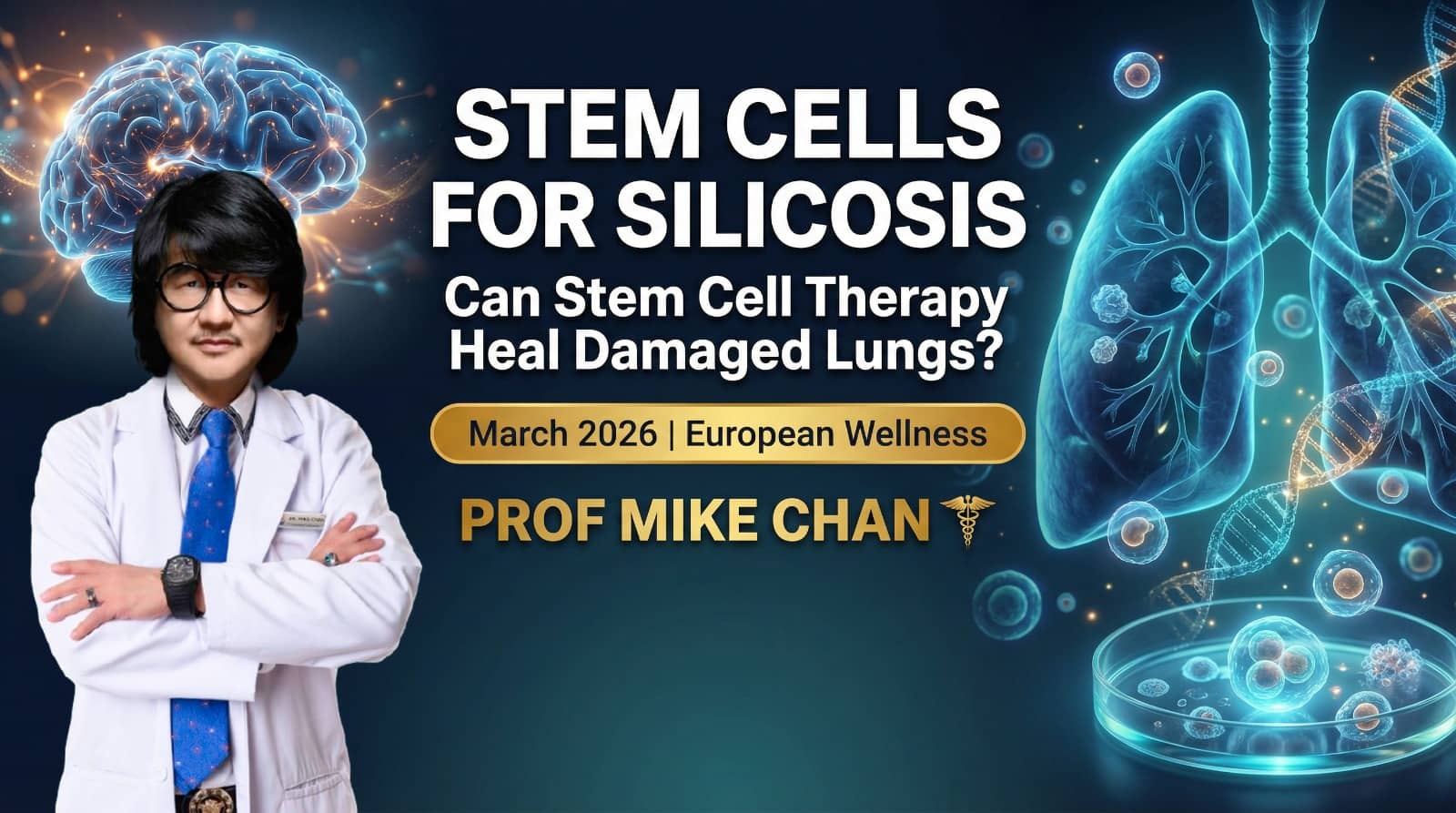
Silicosis is a disease that most people have never heard of, yet it quietly destroys the lives of millions of workers around the world. It is an irreversible lung disease caused by the inhalation of tiny particles of crystalline silica, a mineral found abundantly in sand, rock, and quartz. Workers in mining, construction, quarrying, and manufacturing are most at risk, and for decades, the medical community has been able to offer them little more than palliative care. There is no cure. There has been no way to reverse the damage. Until now, perhaps.
A recently published article in the American Medical Journal (AMJ), titled “Stem Cell Therapies Show Promise For Silicosis,” [1] has brought to the fore a compelling body of research that could change the trajectory of this devastating disease. As Prof. Mike Chan, a practitioner and researcher in regenerative medicine with over four decades of clinical experience treating patients across the globe, including celebrities, heads of state, and elite sports athletes, the findings of this study resonate deeply with the work being done at the European Wellness Biomedical Group. This commentary aims to break down the science for a general audience, highlight what is truly significant about this research, and present a broader, integrated framework for managing silicosis and related lung diseases.
Silicosis The Silent Killer That Steals Your Breath
To understand why this research matters, one must first understand what silicosis does to the human body. Imagine your lungs as two soft, elastic sponges. Every time you breathe, these sponges expand and contract, drawing in oxygen and expelling carbon dioxide. Now imagine that, day after day, you are inhaling microscopic shards of glass. These particles, invisible to the naked eye, lodge themselves deep within the lung tissue. The body’s immune system recognises them as foreign invaders and mounts an attack. But unlike bacteria or viruses, silica particles cannot be destroyed. The immune system keeps fighting, and in doing so, it triggers a cycle of chronic inflammation.
Over time, this relentless inflammation causes the formation of scar tissue, a process known as fibrosis. The lungs, once soft and elastic, become stiff and scarred. Breathing becomes laboured. The body is starved of oxygen. In advanced cases, the condition can lead to respiratory failure, and it also significantly increases the risk of developing tuberculosis and lung cancer. This is the reality faced by an estimated 2.3 million workers globally who are exposed to dangerous levels of silica dust.
The biological mechanisms driving this destruction are now well understood. The research highlighted in the AMJ article identifies three key pathological pathways that stem cell therapy can target. The first is the NLRP3 inflammasome, which acts like an alarm system in the body’s immune cells. When silica particles are detected, this alarm is triggered, setting off a cascade of inflammation. The second is the TGF-β1/Smad signalling pathway, which drives the fibrosis process, essentially telling the body to keep producing scar tissue. The third is an imbalance in Th1/Th2 immune regulation, which disrupts the body’s ability to mount a balanced immune response. Current treatments can only slow these processes down. Stem cell therapy, according to this research, has the potential to actively intervene in all three.
Silicosis is not just a lung disease. It is a systemic failure of the body’s ability to protect itself. When we understand the mechanisms, we can begin to design therapies that work with the body, not just against the symptoms. — Prof. Mike Chan
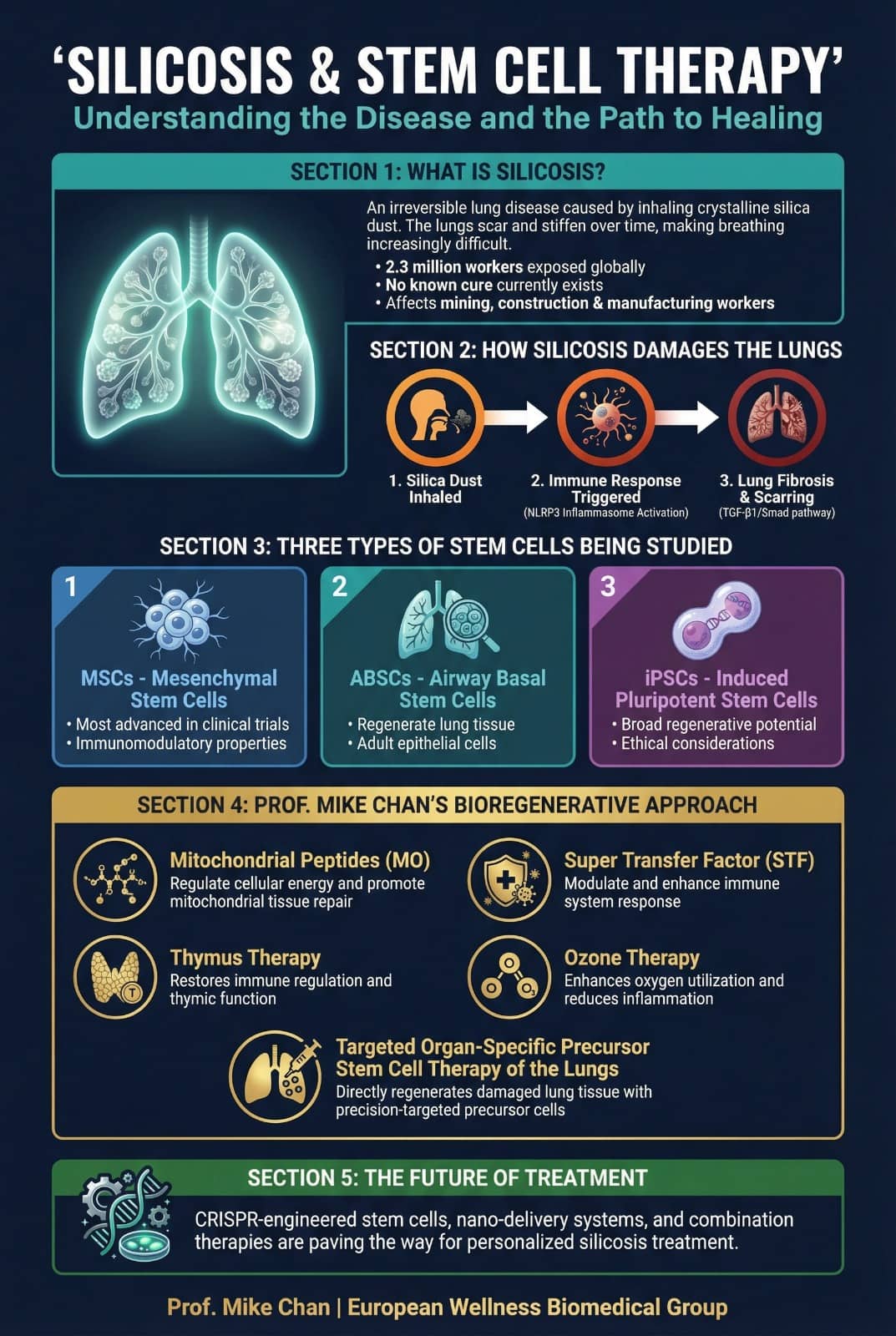
Prof. Mike Chan’s Bioregenerative Approach A Holistic Solution
While the stem cell research discussed in the AMJ article represents a significant step forward, Prof. Mike Chan’s approach at the European Wellness Biomedical Group goes further. Rather than relying on a single therapeutic modality, Prof. Mike Chan advocates for a comprehensive, integrated bioregenerative medicine programme that addresses the root causes of lung disease at multiple levels simultaneously.
We are not just treating the disease; we are treating the person. A holistic approach that combines the best of science and nature is key to long-term wellness. Stem cells are a powerful tool, but they work best when the body’s internal environment is optimised to support healing. — Prof. Mike Chan
The cornerstone of this approach is the use of Mitochondrial Peptides (MO), a proprietary therapy developed under the MF Plus platform. Mitochondria are the powerhouses of our cells, responsible for generating the energy that fuels all biological processes. In diseases like silicosis, the relentless oxidative stress and inflammation cause severe mitochondrial damage, leading to a cellular energy crisis that hampers the body’s ability to heal. MOs are ultra-small bioactive peptides that specifically target and support mitochondrial function. By delivering these targeted peptides, the therapy helps to repair damaged mitochondria, restore cellular energy production, and reduce oxidative stress. This creates a more robust internal environment, making the lung tissue more resilient and better able to respond to other regenerative treatments like stem cell therapy.
Complementing this is the Super Transfer Factor (STF), a low molecular weight immune modulator derived from immune cells. Transfer factors are biological messengers that carry immune intelligence from sensitised donors to non-immune recipients. In the context of silicosis, STF works by strengthening the Th1 arm of the immune system, which is responsible for cellular immunity and the body’s ability to manage chronic infections and inflammation. Crucially, it also helps to downregulate an overactive Th2 response, which is associated with the type of immune dysregulation seen in fibrotic lung diseases. This Th1/Th2 rebalancing directly addresses one of the three key pathological pathways identified in the AMJ research.
Hyperthermia Therapy is another powerful adjunct. By raising the body’s core temperature to between 40°C and 45°C, hyperthermia stimulates the immune system, improves blood circulation to damaged tissues, and creates an environment that is less hospitable to the inflammatory processes driving fibrosis. It has been used effectively alongside conventional treatments for a range of conditions including lung cancer, and its application in silicosis management is a logical extension of its established benefits.
Ozone Therapy rounds out the protocol by addressing oxidative stress, a key driver of cellular damage in silicosis. Research has shown that ozone treatment can significantly reduce levels of reactive oxygen species in lung tissue, modulate the inflammatory response, and activate the Nrf2/ARE antioxidant pathway, which is the body’s own master antioxidant defence system. By reducing the oxidative burden on the lungs, ozone therapy creates a more favourable environment for stem cells and other regenerative therapies to work effectively.
The future of medicine lies in harnessing the body’s own regenerative power. With advanced bioregenerative therapies, we can offer hope where there was none. The science is clear — when we combine stem cell therapy with targeted immune support and anti-inflammatory protocols, we achieve outcomes that neither approach could achieve alone. — Prof. Mike Chan
The table below summarises the integrated approach and how each component addresses the specific pathological mechanisms of silicosis.
| Therapeutic Modality | Mechanism of Action | Target Pathway in Silicosis |
| Targeted Organ Precursor Stem Cell Therapy of the Lungs, Mesenchymal & Thymus | Immunomodulation, anti-fibrotic signalling, targeted organ-specific lung regeneration | NLRP3 inflammasome, TGF-β1/Smad fibrosis, thymic immune regulation |
| Mito Organelle (Mitochondrial Peptides) | Targeted Mitochondrial Peptide Delivery | Mitochondrial dysfunction, oxidative stress, cellular energy deficit |
| Super Transfer Factor (STF) | Th1/Th2 immune rebalancing | Th1/Th2 immune imbalance |
| Hyperthermia Therapy | Immune stimulation, improved tissue perfusion | Chronic inflammation, immune suppression |
| Ozone Therapy | Oxidative stress reduction, Nrf2 activation | Oxidative damage, inflammatory cascades |
Looking further ahead, the AMJ article also highlights emerging strategies such as CRISPR-engineered stem cells, which could be genetically modified to be more resistant to the hostile fibrotic environment of the silicotic lung, and stem cell-driven nano-delivery systems, which could allow therapeutic agents to be delivered with unprecedented precision to the sites of damage. Alveolar organoid models, which are miniature lung structures grown in the laboratory, are also being used to test new therapies before they are trialled in patients. These developments align closely with the direction of research at the European Wellness Biomedical Group, where the integration of cutting-edge science with personalised clinical protocols is the guiding principle.
The fight against silicosis is a long one, and there are no simple solutions. But the convergence of stem cell research, bioregenerative medicine, and advanced immunotherapy is opening up possibilities that were unimaginable even a decade ago. For the millions of workers whose lungs have been scarred by silica dust, and for their families, this research offers something that has been in short supply for far too long: genuine hope.
References
[1] AMJ. (2026). Stem Cell Therapies Show Promise For Silicosis. American Medical Journal. Retrieved from https://www.emjreviews.com/respiratory/news/stem-cell-therapies-show-promise-for-silicosis/
[2] Feng X et al. (2026). Stem cell-based therapies for silicosis: mechanisms, sources, clinical translation, and emerging strategies. Frontiers in Immunology. DOI: 10.3389/fimmu.2026.1745174
[3] Chan, M.K.S., Wong, M.B.F., et al. (2025). Restoring the degenerating brain: Mesenchymal and neural stem cells in neurotherapeutics. Neurology — Research & Surgery, 8(1).
[4] Lakey, J.R.T., Bluguermann, C., Jenkins, I., Casazza, K., Chan, M.K.S., et al. (2025). Diabetes in the pediatric population — Can stem cell therapy overcome the associated burden of disease? American Journal of Biomedical Science & Research, 26(6).
[5] Chan, M.K.S., Wong, M.B.F., Nalapko, Y., Casazza, K., Klokol, D., & Lakey, J.R.T. (2025). Beyond the powerhouse: Mitochondrial organelles as master regulators of wellness. American Journal of Biomedical Science & Research, 27(3).
Prof. Mike Chan is the Chairman and Founder of the European Wellness Biomedical Group and Chief Researcher of FCTI Precursor Stem Cells, Germany. He is the author and co-author of over 50 scientific and medical books and more than 160 international medical publications. He has treated celebrities, heads of state, elite sports athletes, and highly influential individuals across the globe. For more information, visit mikechan.org or european-wellness.eu.
Follow European Wellness:



Follow European Wellness Academy:
Follow Prof. Dato’ Sri Dr. Mike Chan:

Related Posts