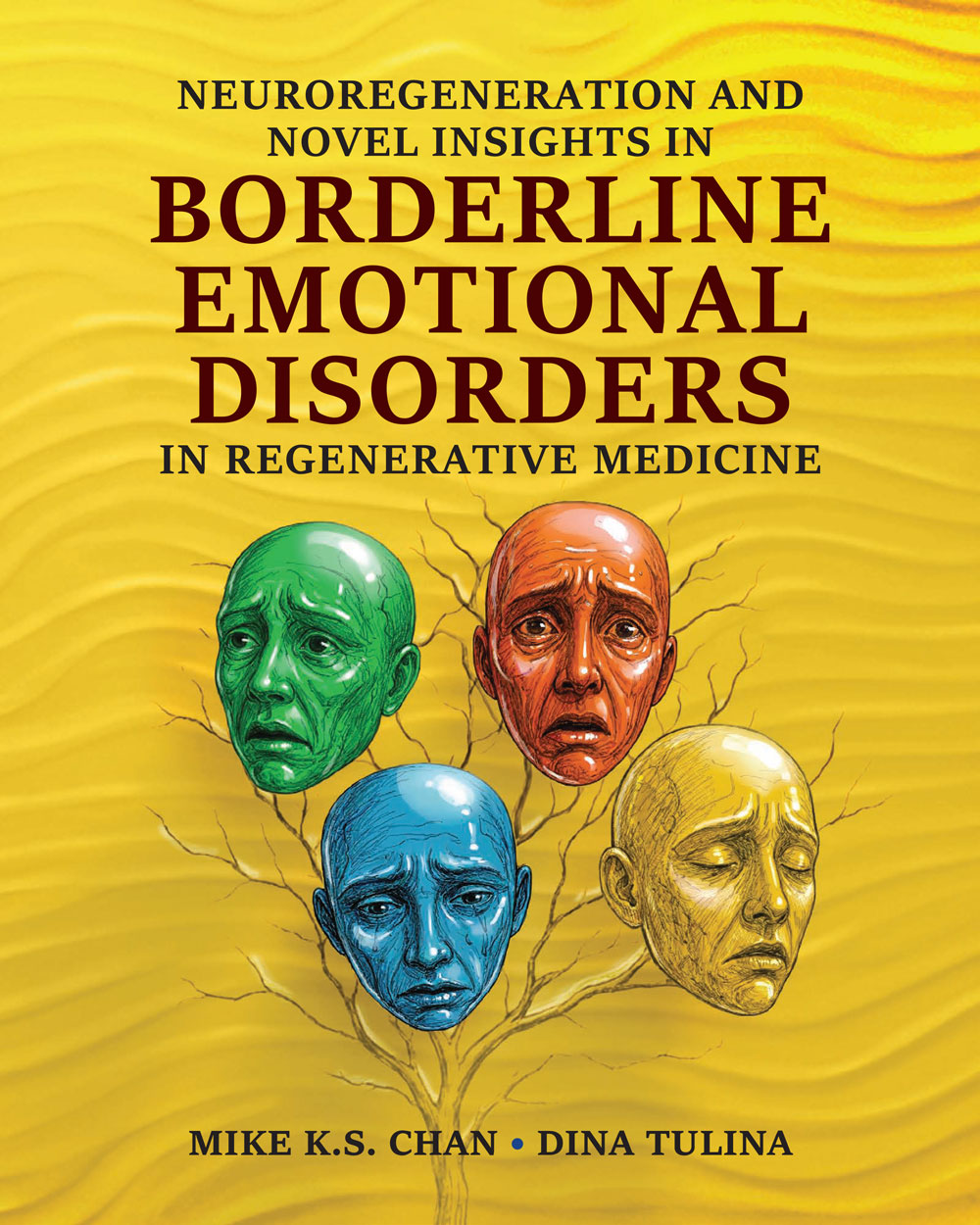
| CHAPTER 1 BORDERLINE DISORDERS: CONCEPT AND CONTEMPORARY RELEVANCE |
1 |
| Borderline Mental Disorders—Definition and Understanding |
5 |
| Stress |
8 |
| Anxiety |
10 |
| Depression |
13 |
| Integration and Conceptual Links |
16 |
| CHAPTER 2 EPIDEMIOLOGY OF STRESS, ANXIETY, AND DEPRESSION: THE MODERN MENTAL HEALTH CRISIS |
19 |
| Global Prevalence and Demographic Patterns |
19 |
| Depression |
21 |
| Anxiety Disorders |
22 |
| Chronic Stress |
22 |
| Vulnerable Populations and Health Disparities |
23 |
| Adolescents and Emerging Adults |
23 |
| Racial and Ethnic Minorities |
23 |
| Low Socioeconomic Status Populations |
24 |
| Neurobiological Vulnerabilities in Modern Contexts |
24 |
| Evolutionary Mismatch |
24 |
| Neuroplasticity and Environmental Enrichment |
25 |
| Public Health Implications and Future Directions |
27 |
| The Disease Burden |
27 |
| Prevention and Intervention Considerations |
27 |
| Conclusion |
28 |
| Temporal Trends: The Rising Tide |
28 |
| Generational Increases |
28 |
| Global Variations |
29 |
| The Modern Life Hypothesis: Etiological Mechanisms |
30 |
| Digital Technology and Social Media |
30 |
| Atomization and Social Disconnection |
31 |
| Economic Precarity and Work-Life Imbalance |
32 |
| Information Overload and Attentional Fragmentation |
32 |
| Decline of Meaning-Making Frameworks |
33 |
| Environmental and Existential Threats |
34 |
| The Modern Workplace: Occupational Stress Epidemiology |
34 |
| Burnout Syndrome |
34 |
| Work-Related Anxiety Disorders |
36 |
| Workplace Environmental Factors |
36 |
| CHAPTER 3 RISK FACTORS |
39 |
| Biological and Genetic Risk Factors |
40 |
| Genetic Vulnerability |
40 |
| Epigenetic Modifications |
41 |
| Neurobiological Vulnerabilities |
41 |
| Sex and Hormonal Factors |
43 |
| Age and Developmental Stage |
44 |
| Medical Comorbidities |
44 |
| Psychological and Cognitive Risk Factors |
45 |
| Temperament and Personality |
45 |
| Cognitive Styles and Biases |
46 |
| Emotion Regulation Deficits |
47 |
| Developmental and Early Life Risk Factors |
48 |
| Childhood Adversity |
49 |
| Social and Environmental Risk Factors |
49 |
| Adverse Life Events |
49 |
| Chronic Stress and Chronic Stressors |
50 |
| Social Support Deficits |
50 |
| Trauma Exposure |
51 |
| Lifestyle and Behavioral Risk Factors |
51 |
| Physical Inactivity |
51 |
| Substance Use |
52 |
| Diet and Nutrition |
52 |
| Digital Technology Use |
52 |
| CHAPTER 4 CLASSIFICATION OF STRESS, ANXIETY, AND DEPRESSION |
53 |
| Stress-related disorders |
54 |
| Acute Stress Disorder (ASD). |
54 |
| Post-Traumatic Stress Disorder (PTSD) |
55 |
| Anxiety Disorders |
56 |
| Generalized Anxiety Disorder (GAD) |
56 |
| Panic Disorder |
57 |
| Agoraphobia |
58 |
| Social Anxiety Disorder (Social Phobia) |
58 |
| Specific Phobia |
59 |
| Separation Anxiety Disorder |
59 |
| Selective Mutism |
60 |
| Depressive Disorders |
61 |
| Major Depressive Disorder (MDD) |
61 |
| Additional specifiers |
64 |
| Persistent Depressive Disorder (Dysthymia) |
65 |
| Disruptive Mood Dysregulation Disorder (DMDD) |
66 |
| Premenstrual Dysphoric Disorder (PMDD). |
66 |
| Depressive Disorder Due to Another Medical Condition |
67 |
| Substance/Medication-Induced Depressive Disorder |
68 |
| Other Specified Depressive Disorder and Unspecified Depressive Disorder |
69 |
| CHAPTER 5 CLINICAL MANIFESTATIONS |
71 |
| Clinical Manifestations of Stress |
73 |
| A. Physical manifestations |
73 |
| B. Cognitive manifestations |
73 |
| C. Emotional manifestations |
73 |
| D. Behavioral manifestations |
74 |
| Clinical Manifestations of Anxiety |
74 |
| A. Physical manifestations |
74 |
| B. Cognitive manifestations |
74 |
| C. Emotional manifestations |
75 |
| D. Behavioral manifestations |
75 |
| Clinical Manifestations of Depression |
75 |
| A. Emotional manifestations |
75 |
| B. Cognitive manifestations |
75 |
| C. Physical (somatic) manifestations |
76 |
| D. Behavioral manifestations |
76 |
| Key Distinguishing Features |
77 |
| Clinical relevance |
77 |
| CHAPTER 6 DIAGNOSIS AND ASSESSMENT TOOLS |
79 |
| Stress |
79 |
| Anxiety |
80 |
| Diagnostic Focus and Assessment Tools for Stress, Anxiety, and Depression |
82 |
| Depression |
83 |
| CHAPTER 7 NEUROBIOLOGY AND SOLUTIONS OF BPDS |
85 |
| Neurobiological Aspects of Stress |
85 |
| Neurobiological Aspects of Anxiety |
87 |
| Neurobiological Aspects of Depression |
91 |
| Cellular Changes in Stress, Anxiety, and Depression |
98 |
| Neuronal Structural Changes |
98 |
| Synaptic Alterations |
102 |
| Neuronal Loss and Atrophy |
106 |
| Neurogenesis Suppression |
109 |
| Glial Cell Alterations |
115 |
| Neural Stem Cells and Cellular Approach |
125 |
| Brain Structures Involved in Stress, Anxiety, and Depression |
127 |
| NSCs Amygdala |
128 |
| NSCs Hippocampus |
129 |
| NSCs Prefrontal Cortex |
144 |
| Hypothalamic NSCs |
146 |
| NSCs of the Pituitary Gland |
148 |
| NSCs Frontal lobe – The Anterior Cingulate Cortex |
150 |
| NSCs Forebrain – The Nucleus Accumbens and Ventral Striatum |
152 |
| NSCs Cerebral cortex – The Insula |
153 |
| NSCs Thalamus |
155 |
| NSCs Brainstem – The Locus Coeruleus |
157 |
| NSCs Brainstem – The Raphe Nuclei |
159 |
| NSCs Forebrain – The Bed Nucleus of the Stria Terminalis |
160 |
| NSCs Midbrain – The Periaqueductal Gray |
162 |
| NSCs Epithalamus – The Habenula |
163 |
| Nano-peptides |
164 |
| Amygdala Neuropeptides |
165 |
| Hypothalamus Neuropeptides |
165 |
| Hippocampus-Related Neuropeptides |
166 |
| Prefrontal Cortex Neuropeptides |
166 |
| Nano peptides of transfer factor |
167 |
| Mito-organells. |
170 |
| Energy metabolism impairment |
170 |
| Oxidative stress |
171 |
| Calcium dysregulation |
172 |
| Mitochondrial dynamics alterations |
172 |
| Mitochondrial interactions with stress pathways |
173 |
| Therapeutic implications |
173 |
| The need for mito-organells of mitochondria |
174 |
| CHAPTER 8 PHYSIOTHERAPY IN THE MANAGEMENT OF BORDERLINE MENTAL DISORDERS (STRESS, ANXIETY, DEPRESSION) |
177 |
| Transcranial Direct Current Stimulation (tDCS) |
177 |
| Neurobiological Mechanisms of Action |
179 |
| Neuroplastic Mechanisms |
180 |
| Effects on Neural Networks and Connectivity |
182 |
| Modulation of Inflammatory Processes |
182 |
| Technical Parameters and Protocols |
183 |
| Application to Depressive Disorder |
185 |
| Application to Anxiety Disorders |
186 |
| Application to Chronic Stress |
187 |
| Transcranial Magnetic Stimulation (TMS) |
189 |
| Application to Chronic Stress |
191 |
| Application to Anxiety Disorders |
194 |
| Application to Major Depressive Disorder |
197 |
| Hyperbaric Oxygenation Therapy with Hyperbaric Oxygen Chamber (HBOT) |
200 |
| Application to Chronic Stress |
202 |
| Application to Anxiety Disorders |
204 |
| Application to Major Depressive Disorder |
206 |
| Ozone Therapy |
208 |
| Application to Chronic Stress |
211 |
| Application to Anxiety Disorders |
212 |
| Application to Major Depressive Disorder |
213 |
| Bio Hormonal Modulator |
215 |
| Stress |
218 |
| Anxiety |
218 |
| Depression |
219 |
| Morphogenetic Harmonizer System, Scalar Plasma Wave Modulator |
220 |
| BIBLIOGRAPHY |
225 |