
Hofit Golan and Vinay Kapoor’s 6-Stars Celebrities Program continues at European Wellness Premier Center (EWPC)…
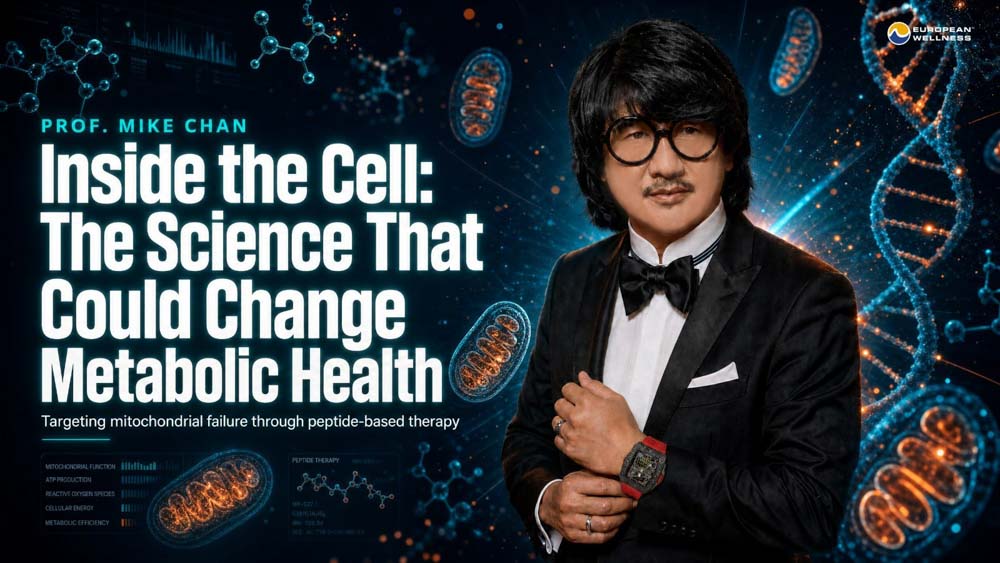
The Hidden Powerhouses of Our Cells: How Fixing Mitochondria Could Solve Metabolic Syndrome
Metabolic syndrome is often viewed as a complex web of health issues, including high blood pressure, elevated blood sugar, excess body fat around the waist, and abnormal cholesterol levels. For years, the medical community has treated these symptoms individually, prescribing different medications for each problem. However, a compelling perspective is emerging from the research of Prof. Dato’ Sri Dr. Mike Chan, a distinguished scientist and Chairman of the European Wellness Biomedical Group. His recent study, titled Targeting Mitochondrial Bioenergetic Failure in Metabolic Syndrome: Translational Roles of Mitochondrial and Multi-Organ Peptides and published in the American Journal of Biomedical Science & Research, suggests that the root cause of metabolic syndrome might lie deep within our cells, specifically in the mitochondria.
Prof. Mike Chan has dedicated over four decades to the fields of stem cells, immunology, and bioregenerative medicine. Throughout his extensive career, Prof. Mike Chan has traveled around the world treating celebrities, heads of state, sports athletes, and highly influential individuals. His latest research shifts the focus from treating isolated symptoms to addressing the fundamental energy crisis occurring at the cellular level. By understanding and repairing mitochondrial dysfunction, we may find a more effective way to combat metabolic syndrome and restore overall health.
Understanding the Cellular Energy Crisis
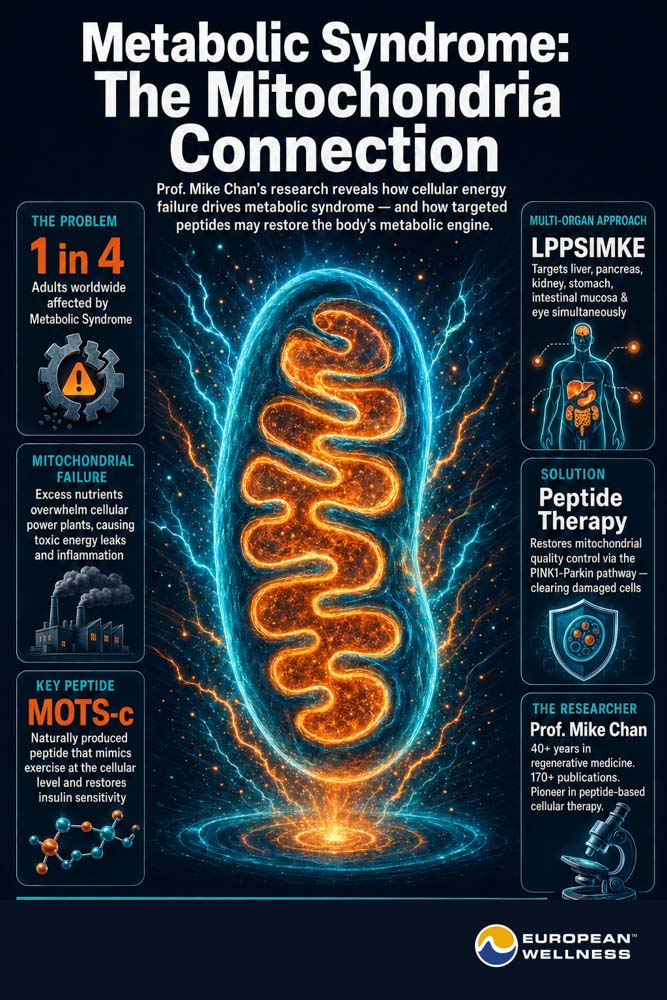
To grasp the significance of this research, it helps to think of mitochondria as the microscopic power plants inside our cells. Their primary job is to convert the food we eat into usable energy. When these power plants function efficiently, our bodies maintain a healthy balance. However, in individuals with metabolic syndrome, these cellular engines begin to fail. Prof. Mike Chan explains that chronic overeating and poor diet overwhelm the mitochondria, causing them to become inefficient and leak harmful byproducts known as reactive oxygen species.
Imagine a factory that is forced to process more raw materials than it can handle. Eventually, the machinery breaks down, and pollution spills into the surrounding environment. Similarly, when mitochondria are overloaded, they produce excess reactive oxygen species that damage the cell and trigger inflammation. This cellular pollution interferes with how the body responds to insulin, leading to insulin resistance — a hallmark of metabolic syndrome. Prof. Mike Chan’s research highlights that this bioenergetic failure is not just a localized issue but a systemic problem that affects multiple organs, including the liver, pancreas, and blood vessels.
Peptide Solutions for Restoring Balance
The study does not just identify the problem; it also explores promising solutions derived from the mitochondria themselves. Prof. Mike Chan and his team investigate the therapeutic potential of mitochondrial-derived peptides, which are tiny proteins naturally produced within the mitochondria. These peptides act as communication signals, helping to regulate energy production and protect cells from stress. One such peptide, known as MOTS-c, has shown remarkable ability to improve insulin sensitivity and protect against diet-induced obesity by acting like an exercise mimic at the cellular level.
Another fascinating solution discussed in the research involves multi-organ peptide constructs. These are specialized combinations of peptides designed to target multiple organs simultaneously. The construct known as LPPSIMKE, for example, includes peptides that support the liver, pancreas, placenta, stomach, intestinal mucosa, kidney, and eye all at once. Prof. Mike Chan emphasizes that because metabolic syndrome is a multisystem disorder, a multi-tissue approach is necessary. By using these targeted peptides, it may be possible to restore the body’s natural metabolic flexibility, reduce inflammation, and improve how our cells handle energy — offering a comprehensive strategy rather than a piecemeal fix.
The Path Forward in Metabolic Health
The implications of this research are profound for anyone struggling with metabolic health issues. Instead of merely managing symptoms with a cocktail of drugs, the focus shifts to repairing the underlying cellular machinery. Prof. Mike Chan’s work underscores the importance of mitochondrial quality control — the body’s natural process of clearing out damaged mitochondria and replacing them with healthy ones, governed by the PINK1-Parkin pathway. When this quality control system fails, as it often does in metabolic syndrome, dysfunctional mitochondria accumulate and perpetuate the cycle of disease.
While the science is complex, the takeaway is clear: restoring mitochondrial health could be the key to reversing metabolic syndrome. Prof. Mike Chan advocates for further clinical trials to fully understand how these peptide-based therapies can be safely and effectively used in humans. As research progresses, the hope is that these targeted interventions will provide a mechanistically sound approach to reducing cardiometabolic risk. By focusing on the microscopic powerhouses within us, we may unlock new ways to achieve lasting health and vitality.
Explore the Full Research
The science behind metabolic syndrome is far deeper than any single article can capture. Prof. Mike Chan’s full publication offers a comprehensive and meticulously referenced exploration of mitochondrial bioenergetic failure, the translational potential of mitochondrial-derived peptides, and the multi-organ therapeutic strategies that could redefine how we approach metabolic health. Whether you are a medical professional, a researcher, or simply someone who wants to understand what is truly happening inside your body, this publication is essential reading.
To read the full publication by Prof. Mike Chan, follow the link below:
Follow European Wellness:



Follow European Wellness Academy:
Follow Prof. Dato’ Sri Dr. Mike Chan:

Related Posts