Immerse yourself in a glamorous landscape of emerging trends and lucrative opportunities at Cosmoprof Asia…
The Hidden Universe Within — Decoding the Gut-Brain Connection and Bioregenerative Medicine
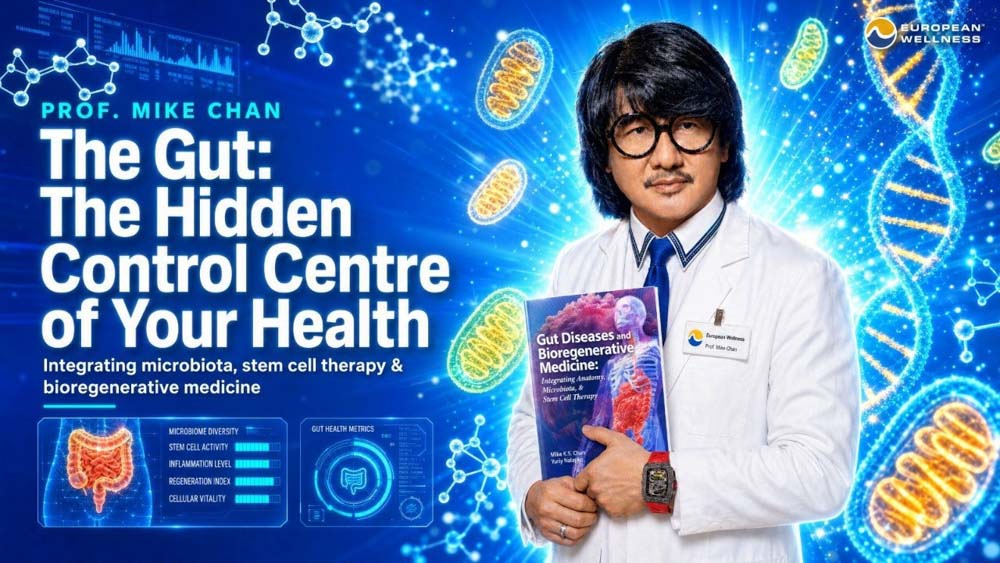
The human gut is far more than a simple digestive organ. It is a living, breathing ecosystem — a complex universe of trillions of microorganisms, protective barriers, immune sentinels, and neural networks that collectively govern the state of our health from head to toe. In the recently published work Gut Diseases and Bioregenerative Medicine: Integrating Anatomy, Microbiota, and Stem Cell Therapy, co-authored with Dr. Yuriy Nalapko, Prof. Mike Chan presents a comprehensive and deeply researched exploration of how the gut governs systemic health, and what we can do — using the most advanced bioregenerative tools available today — to restore it when things go wrong.
This is not a book written merely for scientists or gastroenterologists. It is a clarion call for anyone who has ever experienced unexplained fatigue, persistent mood swings, skin conditions, joint pain, or chronic digestive discomfort. The message is clear and urgent: the root of many modern chronic diseases may lie not in the brain, the heart, or the immune system in isolation — but in the gut.
Having spent decades traveling the world treating heads of state, celebrated athletes, and patients with complex chronic conditions, Prof. Mike Chan has witnessed firsthand how foundational gut health is to every dimension of human well-being. This work is a culmination of that clinical experience and scientific inquiry, aiming to translate complex molecular and ecological insights into actionable, effective interventions for both clinicians and the general public.
When the Gut Wall Cracks — Understanding Leaky Gut and Its Far-Reaching Consequences
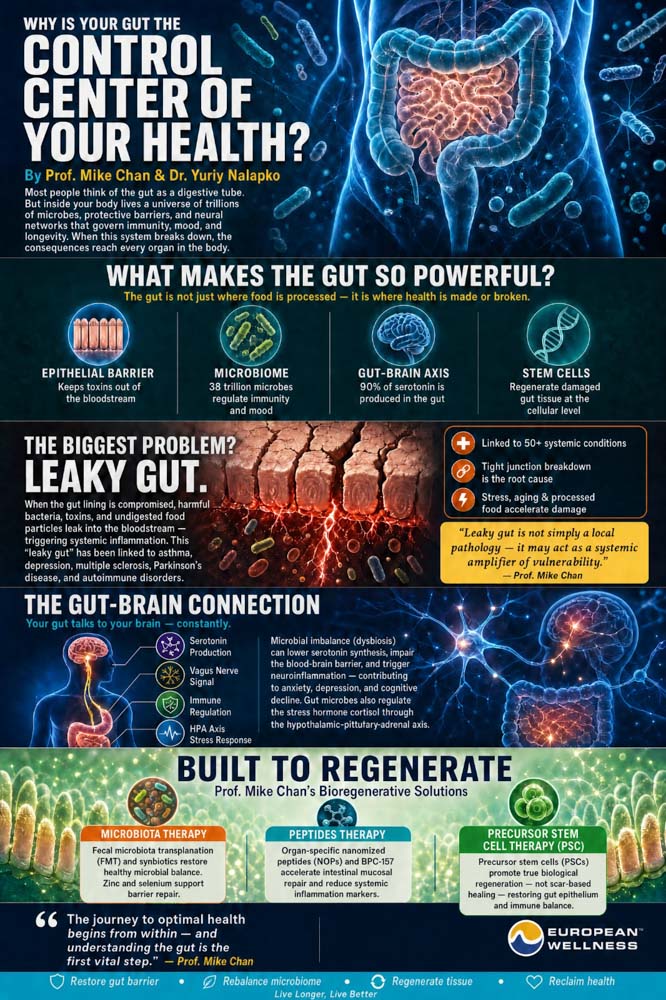
Imagine your gut lining as a carefully constructed brick wall. Each brick represents a cell, and the mortar between them — known as tight junctions — keeps everything sealed and secure. This wall allows nutrients to pass through into the bloodstream while keeping harmful bacteria, toxins, and undigested food particles firmly out. Now imagine that mortar beginning to crumble. Gaps appear. Substances that should never enter the bloodstream begin to leak through. This is what the medical community calls increased intestinal permeability, or more commonly, “leaky gut.”
“Leaky gut is not simply a local pathology but may act as a systemic amplifier of vulnerability, linking gut barrier dysfunction to conditions far beyond primary gastrointestinal disease — including asthma, multiple sclerosis, Parkinson’s disease, depression, and autoimmune disorders.” — Prof. Mike Chan
The book explains in accessible detail how this barrier breakdown occurs. Chronic low-grade inflammation, initiated by microbial imbalance, impairs the tight junction proteins that hold gut cells together. Once these junctions weaken, luminal antigens — fragments of bacteria, food proteins, and toxins — translocate into the bloodstream and trigger systemic immune responses. The body, now perpetually on alert, begins attacking not just the invaders but sometimes its own tissues, giving rise to a cascade of autoimmune conditions.
What makes this particularly alarming is the sheer breadth of conditions now associated with leaky gut. A person suffering from depression, chronic fatigue syndrome, or even Parkinson’s disease may not immediately think to look at their gut. Yet the evidence presented by Prof. Mike Chan and Dr. Nalapko makes a compelling case that in many of these conditions, the gut wall’s integrity — or lack thereof — plays a significant and profoundly underappreciated role.
Several factors contribute to this breakdown, as the book details with precision. High-fat diets compromise tight junction proteins through inflammatory pathways. Chronic psychological stress activates the hypothalamic-pituitary-adrenal (HPA) axis, which in turn alters gut motility and permeability. Aging naturally reduces microbial diversity, weakening the protective microbial community. Even common food additives such as emulsifiers — found in processed foods, salad dressings, and ice cream — have been shown to disrupt the gut’s mucus layer and contribute to inflammatory bowel disease.
The practical takeaway for everyday readers is both significant and empowering. Dietary choices, stress levels, sleep quality, and even the medications we take — particularly non-steroidal anti-inflammatory drugs and antibiotics — all have a direct and measurable impact on the integrity of our gut lining. Understanding this connection is not merely academic; it is the first step toward meaningful, lasting health transformation.
The Gut-Brain Highway — How Your Stomach Shapes Your Mind
One of the most compelling — and perhaps most surprising — revelations in this book is the extent to which the gut governs mental and neurological health. Prof. Mike Chan dedicates considerable attention to the microbiota-gut-brain axis: a sophisticated, bidirectional communication network through which gut microorganisms, neurotransmitters, hormones, and immune signals continuously interact with the brain.
“Most people are astonished to learn that the gut contains more nerve cells than the spinal cord — over 500 million neurons lining the gastrointestinal tract. The gut is, in every meaningful sense, our second brain. It thinks, it feels, it remembers, and when it is unwell, the entire body — including the mind — suffers the consequences.” — Prof. Mike Chan
This is not a metaphor. The enteric nervous system — the vast network of neurons embedded in the walls of the gastrointestinal tract — operates largely independently of the central nervous system. It regulates digestion, immune responses, and even emotional states without waiting for instructions from the brain. Scientists have long called it the “second brain,” and Prof. Mike Chan’s work gives this concept the clinical depth and therapeutic urgency it deserves.
“The microbiota-gut-brain axis is a powerful network of bidirectional communication, in which microbial metabolites, neurotransmitters, and hormonal pathways converge to influence cognitive, emotional, and neurophysiological states. Disruption within this axis can catalyse changes ranging from chronic inflammation to altered neurotransmitter synthesis.” — Prof. Mike Chan
To put this in everyday terms: approximately 90 percent of the body’s serotonin — the neurotransmitter most commonly associated with feelings of happiness and well-being — is produced not in the brain, but in the gut. When the microbial community that supports serotonin production is disrupted, the downstream effects manifest as anxiety, depression, and impaired cognitive function. This is biochemical reality, documented with scientific rigor throughout the book.
The gut communicates with the brain primarily through the vagus nerve — a long cranial nerve that runs from the brainstem down into the abdomen, acting as a direct information highway. When the microbiome is healthy and diverse, these signals are largely stabilizing and anti-inflammatory. When dysbiosis — an imbalance in the microbial community — takes hold, the signals shift, promoting neuroinflammation and altering mood and behavior.
Consider a relatable example. A person under prolonged work stress may notice that their digestion deteriorates — bloating, cramping, or irregular bowel movements. This is not coincidence. The stress hormones released by the brain alter gut motility and permeability, while the gut in turn sends distress signals back to the brain, potentially worsening anxiety and eroding resilience. Prof. Mike Chan’s work illuminates this vicious cycle and, crucially, demonstrates how breaking it at the gut level can produce profound and lasting improvements in mental health outcomes.
The book also draws a compelling link between gut health and neurodegenerative diseases. Immune dysregulation driven by pathogenic microbes or the loss of beneficial species intensifies the risk for conditions such as Parkinson’s disease. Disruption at the intestinal level may translate into cerebral microvascular dysfunction via inflammatory intermediates — a sobering reminder that what happens in the gut does not stay in the gut.
From Diagnosis to Regeneration — Prof. Mike Chan’s Bioregenerative Solutions
Perhaps the most valuable contribution of this work is its detailed and forward-thinking approach to treatment. Rather than simply cataloguing what goes wrong, Prof. Mike Chan and Dr. Nalapko present a comprehensive framework of bioregenerative solutions that address gut dysfunction at its biological root — not merely suppressing symptoms, but restoring the body’s innate capacity to heal.
“Integrative models provide a framework for translating molecular and ecological insights into effective interventions aimed at restoring gut barrier function and systemic homeostasis — moving medicine from symptom suppression to true biological restoration.” — Prof. Mike Chan
These solutions are organized across several interconnected modalities, each supported by clinical evidence and mechanistic understanding. The following table summarizes the key therapeutic strategies presented in the book:
| Therapeutic Modality | What It Does | Who It Helps |
|---|---|---|
| Fecal Microbiota Transplantation (FMT) | Transfers healthy donor microbiota to restore microbial balance | Inflammatory bowel disease, C. difficile infection, IBS |
| Synbiotic Supplementation | Combines probiotics (live bacteria) and prebiotics (their food) to rebuild the microbiome | Dysbiosis, leaky gut, metabolic syndrome |
| Nutritional Modulation | Zinc, selenium, and specialized diets (e.g., low-FODMAP) repair barrier integrity and reduce inflammation | IBS, IBD, food sensitivities |
| Organ-Specific Peptide Therapy (NOPs) | Nanomized peptides target the intestinal mucosa to accelerate cellular repair | Intestinal permeability disorders, mucosal damage |
| BPC-157 Peptide | A body-protecting compound that promotes gut tissue healing and reduces inflammation | Leaky gut, gastric ulcers, IBD |
| Precursor Stem Cell (PSC) Therapy | Promotes true biological regeneration of damaged gut tissue — not scar-based healing — through lineage-specific cellular deployment | Crohn’s disease, ulcerative colitis, severe IBD |
| Lifestyle Modification | Optimizing sleep, physical activity, and stress management to support the microbiota-gut-brain axis | All gut conditions; preventive health |
Fecal Microbiota Transplantation is one of the most striking interventions discussed. The concept is straightforward but powerful: transplanting the gut microbiome of a healthy donor into a patient with dysbiosis can effectively “reboot” the recipient’s microbial ecosystem. The book documents its remarkable efficacy in treating recurrent Clostridium difficile infections and its growing promise in inflammatory bowel disease and metabolic syndrome.
Peptide therapies represent one of Prof. Mike Chan’s signature areas of expertise. Organ-specific nanomized peptides (NOPs), particularly those targeting the intestinal mucosa (NOP-IM), deliver highly targeted biological signals to damaged gut tissue, stimulating repair and regeneration at the cellular level. BPC-157, a body-protecting compound derived from gastric juice proteins, has demonstrated the ability to accelerate healing of the gut lining, reduce inflammatory markers, and even support neural tissue repair — illustrating how gut-targeted therapies can produce systemic benefits that extend well beyond the digestive tract.
Precursor Stem Cell (PSC) therapy represents the most advanced frontier of gut regeneration presented in the book. Unlike conventional treatments that manage symptoms or suppress inflammation, PSC therapy promotes genuine tissue regeneration — not scar-based healing, but true biological restoration at the cellular level. These lineage-specific precursor stem cells are deployed to target damaged gut epithelium, mucosal tissue, and the immune microenvironment simultaneously, differentiating into precisely the cell types needed to rebuild what has been lost. Clinical applications in Crohn’s disease and ulcerative colitis have shown promising results, with patients achieving remission that conventional therapies could not sustain.
Equally important, the book emphasizes that lifestyle modification is not a secondary or optional component of gut health — it is foundational. Regular physical activity promotes microbial diversity and reduces systemic inflammation. Adequate, restorative sleep allows the gut to carry out essential repair processes. Stress management — whether through mindfulness, therapy, or structured relaxation — directly reduces the cortisol-driven disruption of gut permeability. These are not soft lifestyle suggestions; they are biologically validated interventions that complement and amplify every other therapeutic strategy in the book.
The diagnostic framework presented is equally thorough. The book outlines how serological, urinary, microbial, and proteomic biomarkers can be used to assess intestinal permeability and guide clinical management. Emerging biomarkers such as intestinal fatty acid-binding protein (I-FABP), zonulin, and lipopolysaccharide-binding protein (LBP) offer clinicians increasingly precise tools for identifying gut barrier dysfunction before it manifests as overt disease — enabling a shift from reactive treatment to proactive, preventive care.
Final Thoughts
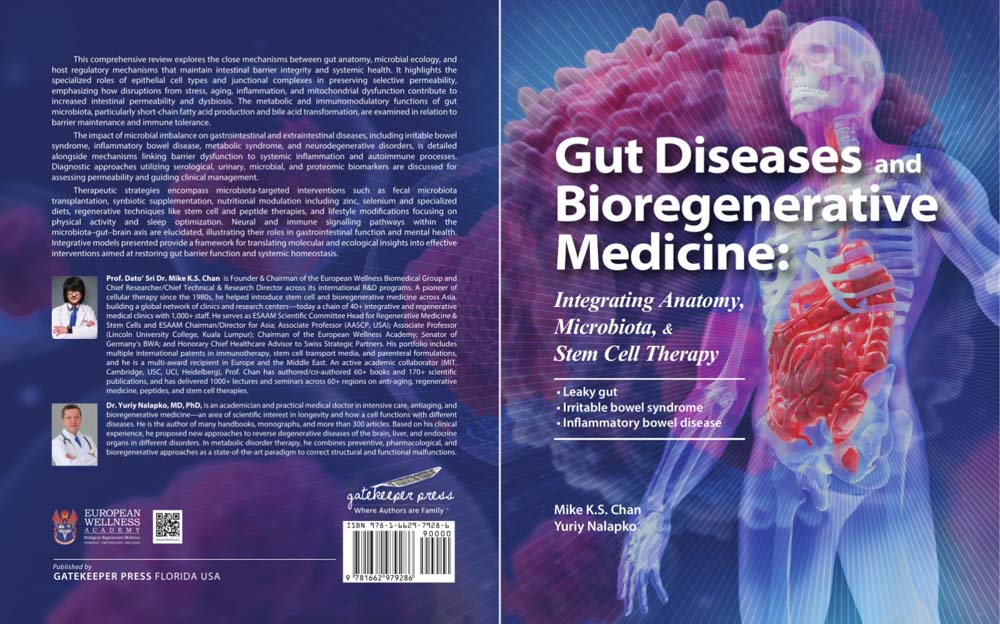
Gut Diseases and Bioregenerative Medicine: Integrating Anatomy, Microbiota, and Stem Cell Therapy is a work that deserves a wide and diverse readership. It is scientifically rigorous without being inaccessible, clinically practical without oversimplifying, and forward-looking without losing sight of the foundational biology that underpins every recommendation.
Prof. Mike Chan’s central message is one of empowerment. The gut is not a passive organ that simply processes food; it is an active, intelligent system — our second brain — that communicates with every part of the body and responds dynamically to the choices we make each day. When we understand this, and when we apply the bioregenerative tools now available to us, the possibilities for restoring health — even in the face of chronic, complex disease — are genuinely profound.
For clinicians, this book offers a structured, evidence-based framework for integrating bioregenerative approaches into gut health management. For patients, it offers something equally valuable: a clear and compassionate explanation of why they may be suffering, and a scientifically grounded roadmap toward recovery. For anyone with a stake in the future of medicine, it offers a compelling and urgent vision of what healing can look like when we treat the body not as a collection of isolated parts, but as the integrated, self-regenerating system it truly is.
The gut, as Prof. Mike Chan reminds us, is where health is made or broken. It is time we treated it accordingly.
Gut Diseases and Bioregenerative Medicine: Integrating Anatomy, Microbiota, and Stem Cell Therapy is published by Gatekeeper Press, Florida, USA (2026). ISBN (hardcover): 9781662979286. DOI: https://doi.org/10.69669/jq4269
Follow European Wellness:



Follow European Wellness Academy:
Follow Prof. Dato’ Sri Dr. Mike Chan:

Related Posts