
Hofit Golan and Vinay Kapoor’s 6-Stars Celebrities Program continues at European Wellness Premier Center (EWPC)…
From Recovery to Silverware: How Sabah FC’s European Wellness Recovery Program Helped Fuel a Challenge Cup Triumph

KOTA KINABALU, SABAH, April 21st, 2026, Sabah FC’s recent Challenge Cup triumph over Penang was decided on the narrowest of margins, but it did not feel narrow to those inside Likas Stadium when the final penalty went in. It felt earned. After a 1–1 first leg, a goalless second leg, and an evening of tension that stretched into extra time and a shootout, Sabah emerged as winners 4–3 on penalties, with Farhan Roslan converting the decisive kick and home celebrations spilling into the night. What the scoreboard captured was a trophy. What it suggested, more quietly, was a team that had learned how to endure.
That is where the wider story begins. Over the past months, Sabah’s players and partners have repeatedly described a performance environment shaped not only by coaching and competition, but also by a structured recovery and rehabilitation program with the European Wellness Premier Center (EWPC). European Wellness’ own coverage presents the relationship as a sports-science partnership built around recovery, stamina, diagnostics, and conditioning support. That does not by itself prove a single cause for Sabah’s improvement. Football never works that neatly. But it does offer a compelling frame through which to understand why Sabah looked capable of surviving a final that demanded composure, resilience, and the ability to keep giving a little more when the game refused to end.
A Final Won on Nerve, Discipline, and the Ability to Go Again
The Challenge Cup final was not a showcase of open, flowing football. It was a two-legged contest shaped by caution, defensive organization, and the sort of emotional pressure that punishes even small lapses. The first leg ended 1–1, and the second remained 0–0 even after extra time, leaving the trophy to be settled from the penalty spot. Sabah’s victory, in other words, was not built on dominance. It was built on resistance.
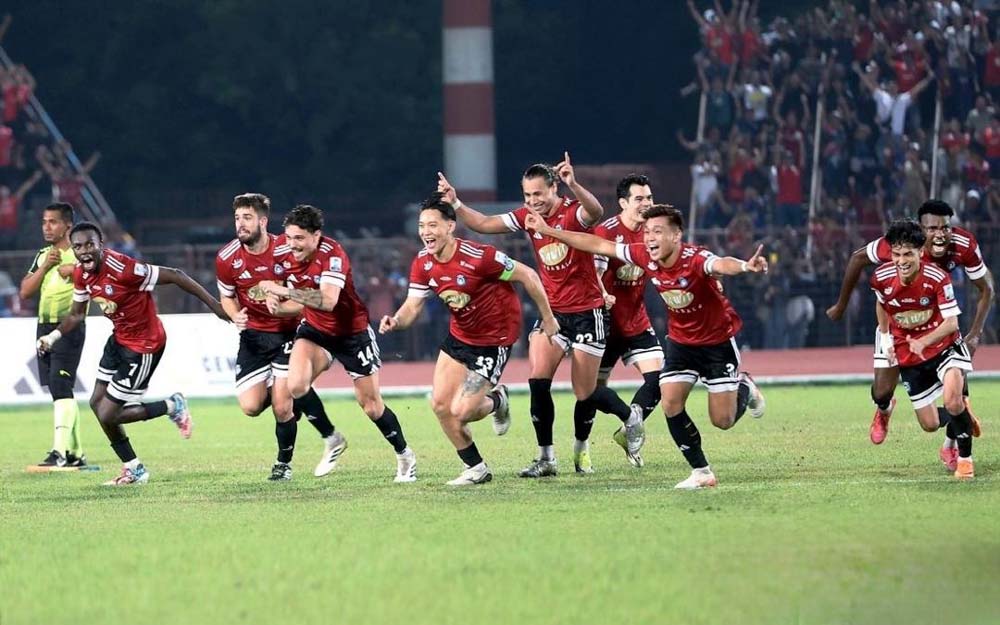
That sort of final places unusual demands on a squad. It asks defenders to stay concentrated, midfielders to keep covering ground, and attackers to retain clarity even when chances are scarce. It also asks the body to recover repeatedly through the match itself: after sprints, collisions, tension, and the deadening effect of caution. Sabah passed that examination. The victory was shaped by defensive discipline, adverse conditions, and psychological endurance rather than by attacking fluency.
In that context, the language used by Sabah’s players about recovery becomes especially revealing. Dane Ingham described the practical benefit of the hyperbaric sessions in the blunt terms footballers often trust most. He said the team had faced stretches in which they played “four, five games” in “two, three weeks,” and added that during those periods, “our bodies have recovered a lot better than what they should have been if we hadn’t been doing the chambers.” He went further, saying the sessions helped the players get “that little bit extra in each game.”
That phrase matters because finals are often won by that little bit extra: one more run, one more recovery sprint, one calmer touch, one steadier kick.
Inside the Recovery Routine That Helped Sabah Stay Sharp Through a Demanding Season
The European Wellness–Sabah FC story did not begin with the Challenge Cup final. Sabah had already shown the direction of their rise by becoming FA Cup finalists in December 2025, and that earlier run strengthened the sense of a side improving progressively and continuing to push through each demanding stretch of the season. It was built in stages. First it focused on players returning to the center for recurring recovery sessions, particularly Hyperbaric Oxygen Therapy (HBOT), ahead of a congested run of matches. Then both European Wellness and Sabah FC formalized the arrangement as a broader partnership for the 2025–26 season, describing movement analysis, musculoskeletal screening, body composition assessments, and multi-modal recovery treatments as part of the framework offered to the club. By the time Sabah’s results improved, the partnership was already being presented publicly as part of the club’s recovery and performance infrastructure.
The recent player interviews deepen that story because they speak less like corporate messaging and more like everyday dressing-room experience, while also giving a clearer sense of the recovery environment overseen by Dr. Natassia Sarah. Fergus Tierney explained that, thanks to European Wellness, Sabah FC had access to facilities “we most usually wouldn’t be able to access,” adding that the oxygen chamber was the one he used “the most consistently” and that it helped when the team had “a lot of matches quite close together.” His wording is important because it locates the value of the partnership not in abstract performance promises, but in regular access, repeat use, and a recovery structure built to keep players ready for the next match.
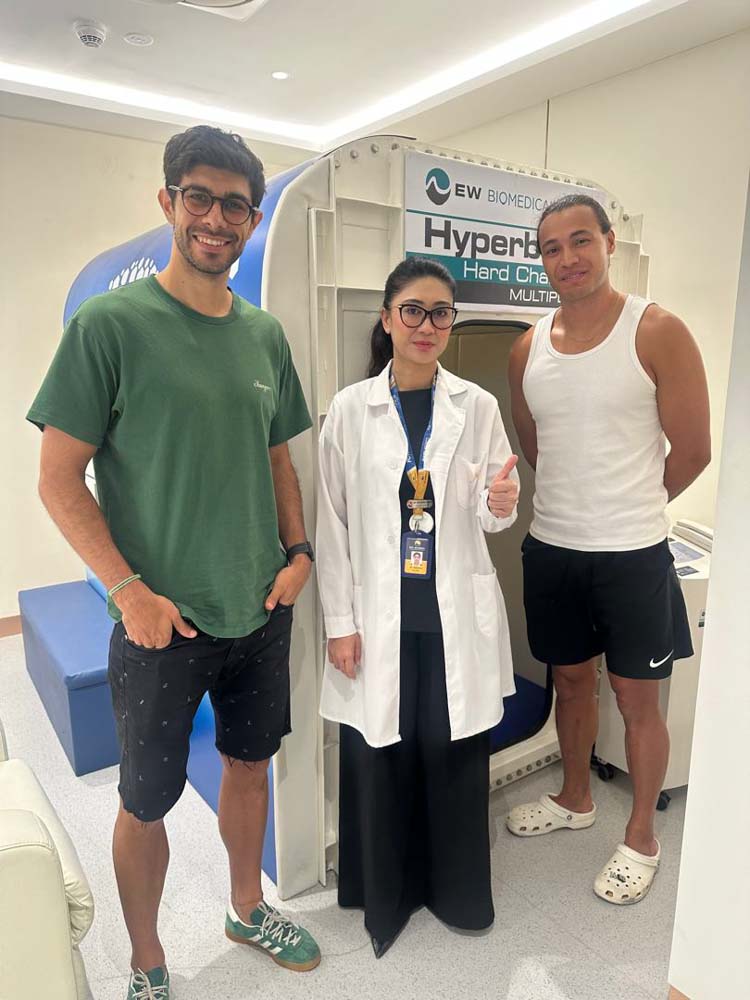
Jose Angel Alonso made the same point from a different angle. Asked about recovery in a busy match schedule, he replied that “the pace of the matches is very fast,” so players have to be ready “for the next one as fast as possible.” He added that the early part of the week is crucial because players must recover in time to handle “the tough trainings” and prepare properly for the next match. This is the hidden labor of a successful season: recovery not as luxury, but as the bridge between one competitive demand and the next.
Mohd Fakrul Iman’s interview gives the clearest picture of why that matters. He described a far more ordinary and uncomfortable side of football recovery: body aches that linger, soreness that survives into later training days, and a personal dislike of ice baths. In other words, he says that after a match, “the body aches and soreness take quite a long time to go away,” and that two or three days later he can still be “enduring all the pain and soreness.” He concludes simply: “for me, recovery is a bit slow.” That honesty provides the feature with one of its most useful truths. Recovery is not a slogan. It is a problem players live inside.
What also stands out is that the athletes recovery program was never described as HBOT alone. European Wellness framed it as a broader, science-driven conditioning and rehabilitation package aimed at improving not only recovery speed, but also late-match endurance, reduced cramping, and clearer decision-making under pressure. At the Kota Kinabalu center, players were reported to be undergoing a combination of Hyperbaric Oxygen Therapy, integrative biological therapies focused on cardiac efficiency, lung capacity, and connective support, proprietary Swiss-German PEMF therapy, Ecolight therapy, lymphatic drainage, colonics, and the Theta Chamber.

A Sabah FC player attends a session with a European Wellness sports nutritionist as part of the club’s wider recovery and performance-support program.
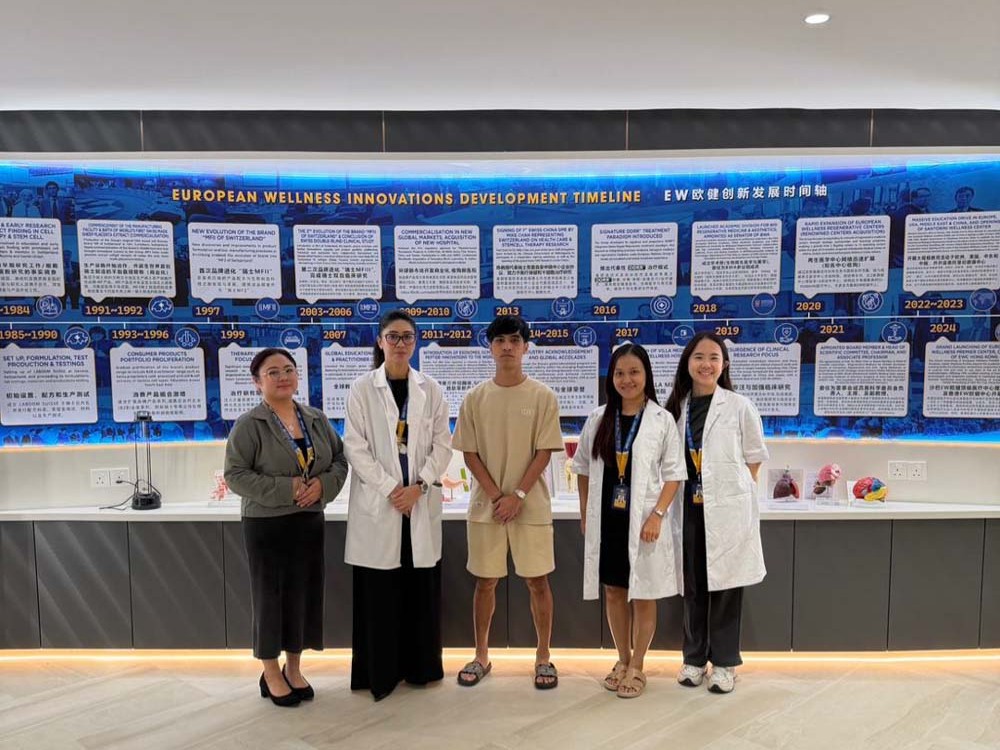
Dr. Natassia Sarah and European Wellness sports nutritionists are pictured with Sabah FC’s Mohd Fakrul Iman, center, during the club’s wider recovery and performance-support program.
| Program component | Intended purpose within the football setting |
|---|---|
| Hyperbaric Oxygen Therapy (HBOT) | Support oxygen delivery and speed up recovery between matches |
| Integrative biological therapies | Support heart, lung, and connective function |
| Swiss-German PEMF therapy | Aid physical restoration and recovery support |
| Ecolight therapy | Contribute to recovery and physiological balance |
| Lymphatic drainage and colonics | Support recovery and internal regulation |
| Theta Chamber | Support recovery, focus, and resilience |
In that framework, the recovery program was presented as part treatment, part conditioning system. At the center of that effort is European Wellness’ Sports Science Regenerative Center, headed by Prof. Dato Sri Dr. Mike Chan and managed by Dr. Natassia Sarah, Sports Science Medical Manager. In practical terms, Dr. Natassia Sarah is presented as overseeing the players’ recovery process and helping ensure they receive the best possible treatments in preparation for the next match. Prof. Mike Chan emphasized that modern football demands more than talent and argued that the program was designed to improve endurance, heart and lung performance, and on-field sharpness, with the basic idea that when recovery and conditioning improve, results can follow. He has worked in Germany and Switzerland since the 1980s in sports medicine and anti-aging science, and has linked EWPC’s expertise to decades of involvement with European footballers, including athletes in English and American soccer environments. The Kota Kinabalu facility itself was described as one of the group’s flagship centers, serving elite athletes, public figures, and international medical partners.
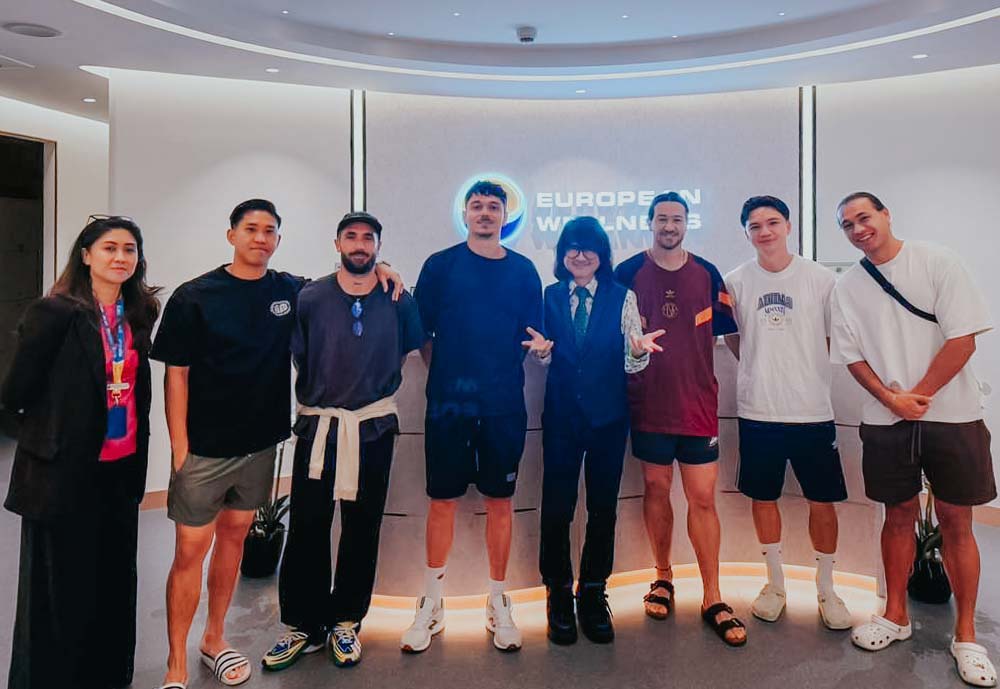
Prof. Mike Chan, center, with Sabah FC first-team players in October 2025.
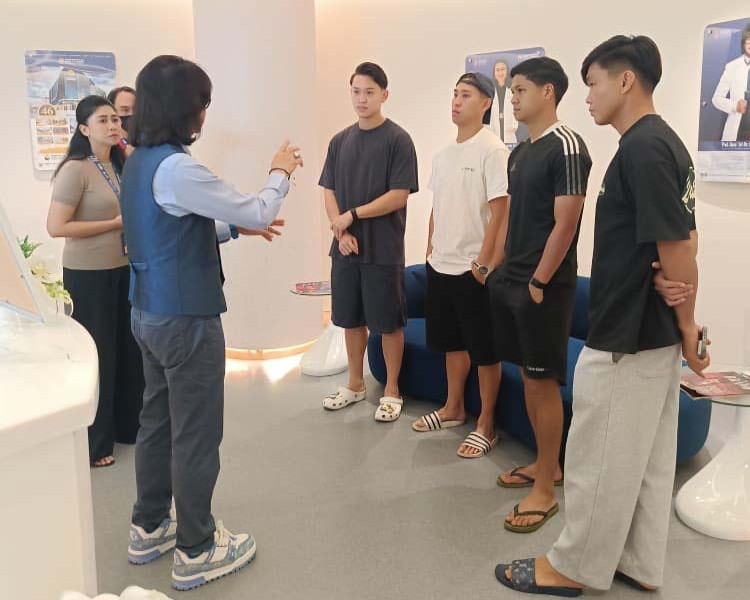
Prof. Mike Chan briefs Sabah FC players on the recovery-program protocol before they begin their therapy session.
Elsewhere, head coach Juan Torres Garrido was quoted as saying the staff were already seeing gains in “speed and endurance,” alongside sharper mentality after matches. These statements remain part of a promotional narrative, and they should be read carefully. Yet taken together with the players’ interviews, they do illuminate a coherent idea: Sabah were trying to build an environment in which players could recover faster, suffer less, and sustain performance more reliably across a demanding calendar.
Additional inputs provided by Dr. Natassia Sarah help place that process in a fuller timeline. She said the collaboration began through former head coach J.P. Marigny and Director of High Performance Scott Ollerenshaw, continued through the transitional spell under interim coach Alto, and was further reinforced under Juan Torres Garrido, whose support for player performance helped sustain the integration of sports science and recovery work within the Sabah FC environment. In her account, one of the earliest signs came with the introduction of HBOT, when she said Marigny observed a notable rise in the squad’s running output after the first week of sessions.
As Dr. Natassia Sarah put it, “Over the past six months, the European Wellness x Sabah FC collaboration has delivered highly encouraging outcomes in player recovery, endurance, and overall performance optimization.” She described the wider effort as “a comprehensive ecosystem that values recovery, regeneration, resilience, and readiness as key pillars of elite performance,” and said European Wellness remains committed to helping Sabah FC reach its maximum potential while developing a high-performance sports science regenerative center focused on athlete care, recovery, and long-term performance support.
What the Players Themselves Say About Hyperbaric Recovery, Readiness, and Belief
If the Challenge Cup win is to be told as a feature rather than merely as a result, then the player voices matter most. They do not all say the same thing, and that is exactly why they are valuable. Some are emphatic, some are cautious, some practical, and some quietly grateful. Together, they reveal how recovery support becomes part of a football culture.
Duje Ljubic offered the most direct endorsement. Asked whether treatments like hyperbaric recovery can help reduce injuries and keep a player match-fit longer, he answered, “I think so, yeah.” Later, he was even clearer: “Of course it helps. I think everything helps.” When asked whether hyperbaric sessions should be a regular part of football training, he replied, “I think yes, of course. I think like one day a week everyone needs to go to the hyperbaric session. I think it helps, helps a lot.” Those are not theoretical reflections. They are straightforward footballer judgments, practical and unadorned.

Dane Ingham acknowledges that “everybody has their own little things” when it comes to recovery, and that not every player prefers the same methods. Yet he still says plainly that the chamber has “helped us quite a lot,” especially during tight turnarounds, and adds that while he is “not a big fan of ice baths,” he would “much rather do the hyperbaric chamber.” Ingham’s quote is useful because it avoids sounding rehearsed. It reflects the way players actually compare methods: not as doctrine, but as lived preference and effect.
Tierney’s voice places the partnership in a broader sporting context. He argues that “the way that football is going now, these things are very crucial for being able to perform at your best every game,” before adding that “just training and not doing anything else is not enough anymore.” That observation gives the article one of its strongest thematic lines. Sabah’s Challenge Cup victory can be celebrated as a triumph of character, but it can also be read as evidence that modern football increasingly depends on the invisible work around the match as much as the visible work within it.

Alonso, meanwhile, captures the rhythm of modern competition. His point is not glamorous; it is procedural. Recovery matters because the next matchday is already coming. As he put it, “you have to be ready for the next one as fast as possible.” In a season shaped by league duties, cup pressure, and little time to reset, that sentence carries the logic of the entire program.
Then there is Fakrul Iman, whose gratitude adds a human dimension to the broader story. Asked how he felt about Sabah FC receiving support from an international-standard recovery center, he said: “As a player, I feel grateful. We’re able to do all this in support from Sabah FC.” His remarks help bring the discussion back to the players’ day-to-day experience. The value of the partnership lies not only in the advanced methods on offer, but also in the consistent support structure it provides as part of Sabah FC’s overall preparation.
There is one more from Duje Ljubic worth holding onto because it returns the story to where it belongs: the supporters. “So come to the stadium, support us these few games, and that’s it. Thank you a lot.” It is a simple message, but perhaps the right ending for a story like this. Recovery science may operate behind closed doors, inside treatment rooms and chambers, but its meaning is still public. It is measured not only in oxygen levels or muscle soreness, but in nights like the one at Likas when a team finds the nerve to last, the calm to finish, and the energy to celebrate.
Sabah’s Challenge Cup victory should therefore be understood in full. It was a football achievement built on discipline and penalty-box courage. It was also the visible peak of a wider process in which the club sought to support its players more intelligently and more consistently. The evidence available does not allow anyone to say that European Wellness alone won Sabah the trophy. But the reporting and player testimony do support a more grounded conclusion: the club’s recovery and rehabilitation program helped create conditions in which Sabah could cope better with the demands of the season, stay competitive through pressure, and arrive at the final with bodies and minds capable of enduring it.
In a final settled by nerve, that may have made all the difference.
Follow European Wellness:



Follow European Wellness Academy:
Follow Prof. Dato’ Sri Dr. Mike Chan:

Related Posts