

Immerse yourself in a glamorous landscape of emerging trends and lucrative opportunities at Cosmoprof Asia…
Healing Our Furry Family: The Science and Heart Behind Targeted Stem Cell Therapy for Pets
A Modern Approach to Veterinary Care
As pet owners, watching our beloved companions age and struggle with chronic conditions is one of the most difficult experiences we face. Traditional veterinary medicine often leaves us managing symptoms with lifelong medications, hoping to slow the inevitable decline. In The Miracle Inside: Before and After Stem Cell Therapy, Prof. Dato’ Sri Dr. Mike Chan and co-author Bob Settineri, MS, present a compelling alternative that shifts the focus from symptom management to cellular healing — a path that moves veterinary medicine from “sick care” to genuine “health care.”
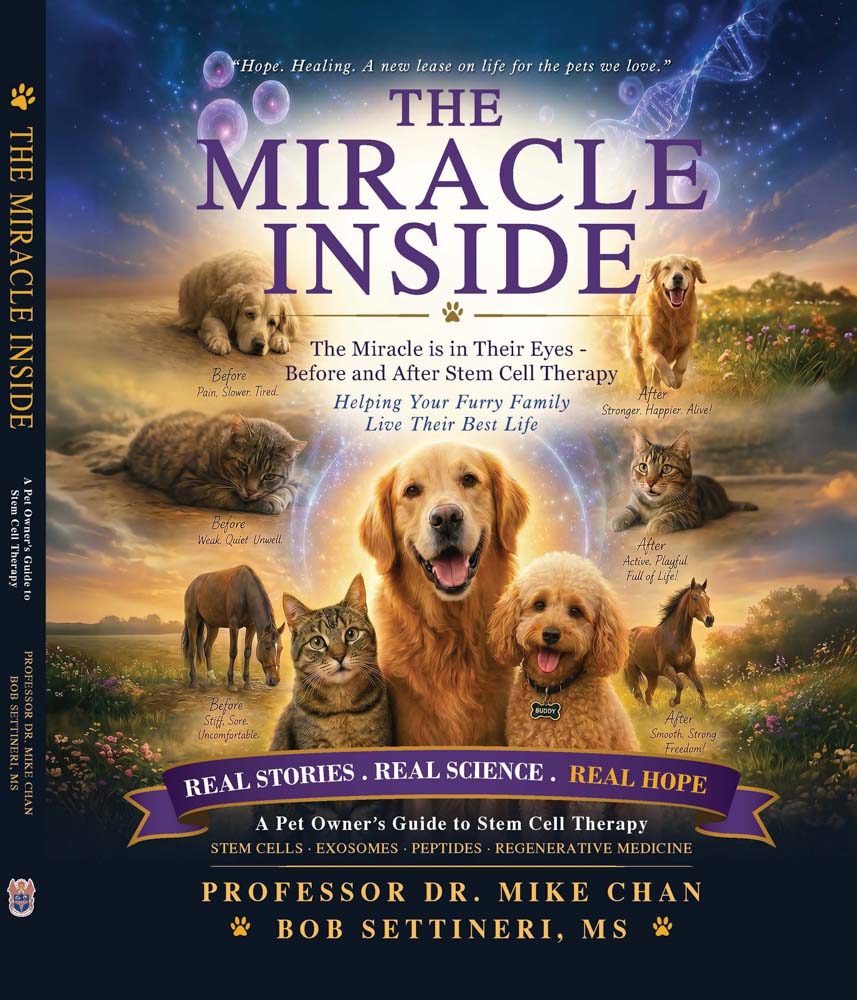
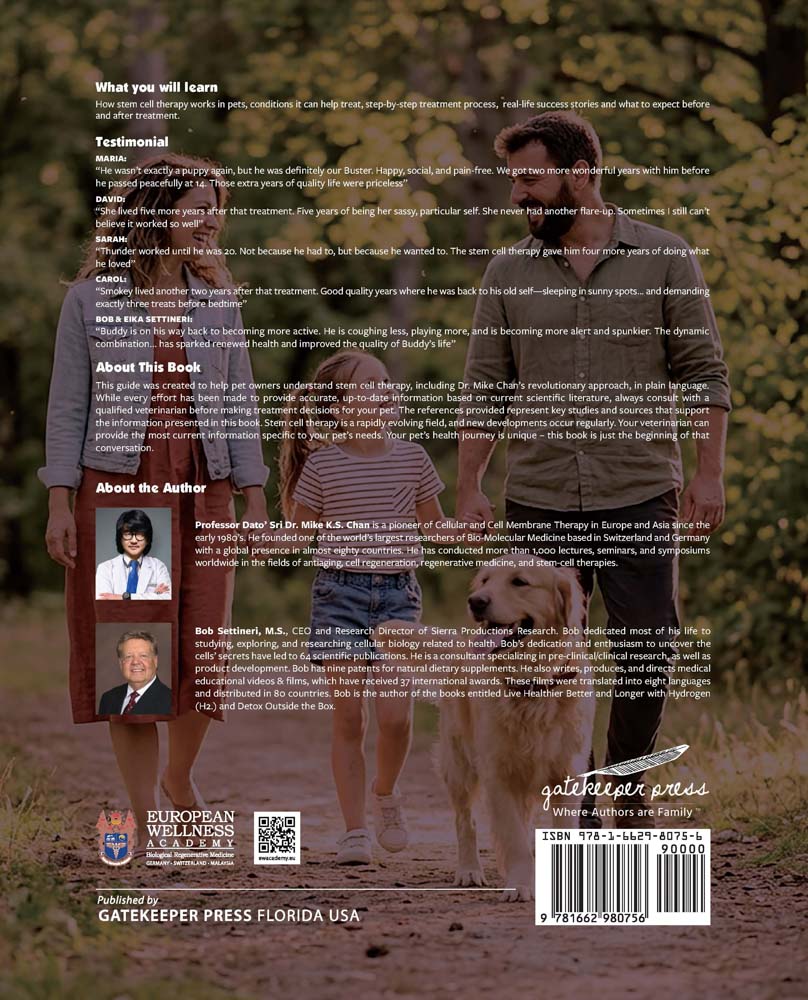
The Miracle Inside: Before and After Stem Cell Therapy by Professor Dr. Mike Chan and Bob Settineri, MS — published by Gatekeeper Press, Florida, USA.
Prof. Mike Chan, a pioneer in Cellular and Cell Membrane Therapy since the early 1980s who has treated celebrities, heads of state, sports athletes, and highly influential individuals worldwide, brings his extensive expertise to the realm of veterinary care. Having founded one of the world’s largest research institutions in Bio-Molecular Medicine, with a global presence in nearly eighty countries, Prof. Mike Chan’s work bridges the gap between cutting-edge science and compassionate care. The core premise of this book is simple yet profound: what if we could give our pets’ bodies the tools they need to repair themselves from within? Rather than merely filling the “potholes” of disease with temporary fixes, his approach aims to rebuild the entire foundation. This commentary explores the critical insights from the book, emphasizing the practical solutions and real-world impact of stem cell therapy for our furry family members.
The Science of Cellular Superheroes
To understand the significance of this study, we must first demystify stem cells. The book excels at translating complex scientific concepts into layman-friendly terms. Imagine your pet’s body is a bustling city, and stem cells are the tiny construction workers. When a pet is young, this construction crew is large, energetic, and equipped with the best tools. However, as pets age, the crew dwindles, and their tools wear out. When damage occurs — whether it is a joint worn down by arthritis or an organ struggling to function — the body sends out a distress signal, like a cellular 911 call.
In traditional medicine, the response might be to administer pain medication, which is akin to putting up a soundproof wall so you do not hear the construction noise. Stem cell therapy, on the other hand, sends in a fresh, highly trained crew to actually repair the damage. The book illustrates this beautifully through the story of Bella, a Golden Retriever whose arthritis had reduced her from an energetic ball-chaser to a couch potato. After stem cell therapy, Bella was back to racing through the yard and stealing tennis balls from unsuspecting children. Her damaged joints had been rebuilt from the inside out.
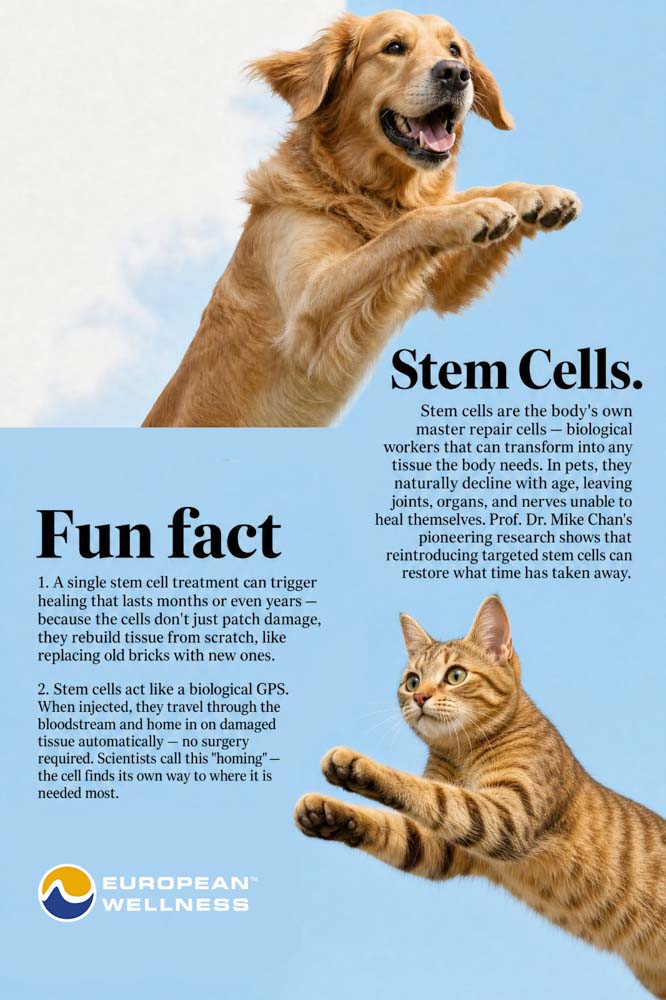
Prof. Mike Chan bases his approach on the ancient medical principle “Similia Similibus Curantur” — “likes cure likes.” In simple terms, heart cells heal hearts, kidney cells heal kidneys, and liver cells heal livers. By introducing targeted cellular workers into the body, the therapy not only addresses the immediate problem but also reduces inflammation, improves blood flow, and creates a superior environment for long-term healing.
“Stem cells aren’t magic — they’re science. And that science could give you more years of morning walks, afternoon naps, and evening cuddles with your beloved companion.” — *Prof. Mike Chan, The Miracle Inside*
The Five-Pillar Solution That Changes Everything
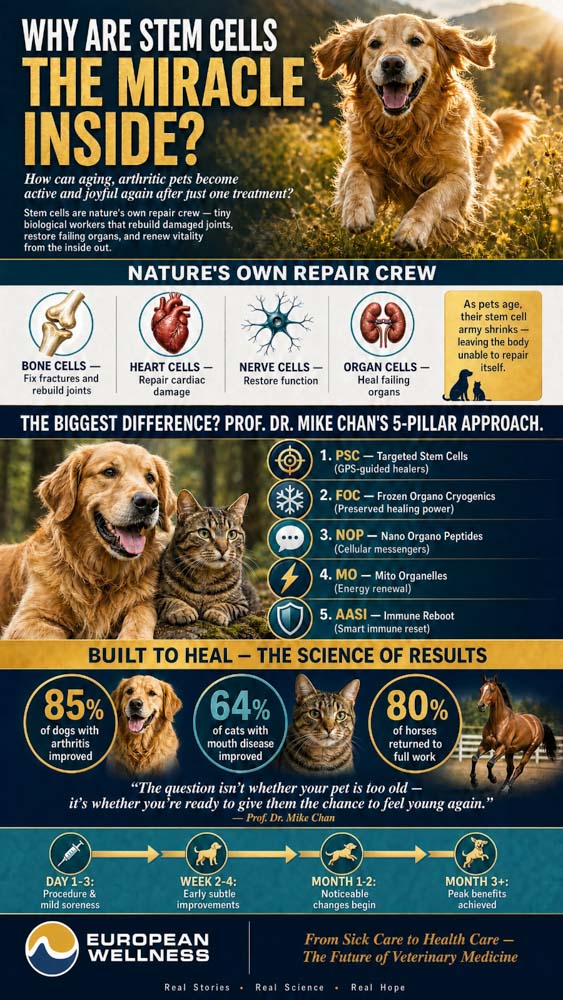
The most crucial contribution of this book is Prof. Mike Chan’s comprehensive five-pillar framework. He recognizes that true healing requires more than just injecting stem cells; it requires creating the optimal environment for those cells to thrive. His solution is a synergistic approach where the combined effect is greater than the sum of its parts — what scientists call “synergistic effects,” where 1 + 1 = 3.
| Pillar | Component | What It Does |
|---|---|---|
| 1 | Precursor Stem Cells (PSC) | GPS-guided healers that already know their destination and head straight to the damaged organ to begin repairs immediately. |
| 2 | Frozen Organo Cryogenics (FOC) | Captures and preserves the healing power of young, healthy cells, ensuring consistent quality and immediate availability. |
| 3 | Nano Organo Peptides (NOP) | Tiny messengers — 1/9th the size of the world’s smallest virus — that deliver specific healing instructions directly to the cells, like recipe cards for repair. |
| 4 | Mito Organelles (MO) | Cellular power plants that boost mitochondrial function, increasing the energy available for healing and combating age-related fatigue. |
| 5 | Autologous Active Specific Immunotherapy (AASI) | A smart reboot for the immune system, retraining it to function correctly rather than overreacting — vital for autoimmune and inflammatory conditions. |
To illustrate how this works in practice, consider Rocky, a 13-year-old mixed breed whose owners had been told to “prepare for the worst.” His kidneys were failing, his joints ached, and his heart was struggling. Prof. Mike Chan’s team treated Rocky with a combination of kidney-specific precursor stem cells, nanomised peptides to improve cellular communication, and Mito Organelles to boost cellular energy. Six months later, Rocky was hiking again. His kidney values improved dramatically, his arthritis pain disappeared, and his heart function stabilized. Rocky lived three more active years — something no one thought possible. This is the power of combining multiple regenerative therapies rather than relying on a single intervention.
“The question isn’t whether your pet is too old or too sick for these treatments — it’s whether you’re ready to give them the chance to feel young again.” — *Prof. Mike Chan, The Miracle Inside*
Real Stories, Real Hope
The true measure of any medical study is its impact on the patients. The book is filled with heartwarming success stories that illustrate the tangible benefits of this therapy. These are not just clinical statistics; they are testaments to the restoration of joy and vitality.
Consider Buster, a Labrador whose severe hip dysplasia had turned him into a recluse. After treatment, his owner Maria noted: “He wasn’t exactly a puppy again, but he was definitely our Buster. Happy, social, and pain-free. We got two more wonderful years with him before he passed peacefully at 14. Those extra years of quality life were priceless.”
Cleo, a Persian cat suffering from chronic gingivostomatitis, faced the prospect of having most of her teeth extracted at just seven years old. Instead, her owner David opted for stem cell therapy. He shared: “She lived five more years after that treatment. Five years of being her sassy, particular self. She never had another flare-up. Sometimes I still can’t believe it worked so well.”
Even in equine care, the results are striking. Thunder, a Quarter Horse with debilitating arthritis in his hocks and knees, was given a new lease on life. His owner Sarah proudly stated: “Thunder worked until he was 20. Not because he had to, but because he wanted to. The stem cell therapy gave him four more years of doing what he loved.”
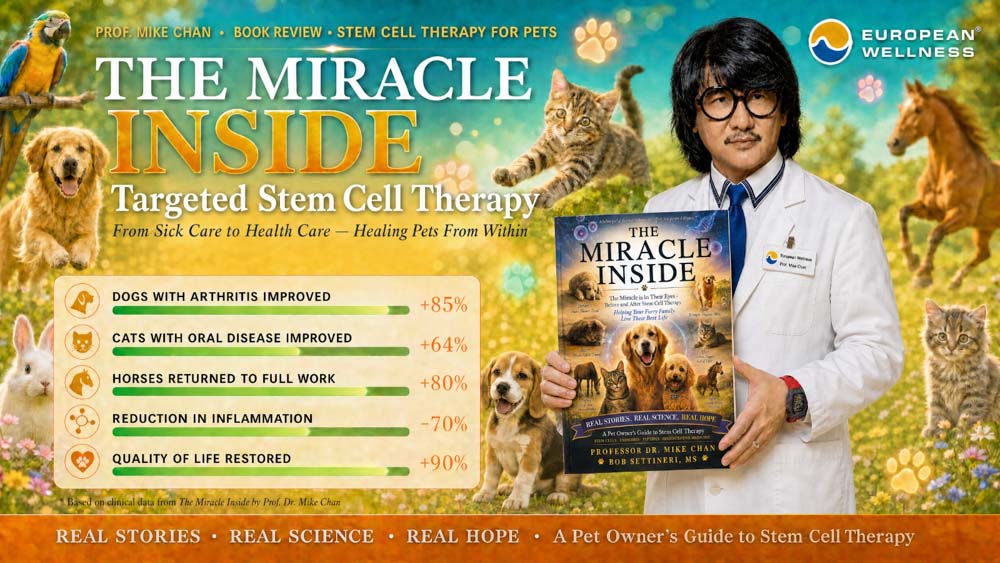
These individual stories are supported by impressive research data. In dogs, 85% of those treated for arthritis showed significant improvement. In cats, 64% of those suffering from chronic gingivostomatitis showed substantial improvement, many avoiding the need for extensive dental extractions. In horses, 80% returned to their previous level of work or higher, with reinjury rates dropping dramatically. The data speaks for itself: this is not wishful thinking, but documented, repeatable science.
Practical Recommendations for Pet Owners
Prof. Mike Chan does not merely offer scientific theory; he provides actionable guidance for families considering this path. The book outlines clear recommendations to help pet owners make informed, confident decisions.
The first step is determining whether your pet is a strong candidate. Conditions such as arthritis, hip dysplasia, chronic kidney disease (especially in cats), and certain heart conditions often respond very well to stem cell therapy. Conversely, end-stage organ failure or advanced cancer may not benefit as significantly. The book presents a practical “traffic light” system: green-light conditions are strong candidates, yellow-light conditions may benefit with careful consideration, and red-light conditions are unlikely to respond.
Age is frequently a concern, but Prof. Mike Chan emphasizes that overall health is a more critical factor than chronological age. A relatively healthy 15-year-old cat might be a better candidate than a severely ill 8-year-old dog. Horses commonly receive stem cell therapy well into their twenties, and dogs in their teens often show remarkable improvements. The key question is not “how old is my pet?” but rather “is my pet still enjoying life and limited by a specific, treatable condition?”
When consulting with a veterinarian, Prof. Mike Chan recommends asking whether they use comprehensive protocols like his five-pillar approach, what their success rate is with similar cases, and what the realistic timeline for results looks like. He also advises pet owners to be wary of practitioners who guarantee specific results or pressure them into immediate decisions without a thorough discussion of risks and alternatives.
Post-treatment care is equally important. Prof. Mike Chan recommends maintaining appropriate weight, following exercise recommendations as healing progresses, and keeping a simple journal of the pet’s activities to track improvements. Many pets benefit from follow-up treatments six to twelve months later, and combining stem cell therapy with complementary approaches such as acupuncture or physical therapy can further optimize results.
“The miracle isn’t just in the cells — it’s in the love that motivates us to seek every possible way to help our furry family members feel their best.” — *Prof. Mike Chan, The Miracle Inside*
Conclusion
The Miracle Inside is an essential read for anyone who views their pet as a cherished family member. Prof. Mike Chan has illuminated a path forward that moves veterinary care from reactive symptom management to proactive cellular healing. By harnessing the body’s innate ability to repair itself, we are no longer limited to watching our companions fade; we now have the tools to help them live their best, most vibrant lives.
What makes this book particularly valuable is its accessibility. Prof. Mike Chan and Bob Settineri have taken decades of scientific research and distilled it into a guide that any pet owner can understand and act upon. The analogies are vivid, the stories are moving, and the recommendations are practical. Whether your pet is a dog struggling with arthritis, a cat battling chronic illness, or a horse whose career seemed over, this book offers a message of genuine hope — not the false hope of miracle cures, but the grounded hope of science applied with compassion and precision.
This commentary is based on “The Miracle Inside: Before and After Stem Cell Therapy” by Professor Dr. Mike Chan and Bob Settineri, MS. Published by Gatekeeper Press, Florida, USA.
Get your copy of The Miracle Inside today.
Follow European Wellness:



Follow European Wellness Academy:
Follow Prof. Dato’ Sri Dr. Mike Chan:

Related Posts