Immerse yourself in a glamorous landscape of emerging trends and lucrative opportunities at Cosmoprof Asia…
DOWN SYNDROME REVERSAL: Ana Victoria’s Triumph and Prof. Mike Chan’s Brain-Targeted Regenerative Therapy Brings New Hope
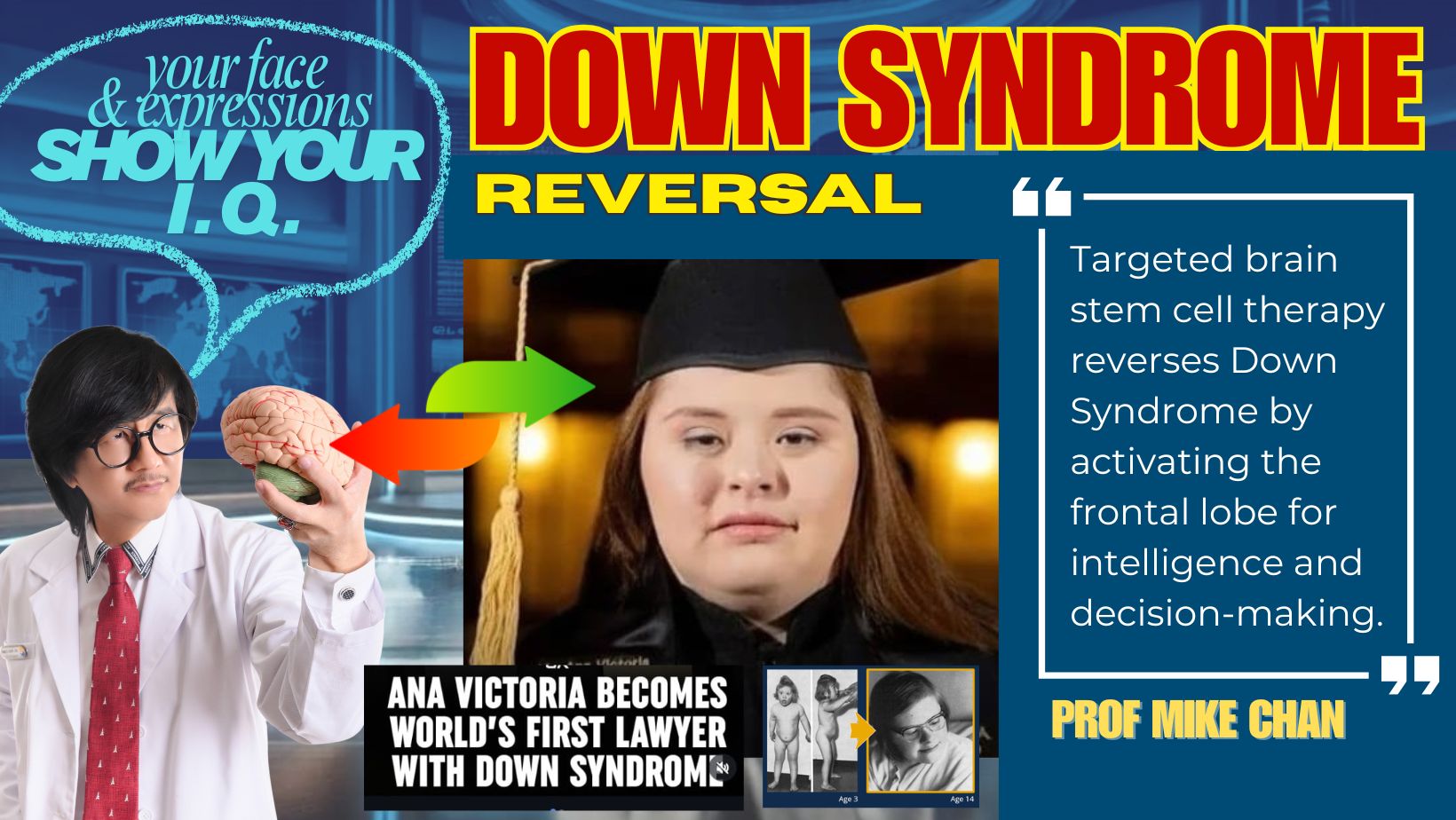
When nobody believed in her dreams, Ana Victoria Espino de Santiago believed harder. The young Mexican lawyer, born with Down syndrome, has defied every expectation placed upon her since childhood. In a world that often underestimates individuals with genetic and developmental differences,
Ana Victoria’s story shines as a testament to determination, perseverance, and the evolving potential of modern science. Her journey — from being told she could never practice law to becoming the world’s first lawyer with Down syndrome, is not only inspirational but also symbolic of a profound shift in how medicine and society now view genetic conditions.
Her success draws global attention to Down syndrome (Trisomy 21), a genetic condition that occurs when a person has a full or partial extra copy of chromosome 21. Affecting approximately. one in every 700 births worldwide, it has long been regarded as a lifelong, untreatable disorder characterized by developmental delays, intellectual disabilities, and distinctive physical features.
Yet, Ana Victoria’s triumph and emerging medical breakthroughs suggest that what was once considered impossible may no longer be beyond reach.
“Your face and expressions show your IQ and intelligence,” said Prof. Mike Chan, emphasizing that neurological function and cognitive vitality are deeply reflected in one’s facial tone, symmetry, and micro-expressions, which mirror the health and activity of the brain’s frontal lobe.
Down Syndrome and the New Frontier of Treatment
For decades, medical textbooks declared that chromosomal disorders such as Down syndrome had no curative treatment. Traditional therapies have focused on managing symptoms, improving motor skills, speech, and learning through early intervention.
However, Prof. Mike Chan, Chairman and Founder of the European Wellness Biomedical Group and a pioneer in cellular therapy and regenerative medicine, challenges this long-held belief.
Drawing from over three decades of clinical research, he asserts that bioregenerative medicine can now “reprogram the body’s healing mechanisms by restoring and regenerating specific organ functions at the cellular level.”
Prof. Chan’s work, through Fetal Cell Technologies International (FCTI) and the European Wellness Academy, has advanced the use of organospecific cell therapy — a principle based on “Similia Similibus Curantur” or “like cures like.”
This concept, which he describes in his seminal works such as The Dawn of New Medicine: Stem Cell Therapy – Old Dogma, New Hope and Stem Cells in Regenerative Medicine: Carpe Diem – Carpe Vitam!, underscores that every organ must be treated with its own specialized cellular counterpart. In other words, hepatocyte cells are used for liver repair, cardiomyocytes for heart regeneration, and neuronal precursor cells for the brain.
In the context of Down syndrome, Prof. Chan and his team have applied this philosophy through targeted bioregenerative therapy, using frontal lobe, cerebellum, thalamus, medulla alba, and hypothalamic precursor cells to help improve cognitive and psychomotor function.
This approach, first explored by pioneers such as Prof. F. Schmid who treated over 3,500 cases of Down syndrome using fetal cell therapy has shown remarkable outcomes.
According to historical data and recent clinical documentation cited by Prof. Mike Chan, many treated individuals demonstrated improved muscle tone, speech, focus, and social engagement, with parents reporting that their children exhibited greater alertness, expressive language, and emotional balance.
As Prof. Mike Chan notes,
“Not all stem cells are alike, nor can they treat all diseases. Each of the 400-plus cell types in our 78 organs carries its own molecular identity. True regenerative medicine means treating every dysfunction with its precise cellular counterpart.”
This philosophy of precision medicine is reshaping how clinicians approach genetic and neurodevelopmental disorders — shifting focus from symptom management to cellular-level rejuvenation.
Scientific Protocols for Down Syndrome Treatment
Prof. Mike Chan’s scientific protocol for complex neurodevelopmental disorders like Down Syndrome emphasizes precision medicine and targeted organ regeneration.
This approach requires meticulous planning, detailed diagnosis (DDRR paradigm), and the highly selective use of cellular components, particularly focusing on brain-specific regeneration.
Renowned globally for his pioneering contributions to stem cell research and regenerative medicine, Prof. Chan underscores the intricate precision required in neurological intervention. He explains:
“The human brain is an immensely complex organ, comprising 52 lobes and 67 distinct types of brain cells, each with unique functions and molecular profiles. For this reason, there must be absolute precision in how you treat the patient — whether through stem cells, peptides, or exosomes.”
In addressing the neurological dimensions of Down syndrome, Prof. Chan emphasizes the brain’s remarkable capacity for adaptation and regeneration. “The frontal lobe, responsible for intelligence and decision-making, only reaches full maturity around the age of 25,” he notes. “This means we can still enhance cognitive ability, and we can still make someone smarter.”
Through his precision-based protocols, which target specific regions of the brain to restore cellular communication and function, Prof. Chan expresses profound optimism for the future of neuroregenerative therapy.
“All neurodevelopmental disorders are treatable,” Prof. Chan asserts, reflecting a vision where science and precision unite to unlock the brain’s untapped potential.”
BOOKS: Bibliography and Synopsis
The following five publications, including those authored by Prof. Chan and his colleague Dr. Abdul Halim Abdul Jalil, provide the foundational knowledge linking precision regenerative medicine to the diagnosis and treatment of conditions such as Down Syndrome.
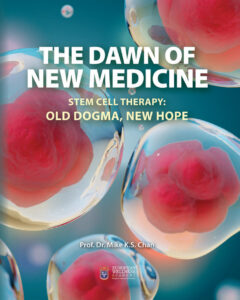
The Dawn of New Medicine – Stem Cell Therapy: Old Dogma, New Hope.
Author: Prof. Dato’ Sri Dr. Mike Chan
Synopsis: This book explicitly explores stem cell therapy as a form of regenerative medicine that promotes the regrowth, repair, or replacement of damaged tissues. It is highlighted as aiming “to inspire hope in managing conditions such as Down Syndrome, Autism Spectrum Disorder, Cerebral Palsy, and global developmental delay”. The book focuses on the possibility of using targeted therapies to address the neurological and developmental challenges associated with the syndrome.
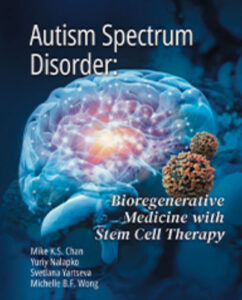
Autism Spectrum Disorder: Bioregenerative Medicine With Stem Cell Therapy.
Author: Prof. Dato’ Sri Dr. Mike Chan
This book outlines supportive bioregenerative treatments vital for conditions requiring neurological repair. It delves into specific adjunct therapies such as antioxidant therapy, hyperbaric oxygen therapy, and mitochondrial organelles replacement therapy. These protocols are integrated into the overall treatment strategy for Down Syndrome to manage oxidative stress and create an optimal cellular environment for the targeted brain-specific precursor stem cells that are utilized in Prof. Chan’s regenerative medicine approach.
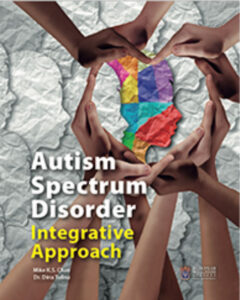
Autism Spectrum Disorder: Integrative Approach.
Author(s): Prof. Dato’ Sri Dr. Mike Chan and Dr. Dina Tulina
This book approaches neurodevelopmental issues (which share common biological deficits with Down Syndrome) by exploring autism as a mitochondrial disease. It details bioregenerative therapies designed to target underlying root causes rather than just symptoms, focusing on optimizing cellular function and addressing metabolic problems critical for improving the neurological outcomes of individuals with Down Syndrome.
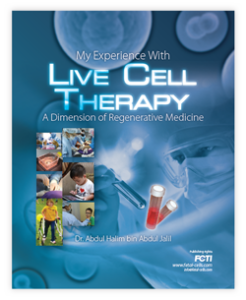
My Experience With LIVE CELL THERAPY.
Author: Dr. Abdul Halim Abdul Jalil
This publication discusses the author’s personal journey and provides crucial insight into the preparation and requirements for optimal live cell therapy outcomes. This aligns with the “Detox and Repair” stages of the DDRR paradigm, emphasizing the importance of a healthy lifestyle, including proper nutrition, exercise, and detoxification, which are essential preparatory steps for enhancing the effectiveness of precursor stem cell treatments in neurodevelopmental conditions like Down Syndrome.
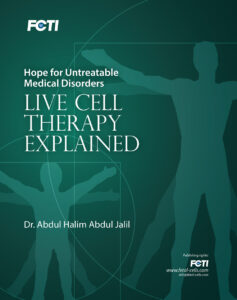
Hope For Untreatable: Medical Disorders With Live Cell Therapy Explained
Author: Dr. Abdul Halim Abdul Jalil
This medical research publication explores innovative live cell therapy approaches for addressing previously untreatable medical conditions. For Down Syndrome, which is often considered conventionally untreatable, this book outlines protocols for using live cell therapy to target systemic and cellular deficits, aligning with Prof. Chan’s core belief that “The untreatable is treatable”.
👉 Above are five books which cover Down Syndrome treatment by Prof. Mike Chan and The European Wellness team. Get your copies today at https://european-wellness.eu/books/
Clinical Success Stories and Research Evidence
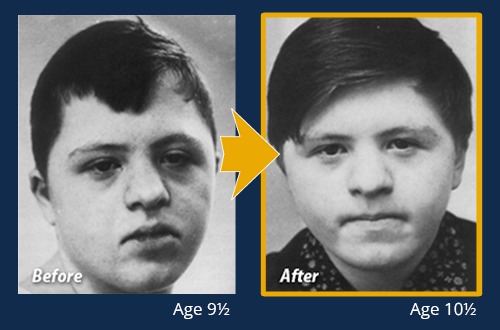
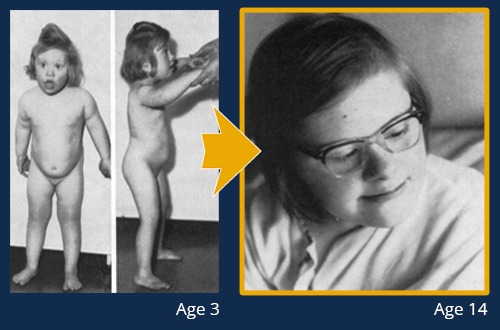
The clinical evidence supporting this new direction is growing. Prof. Chan references the compelling case of Brigitte Baxas, born with Down syndrome in 1973, who began receiving cell therapy at just four months old under the care of her father, a physician trained in cell therapy.
Over the years, Brigitte continued to receive regular treatment and went on to live a healthy, active adult life far exceeding the typical life expectancy once associated with the condition. Her development, as documented through photographs and reports, demonstrated reduced dysmorphic facial features, improved psychomotor skills, and remarkable vitality.
“Brigitte is living proof that genetic destiny can be redirected through scientific intervention,” Prof. Chan reflects in A Comprehensive Guide to Biological Medicine and Wellness.
Similarly, case reports from FCTI clinics describe children who, after receiving multi-organ precursor cell therapy, displayed enhanced attention, better speech articulation, and a visible change in energy and engagement.
Prof. Chan’s commentary on these outcomes emphasizes the role of brain-specific stem cells in neurodevelopmental recovery, explaining that “by restoring mitochondrial health, improving neuronal signaling, and reducing oxidative stress, we give the brain a chance to rebuild itself.”
His recent commentary in Biomedical Regeneration and Neurodevelopmental Science Review (2024) summarizes this vision succinctly:
“Diseases once labeled untreatable may now be addressed through the convergence of precision cellular therapy, peptide signaling, and mitochondrial rejuvenation. Down syndrome exemplifies this shift — where perseverance meets progress, and hope meets evidence.”
Integrated Approach to Regeneration
Beyond cellular therapy, Prof. Chan’s multidisciplinary approach integrates hormonal and metabolic optimization, immunotherapy, and neurorehabilitative training. He explains that restoring function in complex conditions like Down syndrome requires more than cell implantation alone — it demands a harmonized system where each organ communicates effectively with the others.
“Longevity depends on brainspan and healthspan,” he often states. “When we improve the biological age of every organ cell, from the cerebellum to the heart — we improve the human experience itself.”
This integrated model, rooted in cellular precision, has helped redefine the medical paradigm. Bioregenerative medicine does not promise a “cure” in the conventional sense; instead, it offers a scientific path to functional improvement, enhanced independence, and longer, healthier lives. It invites a rethinking of what medicine can achieve for individuals with genetic or neurological conditions.
From Inspiration to Innovation
Ana Victoria’s story personifies this new era. Her determination and success mirror the very ethos of regenerative medicine — the belief that limitations exist only until science and spirit find a way to overcome them. Her life challenges not just societal prejudice, but also scientific pessimism about what’s possible for individuals with Down syndrome.
Prof. Chan summarizes this beautifully in his reflections on medical evolution:
“Through biohacking and regenerative protocols, we can rejuvenate the brain, organs, and systems that were once thought beyond repair. The real miracle lies not in the science alone, but in the courage to apply it.”
There are three powerful truths that emerge from this narrative:
- Belief fuels biology — Just as Ana Victoria believed harder, regenerative medicine reawakens the body’s belief in its own potential to heal.
- Precision transforms outcomes — Organ-specific, targeted cell therapy achieves what generalized medicine cannot.
- Science meets humanity — When compassion and cellular innovation unite, healing becomes more than possible — it becomes inevitable.
Ana Victoria’s triumph is not merely a personal victory; it symbolizes a scientific revolution inspired by perseverance and guided by pioneers like Prof. Mike Chan. Her success, and the research that supports it, remind us that the only real disability is the failure to believe — in ourselves, in progress, and in the boundless capacity of human regeneration.
Follow European Wellness:



Follow European Wellness Academy:
Follow Prof. Dato’ Sri Dr. Mike Chan:

Related Posts