Cellular ageing is often spoken about as though it were a single clock ticking down…
The Handbook of Skin & Aging — A Window Into the Science of Living Well
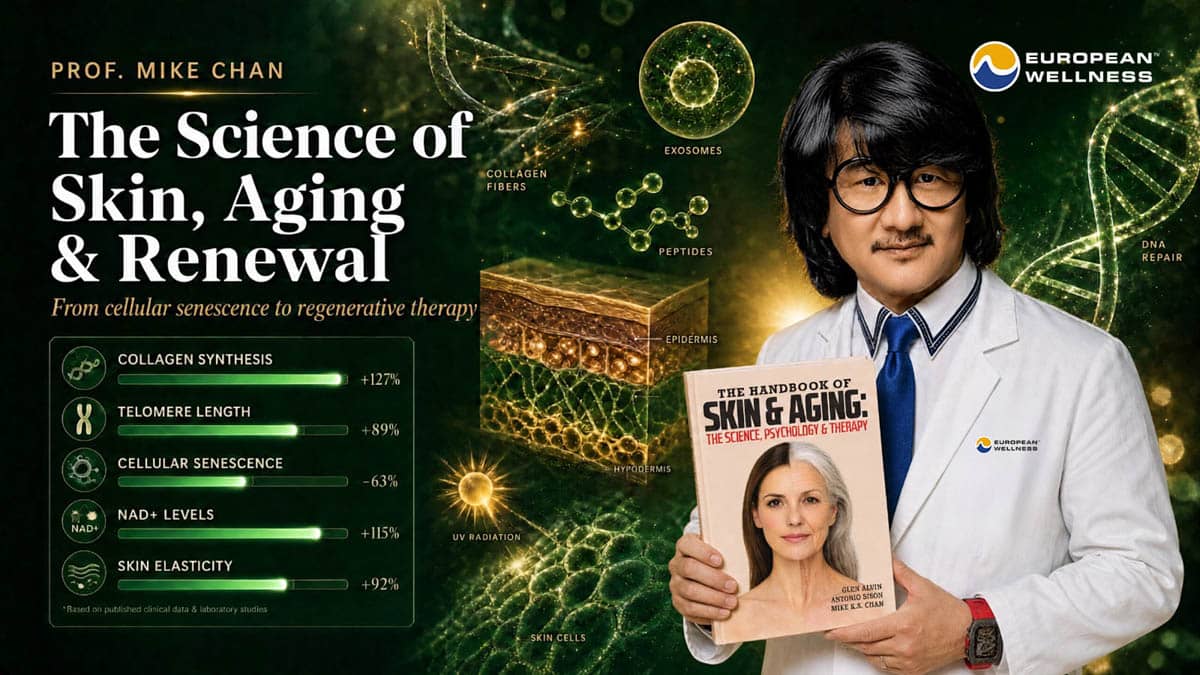
There is a question that has occupied my mind for decades, one that I encounter in every consultation room, at every international symposium, and in every conversation with the patients I have had the privilege of treating — from celebrities and heads of state to world-class athletes and some of the most influential individuals on the planet. That question is deceptively simple: Why do we age, and what can we do about it?
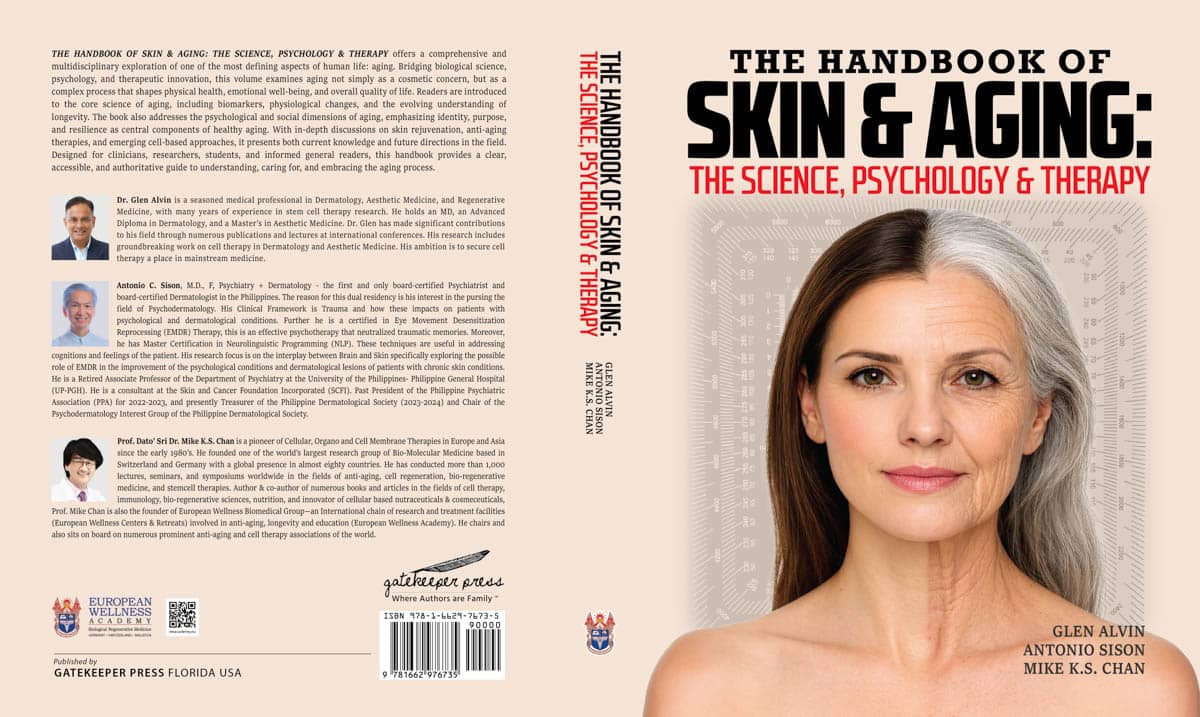
The recently published Handbook of Skin & Aging: The Science, Psychology & Therapy, which I co-authored alongside Dr. Glen Alvin and Dr. Antonio Sison, represents our collective attempt to answer that question with both scientific rigour and genuine human compassion. It is a book I believe belongs not only on the shelves of clinicians and researchers, but in the hands of anyone who has ever looked in the mirror and wondered what time is doing to their face — and to their body.
Why Your Skin Tells the Story of Your Health
Most people think of aging skin as a cosmetic inconvenience. A few wrinkles here, some pigmentation there, perhaps a loss of firmness that no amount of moisturiser seems to reverse. But the handbook challenges this superficial view with a compelling argument: your skin is not merely aging — it is reporting. It is a living, breathing organ that reflects the cumulative impact of everything your body has endured — from the sun you absorbed on childhood holidays to the stress you carried through decades of work and worry.
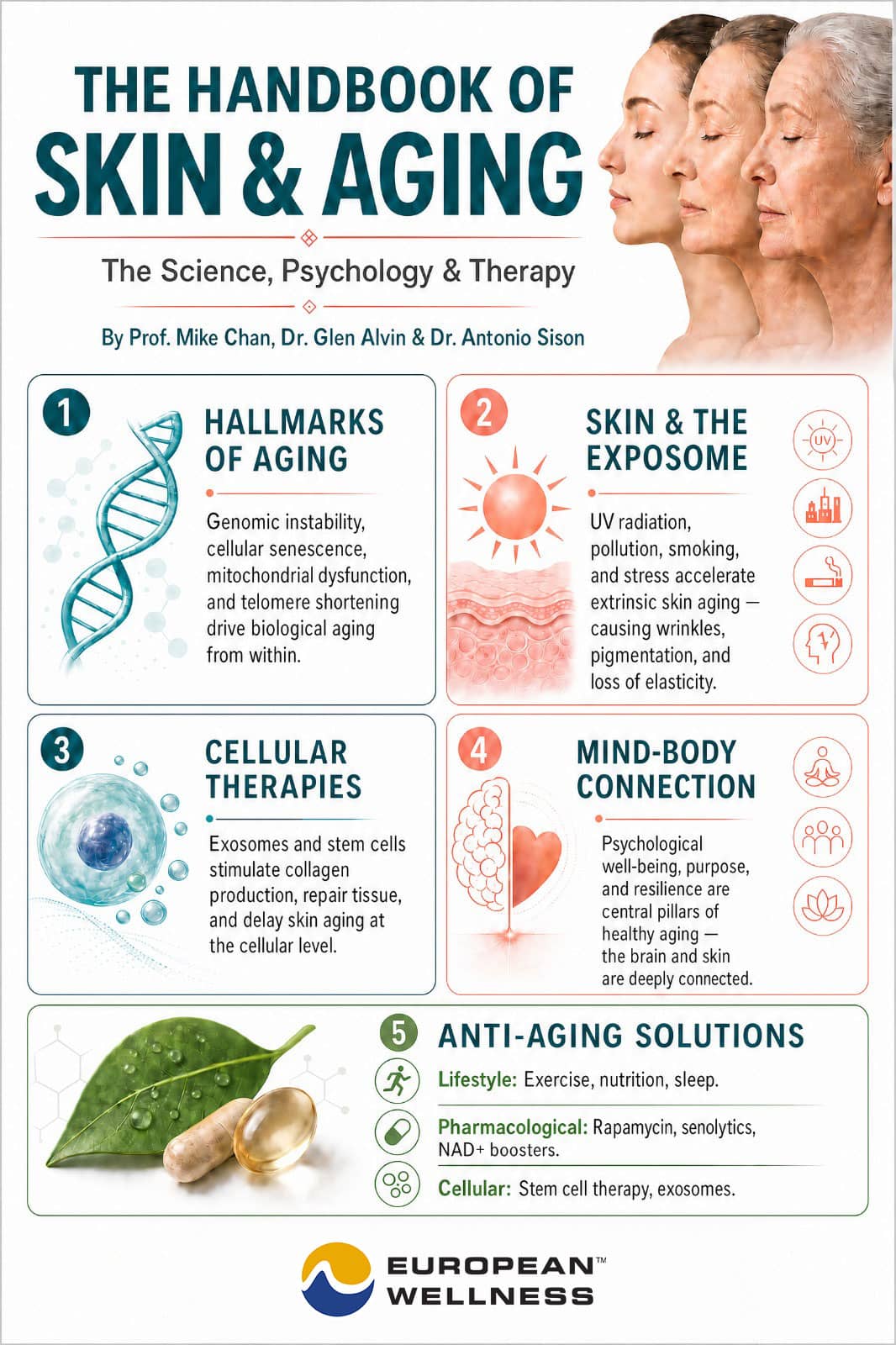
The book introduces the concept of the “exposome” — the totality of environmental exposures that interact with your skin over a lifetime. Chronic sun exposure is the most significant driver of extrinsic aging, causing the coarse wrinkles, irregular pigmentation, and age spots that many people attribute simply to “getting older.” But pollution, cigarette smoke, poor sleep, and chronic stress are equally culpable. Smokers, for example, develop a distinctive pattern of premature aging — prominent lines around the mouth, sharply defined crow’s feet — because nicotine constricts blood vessels, depriving the skin of oxygen and nutrients, and reducing collagen and elastin fibres in the dermis.
“Our skin begins to age from the moment we are born. In a world obsessed with youthfulness, this handbook edifies how to look after your skin while embracing an aging face.” — Prof. Mike Chan
Consider a practical example that Prof. Mike Chan often uses with patients: imagine two identical twins, one of whom spent their adult life working outdoors without sun protection, while the other worked indoors and wore SPF daily. By their fifties, the difference in their skin would be dramatic — not because of genetics, but because of the exposome. This is both sobering and empowering: if environmental factors drive so much of visible aging, then modifying those factors can meaningfully change the outcome.
The Invisible Architecture of Aging — What Is Really Happening Inside Your Cells
To understand why the skin ages the way it does, the handbook takes readers on a fascinating journey into the cellular and molecular machinery of the human body. This is where the science becomes truly compelling — and where Prof. Mike Chan’s decades of expertise in bio-regenerative medicine come into sharp focus.
The book details the hallmarks of aging — a framework of fourteen interconnected biological processes that collectively drive the aging phenotype. These include genomic instability (the accumulation of DNA damage over time), telomere attrition (the gradual shortening of the protective caps on chromosomes), cellular senescence (the accumulation of so-called “zombie cells” that refuse to die but also refuse to function properly), mitochondrial dysfunction, and chronic low-grade inflammation — a process the book aptly terms “inflammaging.”
Hallmark of Aging |
What It Means in Plain Language |
Effect on Skin |
| Genomic Instability | DNA damage accumulates faster than it can be repaired | Impaired cell renewal, increased cancer risk |
| Telomere Attrition | Chromosomal caps shorten with each cell division | Cells lose the ability to replicate; tissue thins |
| Cellular Senescence | “Zombie cells” accumulate and release inflammatory signals | Collagen and elastin breakdown; wrinkle formation |
| Mitochondrial Dysfunction | Energy production in cells declines | Reduced skin repair capacity; dull complexion |
| Inflammaging | Persistent low-grade inflammation damages tissue | Accelerated skin degradation; redness and sensitivity |
| Loss of Proteostasis | Damaged proteins accumulate inside cells | Impaired cellular function; accelerated aging |
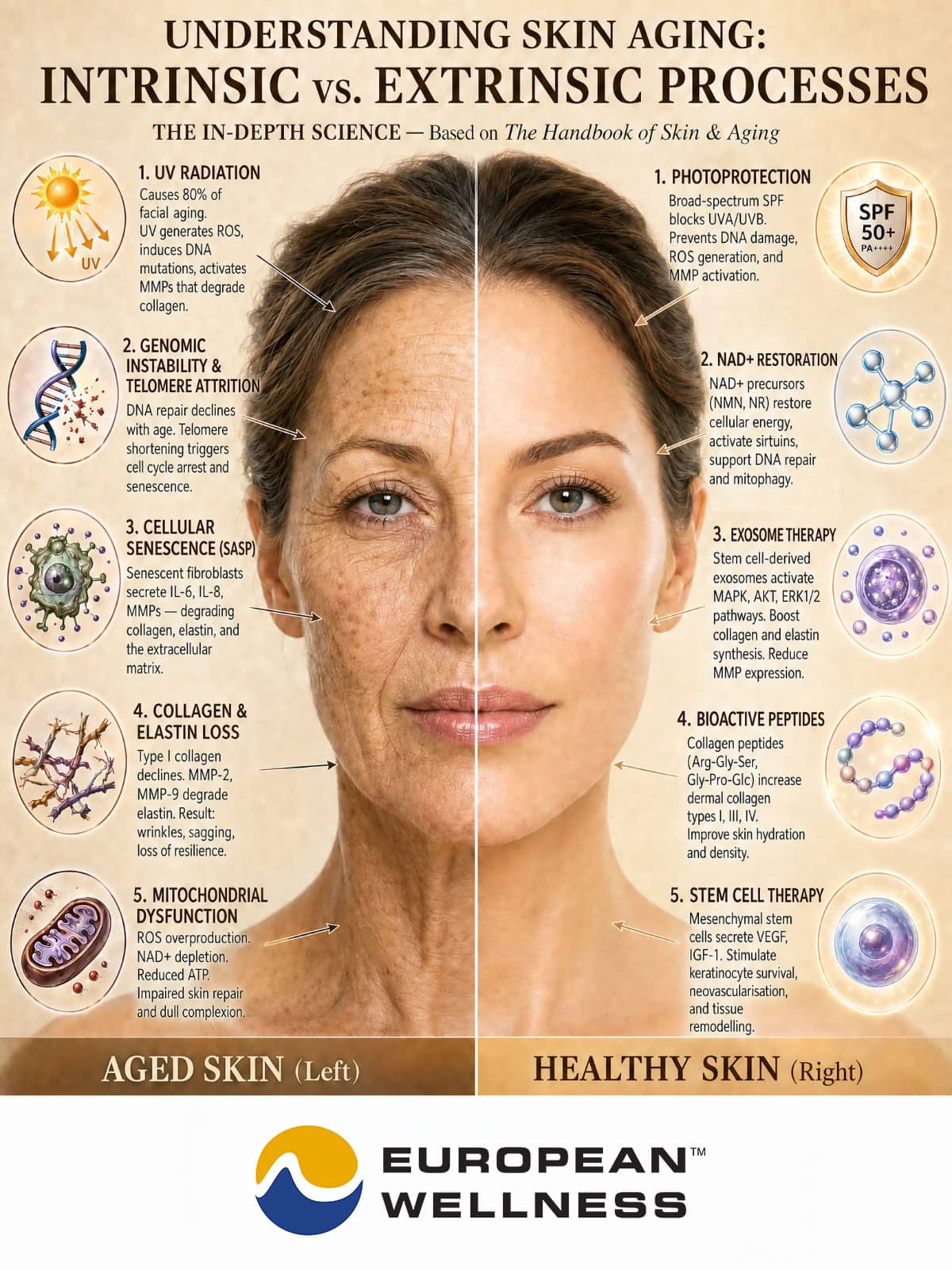
The concept of cellular senescence deserves particular attention because it illustrates so vividly how aging works at the microscopic level. Senescent fibroblasts — the cells responsible for producing collagen and elastin — stop doing their job and instead secrete a cocktail of inflammatory molecules known as the senescence-associated secretory phenotype (SASP). This inflammatory environment degrades the surrounding tissue, accelerating the very aging process the cells were once designed to prevent. It is a cellular mutiny, and understanding it is key to developing effective counter-strategies.
Prof. Mike Chan draws on his pioneering work in cellular and organo therapies to explain why this matters clinically. “When we understand that aging is not a single event but a cascade of interconnected cellular failures,” he explains, “we begin to see that the most effective interventions must work at multiple levels simultaneously — not just on the surface.”
Prof. Mike Chan’s Solutions — From the Clinic to the Cutting Edge
The handbook’s most practically valuable sections are those dedicated to therapeutic interventions. Prof. Mike Chan has spent over four decades developing and refining approaches to anti-aging medicine, and the solutions presented in this book reflect that depth of clinical experience.
Cellular and Cell-Free Therapies
At the forefront of Prof. Mike Chan’s therapeutic philosophy is the use of cellular and cell-free therapies, particularly exosomes and mesenchymal stem cells. Exosomes are nanoscale vesicles — essentially tiny biological packages — secreted by cells to communicate with one another. They carry proteins, lipids, and genetic material, including microRNAs, that can reprogram recipient cells and stimulate regenerative processes.
In the context of skin aging, exosomes have demonstrated a remarkable ability to activate signaling pathways that enhance fibroblast proliferation and migration, increase collagen and elastin production, and reduce the expression of matrix metalloproteinases (MMPs) — the enzymes responsible for breaking down the skin’s structural scaffold. The result is measurable improvement in skin texture, firmness, and hydration.
“Exosomes contain biologically active proteins and genetic material, vital for delaying cell aging by inhibiting the synthesis of aging factors while promoting the production of NAD+ — a critical molecule whose levels decline significantly with age.” — Prof. Mike Chan
Mesenchymal stem cells (SCs) offer another powerful avenue. These multipotent cells possess trophic factors that induce cellular and matrix remodelling, suppress inflammation, and facilitate the recovery of damaged tissue. They release pro-angiogenic factors — including vascular endothelial growth factor (VEGF) and insulin-like growth factor-1 (IGF-1) — that promote the formation of new blood vessels and support keratinocyte survival. In practical terms, this means better-nourished, better-repaired skin.
Pharmacological and Nutraceutical Interventions
The handbook also presents a compelling case for several pharmacological agents that have shown genuine promise in anti-aging research. Rapamycin, an mTOR inhibitor, has demonstrated positive effects on cardiovascular health, neuroprotection, and skin aging by promoting autophagy — the cellular process of clearing out damaged proteins and organelles. Clinical evidence suggests it can prevent wrinkles, pigmentation, and loss of elasticity.
Senolytics — compounds that selectively eliminate senescent cells — represent another exciting frontier. Fisetin, a natural flavonoid found in strawberries and other fruits, has demonstrated potent senolytic activity with a favourable safety profile. It has been shown to reduce senescence markers, extend longevity in animal models, and even mitigate cognitive decline associated with Alzheimer’s disease.
NAD+ precursors, such as nicotinamide riboside (NR) and nicotinamide mononucleotide (NMN), address the age-related decline in cellular energy metabolism. NAD+ is essential for DNA repair, mitochondrial function, and the activation of sirtuins — proteins that regulate cellular health and longevity. Restoring NAD+ levels has shown promise in improving skin quality, metabolic function, and cognitive performance.
Lifestyle as Medicine
Prof. Mike Chan is emphatic that no pharmacological intervention can substitute for the foundational pillars of healthy living. The handbook dedicates substantial attention to the evidence base for exercise, nutrition, sleep, and stress management as primary anti-aging tools.
Regular physical activity reduces inflammaging, supports mitochondrial biogenesis, and maintains muscle mass — all of which have direct implications for skin health and overall vitality. A Mediterranean-style diet rich in antioxidants, omega-3 fatty acids, and polyphenols provides the raw materials for cellular repair and reduces oxidative stress. Quality sleep — during which the body undertakes its most intensive repair processes — is non-negotiable. And chronic psychological stress, which elevates cortisol and promotes systemic inflammation, is one of the most underestimated accelerants of biological aging.
“The challenge for the 21st century is not simply to add years to life, but to add life to years. Prioritising longevity and nurturing a healthy, well-balanced life benefits both the body and the soul.” — Prof. Mike Chan
The following table summarises the key therapeutic recommendations presented in the handbook:
Intervention Category |
Specific Approach |
Primary Benefit |
| Cellular Therapy | Exosome treatment | Collagen stimulation, tissue repair, reduced inflammation |
| Cellular Therapy | Mesenchymal stem cells | Tissue remodelling, angiogenesis, wound healing |
| Pharmacological | Rapamycin (mTOR inhibitor) | Autophagy promotion, cardiovascular and neuroprotection |
| Pharmacological | Senolytics (e.g., Fisetin, Quercetin) | Elimination of senescent cells, reduced inflammaging |
| Nutraceutical | NAD+ precursors (NR, NMN) | Cellular energy restoration, DNA repair support |
| Nutraceutical | Resveratrol, Metformin (caloric restriction mimetics) | Sirtuin activation, metabolic health |
| Lifestyle | Exercise (aerobic + resistance) | Reduced inflammaging, mitochondrial health, muscle preservation |
| Lifestyle | Mediterranean diet, antioxidants | Oxidative stress reduction, skin nourishment |
| Lifestyle | Quality sleep (7–9 hours) | Cellular repair, hormonal balance, cognitive health |
| Psychological | Stress management, mindfulness | Cortisol reduction, reduced systemic inflammation |
The Mind-Skin Connection — A Dimension Too Often Overlooked
One of the most distinctive and intellectually stimulating aspects of this handbook is its treatment of the psychodermatological dimension of aging — the profound and bidirectional relationship between the mind and the skin. Dr. Antonio Sison, the world’s only dual board-certified psychiatrist and dermatologist, contributes a perspective that is rarely found in conventional dermatology texts.
The book explores how chronic psychological stress, unresolved trauma, and negative emotional states can manifest as skin conditions — from accelerated aging and impaired wound healing to flare-ups of eczema, psoriasis, and other inflammatory dermatoses. The skin, as the body’s largest organ and its primary interface with the external world, is exquisitely sensitive to the internal emotional environment.
Prof. Mike Chan has long advocated for a holistic approach to patient care that integrates physical, psychological, and even spiritual dimensions of well-being. The handbook reflects this philosophy, drawing on Erikson’s psychosocial stages, continuity theory, and the concept of “selective optimization with compensation” to argue that psychological resilience, a sense of purpose, and strong social connections are not merely pleasant additions to a healthy life — they are biological imperatives for healthy aging.
For the lay reader, this translates into a simple but powerful message: how you feel about your life matters as much as what you put on your skin or into your body. A person who finds meaning in their work, maintains close relationships, and approaches aging with acceptance and curiosity will, quite literally, age differently — at the cellular level — from one who does not.
A Book for Everyone Who Will Grow Older
The Handbook of Skin & Aging is, at its heart, a book about possibility. It does not promise the impossible — no responsible scientist would. But it does present a compelling, evidence-based case that the trajectory of aging is far more malleable than most people believe. The biological processes that drive aging are real and formidable, but they are also, increasingly, addressable.
Prof. Mike Chan’s contribution to this volume reflects a lifetime of clinical innovation, scientific inquiry, and genuine dedication to improving human health and longevity. His work at the European Wellness Biomedical Group — spanning nearly eighty countries and encompassing cellular therapies, bio-regenerative medicine, and longevity science — has placed him at the forefront of a field that is rapidly maturing from the margins of medicine into its mainstream.
The book’s ultimate message is one that Prof. Mike Chan has carried throughout his career: aging is not something that simply happens to us. It is a process we can understand, influence, and, to a meaningful degree, shape. The goal, as the handbook states with admirable clarity, is to make “100 the new 60” — not through fantasy or false promise, but through science, discipline, and the courage to take our own health seriously.
For anyone who wants to understand why their skin ages, what is happening inside their cells, and what they can realistically do about it, this handbook is essential reading. It is rigorous enough for the clinician, accessible enough for the curious layperson, and honest enough to be trusted.
The Handbook of Skin & Aging: The Science, Psychology & Therapy
Prof. Dato Sri Dr. Mike Chan is a pioneer of Cellular, Organo, and Cell Membrane Therapies in Europe and Asia, and the founder of the European Wellness Biomedical Group. He is co-author of The Handbook of Skin & Aging: The Science, Psychology & Therapy (Gatekeeper Press, 2026).
Follow European Wellness:



Follow European Wellness Academy:
Follow Prof. Dato’ Sri Dr. Mike Chan:

Related Posts