The Kidney Paradox: Bioregenerative and Longevity Approaches for Chronic Renal Disorders (2026), written by Mike…
The Kidney Paradox and the Case for Acting Before Symptoms Appear

The Kidney Paradox: Bioregenerative and Longevity Approaches for Chronic Renal Disorders (2026), written by Mike K. S. Chan and Glen Alvin with other contributors, is a 12-chapter survey of kidney function, acute and chronic kidney disease, diabetic nephropathy, regenerative research and preventive care. It is not a report of one new clinical trial; it is a wide-ranging synthesis that connects physiology, clinical care and emerging science. Its most important message is also its most practical: kidney health should be protected before the first obvious symptom arrives.
The Kidney Does More Than Filter
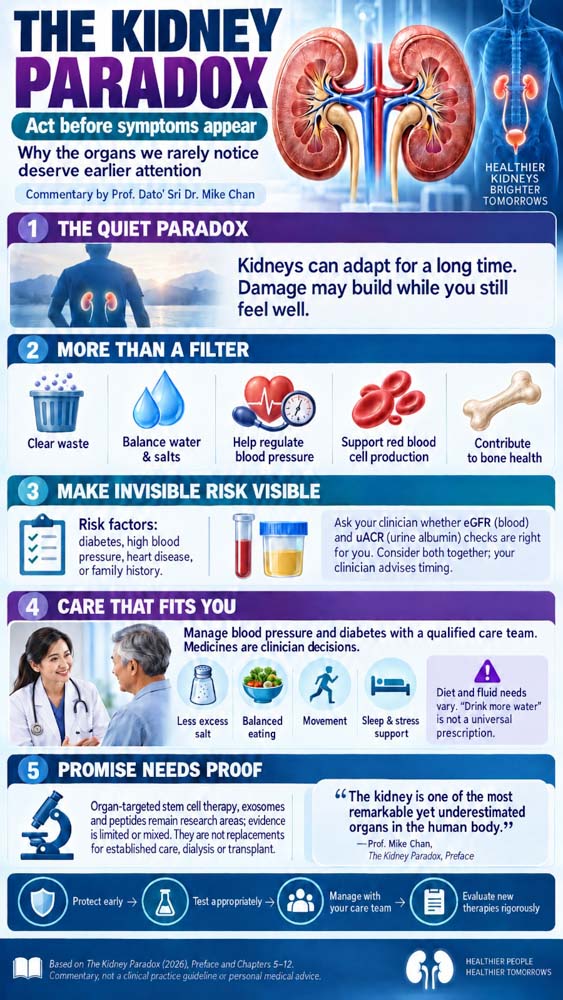
The kidneys are often described as the body’s filters, but that is only part of the job. They remove waste from the blood, balance water and salts, help regulate blood pressure, support red blood cell production and contribute to bone health. Think of them as a water-treatment plant linked to a thermostat and a control room: they clean, balance and signal at the same time.
That complexity explains the paradox at the heart of the book. Kidneys can adapt for a long time, so damage may build quietly. A person can feel well while blood pressure, diabetes or another condition is gradually straining the kidney’s tiny filtering units. Urine albumin can act like a small leak from a damaged filter; a blood test that estimates filtration can show how well the system is coping. Neither test should be interpreted alone, but together they can help clinicians notice trouble earlier.
“The kidney is one of the most remarkable yet underestimated organs in the human body.”
—Prof. Mike Chan
The book’s strength is its whole-body view. Kidney disease is connected to the heart, blood vessels, metabolism, immunity and a person’s environment—not just to urine or dialysis. That matters in ordinary life. Someone with diabetes may feel no kidney symptoms, yet a routine blood-and-urine review could flag a change early enough for a clinician to respond. The point is not to frighten people; it is to make invisible risk visible.
A Practical Solution Begins Before Symptoms
The solution I set out in the book is integrated rather than based on one miracle treatment. It starts with prevention and early detection, then uses individualized medical care and daily habits to reduce avoidable strain. The book’s later chapters add precision tools and regenerative research as possible next steps, not substitutes for proven care.
A reader can translate that approach into a few sensible conversations with a healthcare professional:
- Know your risk. Diabetes, high blood pressure, heart disease and a family history of kidney problems are reasons to ask whether kidney checks are appropriate.
- Check before you feel unwell. Ask about a blood test for estimated filtration (eGFR) and a urine albumin test (often reported as uACR). Your clinician can advise when and how often to repeat them.
- Treat the drivers. The book reviews blood-pressure and diabetes management, including kidney-protective medicines such as ACE inhibitors or ARBs and SGLT2 inhibitors for suitable patients. These are clinician decisions, based on diagnosis, kidney function, other medicines and lab results—not a do-it-yourself checklist.
- Make habits supportive and personal. The book discusses less excess salt, balanced whole-food eating, regular movement, sleep and stress management. But kidney diets and fluid needs can change with disease stage and lab results. “Drink more water” is not a universal prescription; neither should anyone start supplements or stop prescribed medicine without professional advice.
A second example comes from the book’s discussion of environmental risks. Someone doing outdoor work in hot weather may face repeated heat and dehydration stress. Shade, rest breaks and a sensible hydration plan can help reduce avoidable strain, while a person already living with kidney disease should follow the fluid guidance given for their own condition.
“The kidney must be appreciated as a dynamic organ situated at the crossroads of metabolism, inflammation, immunity, circulation, and human behaviour.”
—Prof. Mike Chan
This is also where the book’s P4 idea—predictive, preventive, personalised and participatory care—becomes useful in plain language. Use risk information to look ahead, act before damage advances, fit care to the individual, and make the patient an active partner rather than a passive recipient. The book is right to emphasize that good care depends not only on new technology, but on timely testing, clear explanations and follow-up people can actually access.
Regeneration is a Promise That Needs Proof
The most future-facing chapters examine stem cells, exosomes and peptides. In simple terms, these approaches aim to influence the kidney’s repair signals, calm damaging inflammation or help vulnerable cells cope with stress. The biological ideas are interesting, but a plausible mechanism is not the same as a treatment proven to help patients.
Importantly, the book itself gives readers reasons to keep that distinction clear. It describes early clinical work on mesenchymal stem cells as generally encouraging for safety, while noting that a Phase II study in acute kidney injury after cardiac surgery did not show a significant improvement in kidney recovery. The peptide chapter says direct clinical evidence for some kidney-directed peptide approaches remains limited and calls for further evaluation of delivery, dose and long-term safety. Exosome and other regenerative strategies also need carefully designed human studies before they can be treated as routine kidney care.
Where the book discusses named commercial cell or peptide products, readers should ask for independent human-trial evidence, the product’s regulatory status in their country, manufacturing standards, known risks and costs. That is not a rejection of research; it is how patients are protected from confusing scientific promise with demonstrated benefit. Regenerative therapies should not replace established medical care or, when needed, dialysis or transplantation.
My central answer, based on the book, is therefore straightforward: protect kidney health early, detect changes with appropriate tests, manage the causes with a qualified care team, and evaluate regenerative ideas rigorously before calling them solutions. The lasting value of The Kidney Paradox is that it joins hope to responsibility.
“It is my sincere hope that this book will inspire greater awareness, curiosity, and compassion towards kidney disease.”
—Prof. Mike Chan
A quiet organ cannot always announce that it is under strain. Awareness, testing and thoughtful care can speak for it.
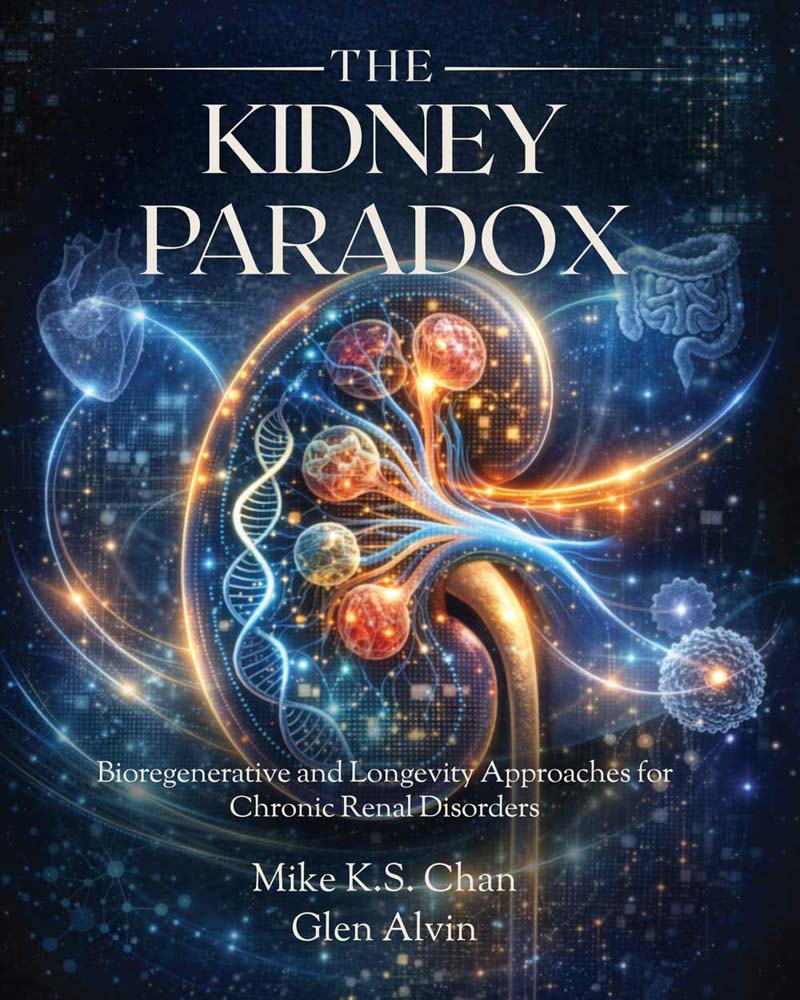
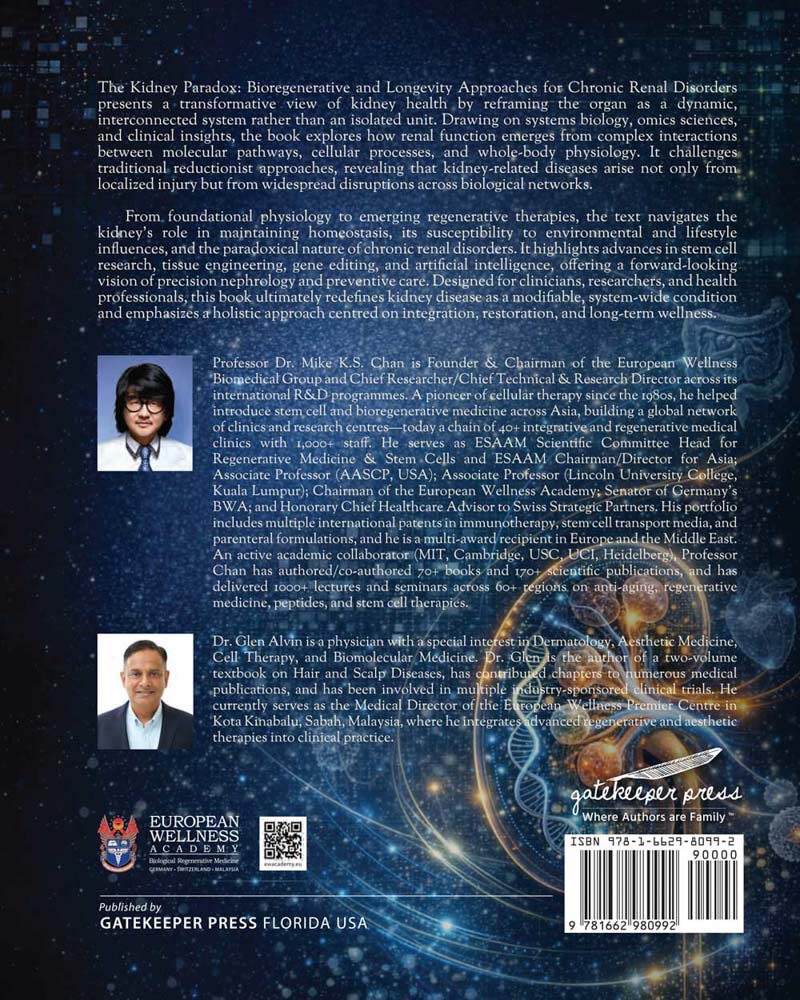
Book-cover spread — front cover at left, back cover at right.
Read Further
To explore the study in more detail, visit the publication page
Follow European Wellness:



Follow European Wellness Academy:
Follow Prof. Dato’ Sri Dr. Mike Chan:

Related Posts