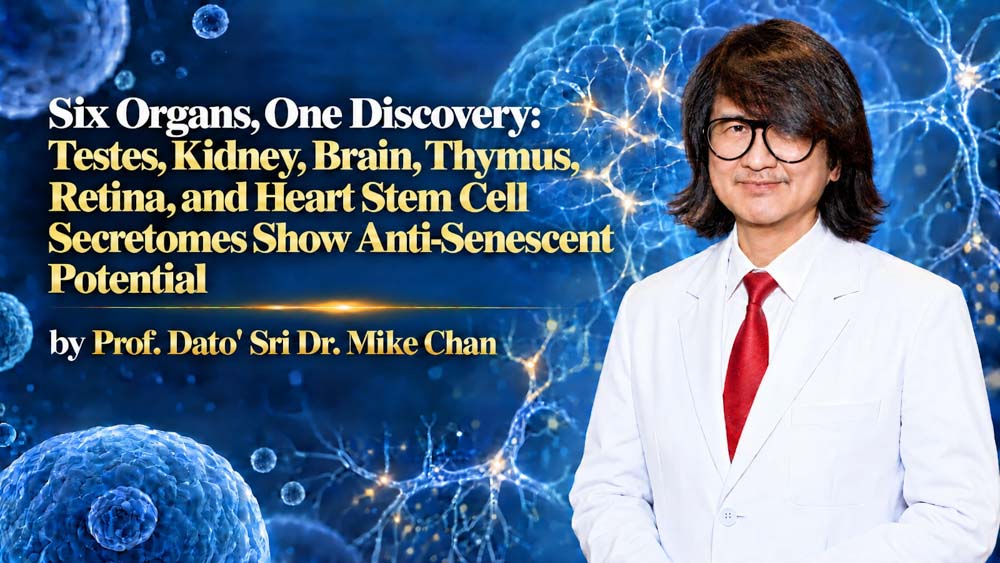
Cellular ageing is often spoken about as though it were a single clock ticking down…
Unlocking the Body’s Biological Treasury: A Landmark New Book on Cell Therapy and Healthy Longevity
A quiet but profound transformation is taking place in modern medicine. Instead of focusing solely on controlling symptoms and slowing the progression of disease, researchers are increasingly exploring whether damaged tissues can be repaired, biological functions restored, and the period of life spent in good health extended.
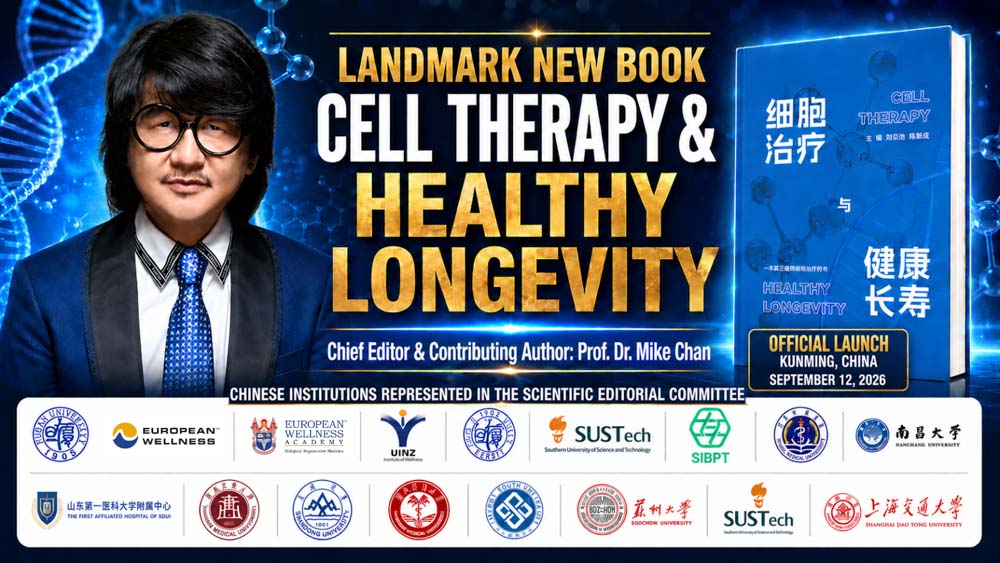
This emerging direction lies at the heart of Cell Therapy and Healthy Longevity, a major medical monograph published in July 2026 by the Macao Science Publishing House.
Published in July 2026 by Macao Science Publishing House, the book is jointly led by its two chief editors, Prof. Liu Baochi of the Shanghai Public Health Clinical Center, Fudan University, and internationally renowned Malaysian scientist Prof. Dr. Mike Chan of European Wellness Biomedical Group. Significantly, Prof. Chan is not only a chief editor but also a contributing author, bringing more than four decades of international research and clinical experience in cellular therapy, immunology, and regenerative medicine to the publication.
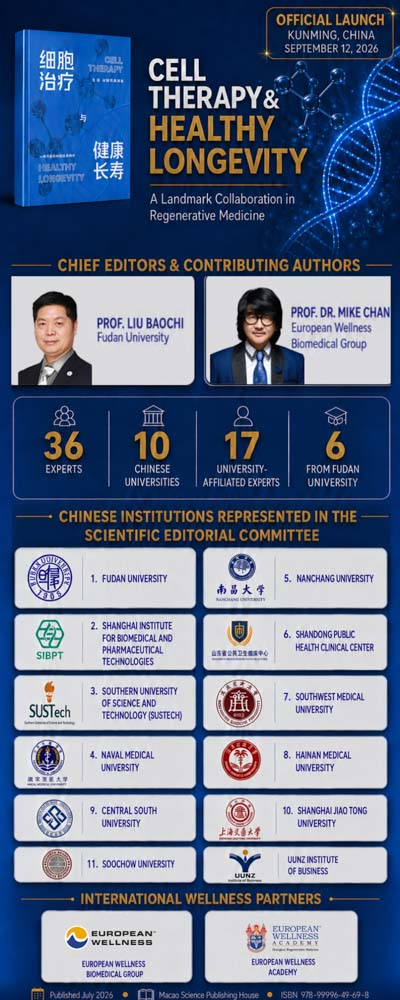
The monograph brings together the knowledge of 36 experts, including leading contributors associated with 10 Chinese universities. Fudan University has the strongest representation, with six experts drawn from the university and its affiliated medical institutions: Prof. Liu Baochi, Chen Shanwen, Li Lei, Liu Li, Si Yanhui, and Wang Hao.
Other contributors represent the Southern University of Science and Technology, Naval Medical University, Nanchang University, Shandong University, Southwest Medical University, Hainan Medical University, Central South University, Shanghai Jiao Tong University, and Soochow University. This distinguished academic collaboration gives the publication exceptional breadth, combining Chinese clinical experience, university-led research, and European expertise in cellular and regenerative medicine.
Through this formidable alliance, Cell Therapy and Healthy Longevity emerge as more than a medical textbook. It is an important international reference connecting laboratory discoveries with clinical practice while presenting a shared scientific vision for cellular repair, disease management, and the extension of healthy human life.
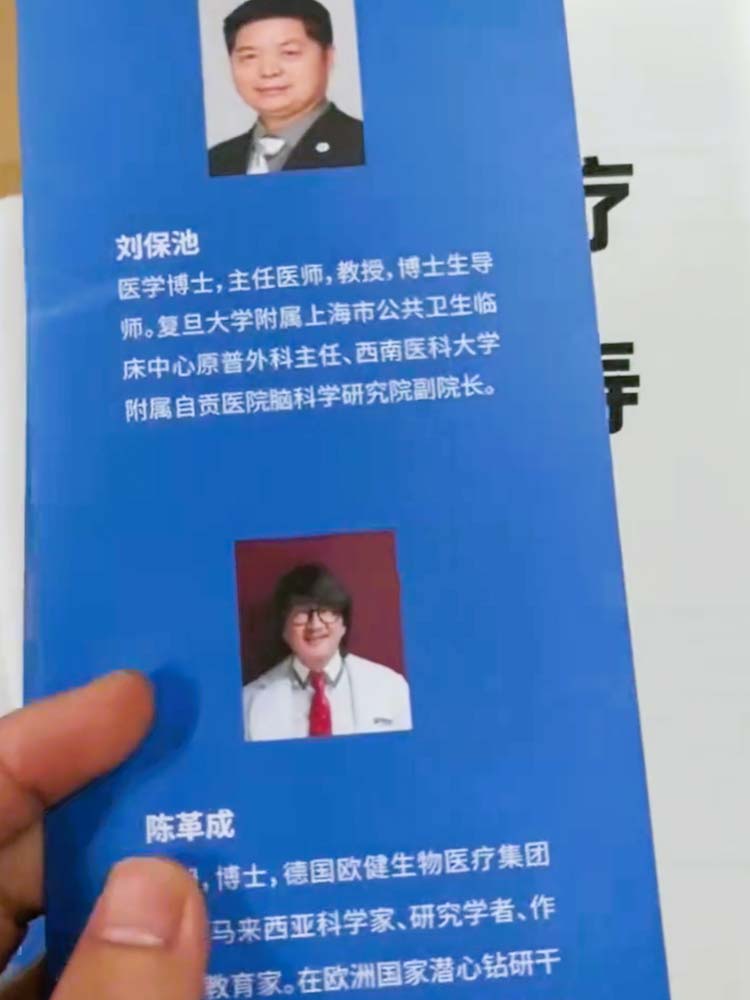
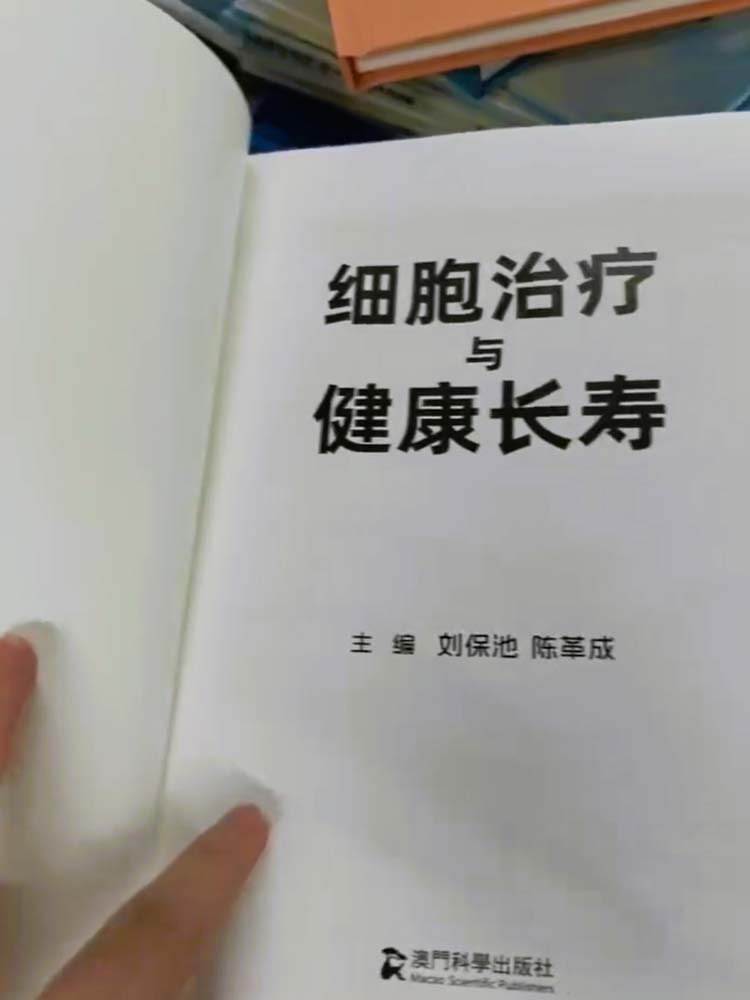
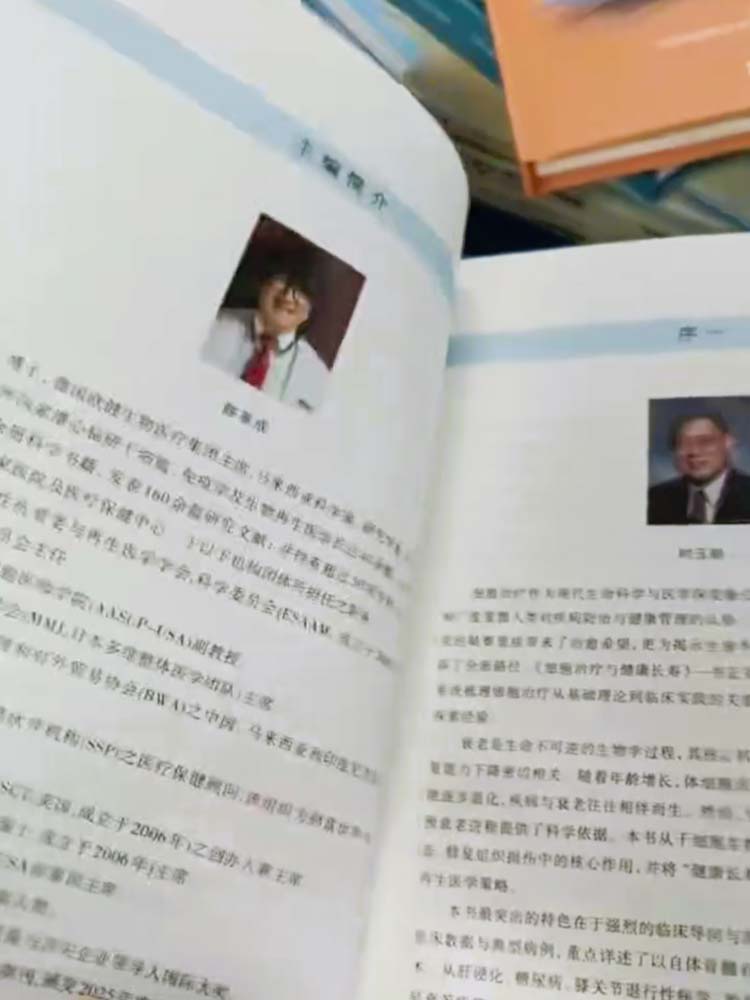


More than a conventional medical textbook, the monograph seeks to connect laboratory research with clinical practice. Its central proposition is that the human body contains a “biological treasury” of cells and repair mechanisms that may be harnessed to support tissue regeneration, immune restoration, and healthier longevity.
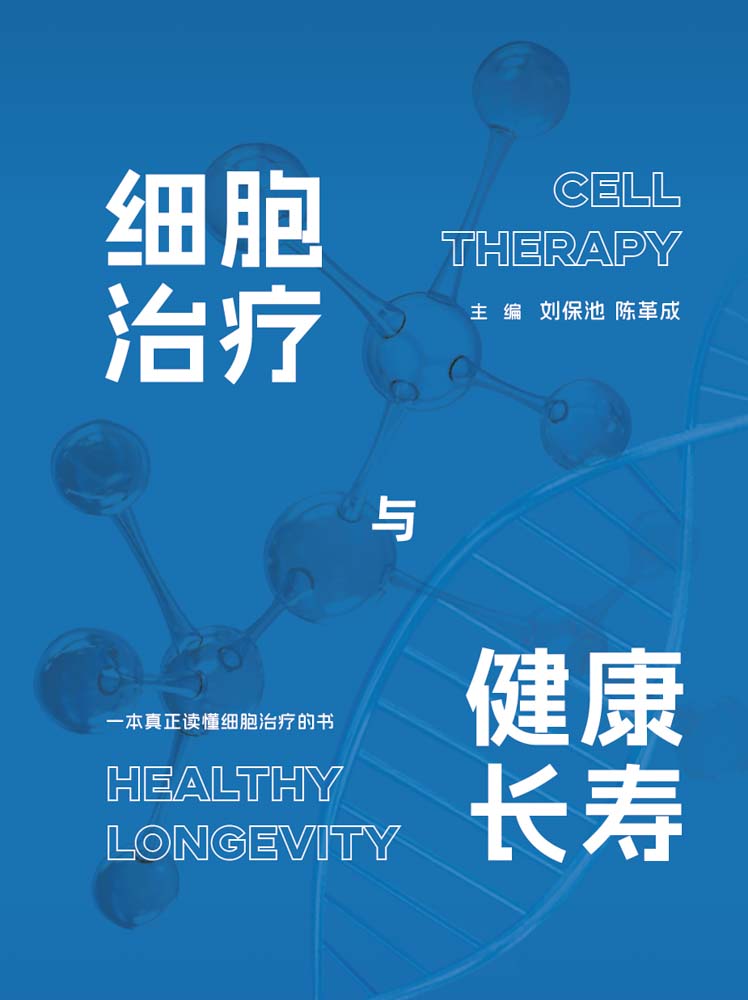
A Multidisciplinary Collaboration
The scale of the publication is reflected in the breadth of its editorial team.
Prof. Liu Baochi, a chief physician, professor, and doctoral supervisor affiliated with the Shanghai Public Health Clinical Center of Fudan University, has extensive experience in the clinical study and application of autologous cellular therapies.
His work has included surgical care for more than 2,000 patients living with HIV, as well as research into ultrasound-guided cellular interventions for conditions such as liver cirrhosis and diabetes.
Joining him as co-editor is Prof. Dr. Mike Chan, chairman of European Wellness Biomedical Group and a prominent international advocate for precision regenerative medicine. His involvement gives the publication a strong international dimension, connecting Chinese clinical experience with decades of European research and practice in cellular therapy.
The deputy editors are Wang Hao of Shanghai Medical College, Fudan University; Liu Jinfeng of the Second Medical Center of the PLA General Hospital; and Liu Li of Zhongshan Hospital affiliated with Fudan University.
Other editorial contributors represent institutions including Huashan Hospital of Fudan University, the Shanghai Institute of Biomedicine and Biotechnology, Xiangya Hospital of Central South University, Southern University of Science and Technology, and Shanghai Jiao Tong University.
Together, they contribute expertise spanning clinical medicine, cellular biology, immunology, biotechnology, oncology, and translational research.
Recognized by Prominent Medical Scholars
The monograph is accompanied by forewords and reviews from respected figures in medical science.
Academician Shi Yufang, Dean of the Institute of Translational Medicine at Soochow University and a member of the European Academy of Sciences, highlights the book’s systematic presentation of the clinical strategy of “autologous sourcing and precise infusion.”
Academician Wei Qiming commends its broad approach to combining Chinese and Western perspectives while bringing medical research and clinical practice closer together.
Other reviewers include Academician Han Zhongchao of the French National Academy of Technologies and the French National Academy of Medicine and Academician Wang Fusheng of the Chinese Academy of Sciences.
The book also includes perspectives from Dr. Sun Baiqiu, a physician and reported recipient of autologous cell therapy, and Dr. Lee Tsung-Daw, former director of the Immunogenetics Laboratory at the American Red Cross Research Institute.
These endorsements reflect the monograph’s ambition to serve not only as an academic reference but also as a guide to the responsible translation of scientific knowledge into potential clinical applications.
Prof. Mike Chan’s International Contribution
Prof. Dr. Mike Chan’s role in the publication builds upon more than four decades of work in cellular therapy, immunology, peptides, biological medicine, and regenerative health.
He has written or co-authored more than 60 scientific books and published extensively in peer-reviewed journals. He is also associated with numerous patents involving cellular and peptide biology.
Through European Wellness Biomedical Group, Prof. Chan has helped develop an international network of hospitals, medical centers, research facilities, educational institutions, and wellness centers. His work has focused particularly on translating developments in regenerative science into structured approaches for preventive health, biological repair, and longevity medicine.
His professional affiliations have included leadership and advisory roles in international organizations dedicated to anti-aging, regenerative medicine, and cell therapy. These include the European Society of Preventive, Regenerative, and Anti-Aging Medicine; the International Association for Stem Cell Transplantation; and the International Cell Therapy Association.
He has also been featured in numerous international publications and recognized through awards related to scientific authorship, innovation, and regenerative medicine.
His participation in Cell Therapy and Healthy Longevity reflects his longstanding belief that the future of medicine will be increasingly personalized, preventive, and directed towards specific tissues, organs, and biological pathways.
Connecting Chinese Clinical Experience with European Cellular Medicine
One of the monograph’s most significant features is the integration of Chinese clinical experience with knowledge drawn from the classical European school of cellular therapy.
European Wellness Biomedical Group contributes an international perspective shaped by decades of research and clinical cooperation in Europe and other regions.
A central part of this work is Fetal Cell Technology International, or FCTI, which traces its scientific foundations to European developments in biological and cellular medicine. FCTI works with researchers and specialized institutions to study cellular preparations, organ-specific biological materials, and related regenerative approaches.
The group’s research has considered potential applications in neurological, metabolic, musculoskeletal, developmental, and age-related conditions. These areas have included autism spectrum disorders, cerebral palsy, multiple sclerosis, muscular dystrophy, diabetes, chronic kidney and liver conditions, and post-stroke rehabilitation.
Such approaches remain specialized and should be assessed carefully according to the patient’s condition, available evidence, and applicable medical regulations. The monograph nevertheless illustrates the expanding scope of scientific interest in cell-based medicine.
The Body as a Source of Therapeutic Potential
A major theme running through the book is the therapeutic potential of autologous cells—cells obtained from a patient’s own body.
The monograph pays particular attention to bone marrow-derived nucleated and mononuclear cells. These cells contain different populations involved in blood formation, immune regulation, tissue repair, and biological signaling.
Because autologous cells originate from the patient, they may reduce concerns surrounding immune incompatibility and certain ethical issues associated with other cellular sources. However, their collection, preparation, and administration must still follow strict medical, laboratory, and regulatory standards.
The book describes these cells as biological “seeds” capable of responding to signals released by damaged or inflamed tissues. Researchers are studying whether such cells can migrate towards affected areas and contribute directly or indirectly to the repair process.
This concept is part of a broader shift in medicine: treating the body not simply as a collection of diseased organs but as an interconnected biological system with inherent mechanisms for repair.
Precision Delivery Through Ultrasound Guidance
The monograph also examines ultrasound-guided percutaneous cell infusion, a technique designed to deliver cellular preparations more precisely to selected tissues or organs.
Traditional organ-targeted interventions may require sophisticated radiological procedures and hospital admission. Ultrasound guidance allows trained clinicians to view anatomical structures in real time and guide a fine needle towards an intended treatment area.
Depending on the medical indication, the method may be considered for areas such as the liver, pancreas, thyroid, ovaries, or joints.
Its proposed advantages include greater targeting accuracy, smaller entry points, and potentially shorter recovery periods. The procedure, however, remains highly specialized and must only be performed by properly trained medical practitioners in an appropriately regulated clinical environment.
Clinical Areas Explored in the Book
The monograph discusses a wide range of investigational and clinical applications.
Liver Disease and Immune-Compromised Patients
The book presents studies involving autologous bone marrow cells administered to patients with serious liver disease, including individuals with liver cirrhosis and HIV-related complications.
Some reported cases experienced improvements in liver function and long-term survival. These observations are presented as part of the evolving clinical evidence surrounding cellular interventions, rather than as guarantees that every patient will achieve the same result.
Diabetes and Pancreatic Repair
Another area examined is the use of autologous cells to support pancreatic function.
Researchers are investigating whether precisely delivered cellular preparations can improve the environment surrounding pancreatic islet cells and support metabolic regulation. Certain cases cited in the book reportedly achieved improved blood-glucose control and reduced dependence on insulin.
Further controlled research remains necessary to determine which patients are most likely to benefit and how durable the effects may be.
Premature Ovarian Insufficiency
The monograph describes the investigation of ultrasound-guided ovarian cellular infusions for women with premature ovarian insufficiency or premature ovarian failure.
Reported outcomes in selected cases included the return of menstrual cycles, changes in hormone levels, and natural pregnancies. While encouraging, such findings require individual medical assessment and should not be interpreted as an established fertility guarantee.
Osteoarthritis and Cartilage Injury
Musculoskeletal regeneration is another major area of interest.
Bone marrow-derived cells are being studied for their potential to support cartilage repair, reduce inflammation, and improve joint function in people with knee osteoarthritis and other degenerative joint conditions.
The goal is not simply to suppress pain but to improve the biological environment of the affected joint. In some reported cases, patients experienced improved mobility or postponed more invasive procedures.
The suitability of such treatment depends on the severity of cartilage loss, the patient’s age, underlying inflammatory conditions, and overall health.
Recovery Following Chemotherapy
The book also discusses the preservation and reinfusion of autologous bone marrow cells in connection with chemotherapy.
Chemotherapy may significantly suppress bone marrow and weaken the immune system. Under specialized protocols, cells collected before treatment may potentially be used to support blood cell and immune system recovery afterwards.
This is a complex medical application that requires careful coordination between oncology, hematology, and cellular therapy specialists.
Immunotherapy, Gene Therapy and the Next Frontier
Beyond regenerative applications, Cell Therapy and Healthy Longevity examines rapidly developing fields in cancer immunotherapy and genetic medicine.
These include CAR-T-cell therapy, CAR-NK-cell therapy, and tumor-infiltrating lymphocyte therapy. Each approach seeks to strengthen or re-engineer the immune system’s ability to recognize and attack cancer cells.
The book also considers gene therapy, oncolytic viruses, and emerging forms of cellular engineering that may eventually make highly personalized therapies more accessible.
These fields are advancing quickly, but they also raise important questions involving patient selection, safety, manufacturing quality, affordability, and regulation. By examining both scientific principles and clinical procedures, the monograph attempts to provide a practical framework for researchers and practitioners navigating this changing landscape.
From Lifespan to Healthspan
The deeper message of Cell Therapy and Healthy Longevity is that longevity should not be measured merely by the number of years lived.
The more meaningful goal is healthspan—the number of years a person remains physically capable, mentally active, and functionally independent.
Cellular medicine may eventually contribute to this goal by addressing some of the biological processes associated with tissue degeneration, chronic inflammation, immune decline, and impaired repair. It is not a promise of immortality nor a universal solution to every disease. It is an evolving scientific field seeking better ways to preserve human function and quality of life.
As Academician Han Zhongchao observes in his review, the monograph builds a bridge connecting basic science with clinical practice, international developments with Chinese solutions, and scientific ideals with the needs of patients.
That bridge may prove to be one of the book’s most important contributions.
A Reference for the Future of Regenerative Medicine
By assembling the work of 36 experts, Cell Therapy and Healthy Longevity provides researchers, physicians, and medical educators with a wide-ranging overview of contemporary cellular medicine.
It also reflects the shared vision of Prof. Liu Baochi and Prof. Dr. Mike Chan: that meaningful progress depends on collaboration across countries, institutions, and medical disciplines.
The body’s biological treasury is only beginning to be understood. Unlocking it responsibly will require scientific rigor, ethical practice, regulatory oversight, and a commitment to patient safety.
With this landmark publication, its editors and contributors have created a substantial reference for those seeking to understand how cell therapy may shape the future of regenerative medicine—and how the pursuit of a longer life can become the pursuit of a healthier, more active, and more meaningful one.
Cell Therapy and Healthy Longevity was published by Macao Science Publishing House in July 2026. ISBN: 978-99996-49-69-8.
Medical note: Cell-based therapies vary in their level of clinical evidence and regulatory approval. Patients should consult qualified medical specialists and carefully evaluate the evidence, risks, and regulatory status of any proposed treatment.
Follow European Wellness:



Follow European Wellness Academy:
Follow Prof. Dato’ Sri Dr. Mike Chan:

Related Posts