Immerse yourself in a glamorous landscape of emerging trends and lucrative opportunities at Cosmoprof Asia…
Leigh Steinberg’s COMEBACK Finds New Purpose With Prof. Mike Chan
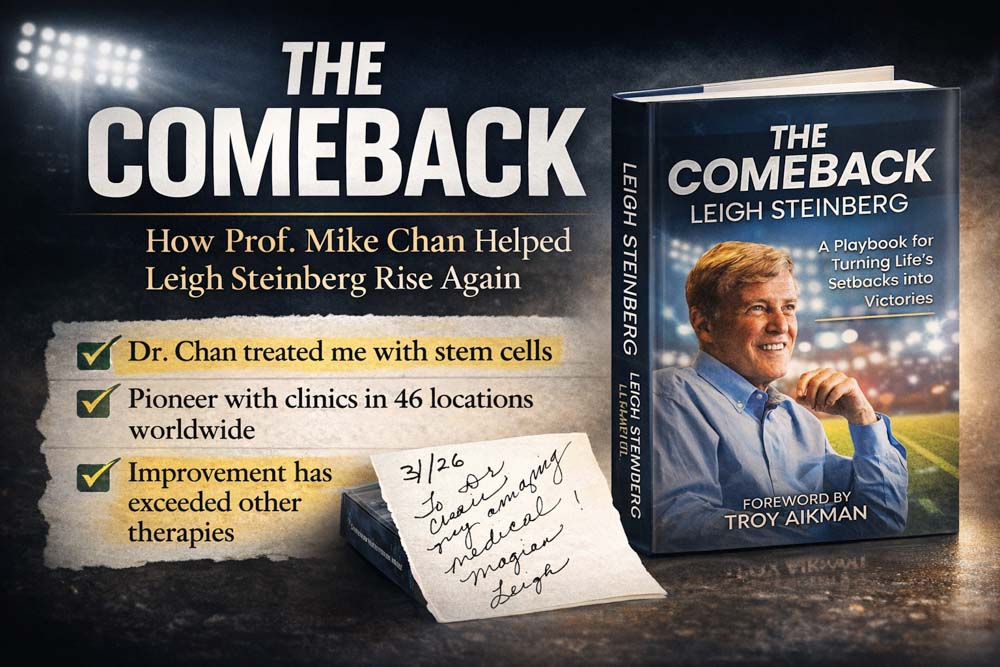
SAN FRANCISCO, United States (April 8, 2026) — For decades, Leigh Steinberg was one of the most powerful men in sport, the celebrated super-agent who built an empire representing more than 300 professional athletes, negotiated over US$4 billion in contracts, and inspired the Oscar-winning film Jerry Maguire.
But behind the glamour of draft-day deals, championship rings and celebrity clients, Steinberg was fighting a private collapse that nearly destroyed him.
In The Comeback, his deeply personal memoir, Steinberg recounts how alcohol addiction sent his life into freefall, reducing one of the most influential men in football to a figure sitting on a park bench, drinking paper bag vodka a block from his childhood home.
Yet the book is not a story about ruin. It is a story about rebuilding.
“This is your playbook for turning life’s setbacks into your greatest victories,” the front cover flap declares.
It is a fitting description of a man whose second act has moved beyond contracts and celebrity, into something more urgent and enduring: brain health, athlete safety, and the search for healing.
Now, that journey has found fresh momentum in a meaningful alliance with Prof. Mike Chan, the regenerative medicine pioneer Steinberg warmly saluted in a handwritten dedication: “To Dr. Chan, my amazing medical magician!”
A Comeback Built on Responsibility
Steinberg’s recovery was shaped by a lesson from his father that would stay with him for life.
“If you wait for others to take responsibility and improve conditions, you could wait forever. The ‘they’ is ‘you’, son,” he wrote, recalling advice that echoed Gandhi’s famous challenge to be the change one wishes to see in the world.
That message became more than philosophy. It became survival.
“I had to hit rock bottom to find my inner strength,” Steinberg wrote. “You have to be the leader on your comeback trail to recovery.”
In the book, he describes fear as one of the great hidden forces behind both success and failure. “Fear is a natural part of the process of coming back,” he wrote. “But unchecked fear can eat away at hope.”
Hope, for Steinberg, became the spark that pulled him forward. “That’s the little spark that ignites the engine inside you,” he wrote. “And sometimes, when you’ve lost everything, hope might be all you have.”
His journey eventually led him to a new conviction that recovery meant more than restoring himself.
“But once you find your footing and you’re on your way back to the top, you will discover that healing and restoring yourself necessitates sharing your gifts with others,” he wrote. “Spread the light that shines within you.”
More than an Agent
Steinberg’s memoir makes clear that he never wanted to be just another sports agent chasing the next deal.
“When I began my career, it was the wild, wild west of sports agents,” he wrote. “I wanted to develop a different model for representing athletes, treating them not simply as financial clients but holistically.”
That philosophy became one of the defining traits of his career. He did not just negotiate contracts. He encouraged athletes to think about their values, their purpose, and their lives after sport.
“I sought not only to enhance their athletic careers but also to lay a foundation for an exciting life after pro sports,” he wrote.
He saw athletes as more than stars. He saw them as platforms for change.
“It was clear that their high profile could trigger positive imitative behavior, especially among younger people,” he wrote.
That belief would shape everything that followed, including his long campaign to bring attention to one of football’s most devastating hidden dangers.
Taking on Football’s Brain Health Crisis
Long before concussions became central to the national sports debate, Steinberg was already sounding the alarm.
“One issue that has become impossible to ignore is the rising awareness of concussions and brain health,” he wrote in the book’s chapter Healthy Minds, Healthy Bodies.
He warned that the biggest danger was not only the spectacular knockout collisions that dominate highlight reels but also the quieter, repeated impacts absorbed over years of play.
“Offensive and defensive linemen are exposed to this constant impact thousands of times throughout high school, college, and the NFL,” he wrote. “A lineman can finish a career with 10,000 sub-concussive blows without a single diagnosed concussion, yet the cumulative effect can mirror the damage caused by multiple knockout hits.”
That reality haunted him as he sat in exam rooms with injured players, asking questions medicine could not yet answer.
“How many concussions are too many? What are the long-term consequences? When should a player consider retirement?” he wrote.
“I could not, in good conscience, continue representing players without fighting for a better understanding and better care.”
In 1994, Steinberg organized what he described as the first Player Safety and Concussion Conference in Newport Beach, bringing together neurologists, helmet manufacturers, trainers, and NFL players.
“We didn’t walk away with many definitive answers, but we took an important step,” he wrote. “At that moment, simply getting the issue into the light was progress.”
He later expanded that work through the Brain Health Summit, which he said was designed to bring together leaders in medicine, sports, entertainment, media and policy.
“What I value most about the Summit is that it brings together perspectives from across disciplines,” he wrote. “It’s a reminder that brain health is not just a sports issue. It affects everyone.”
The Meeting with Prof. Mike Chan
It is here that Steinberg’s personal recovery story intersects most directly with Prof. Mike Chan.
After years of alcohol abuse, Steinberg began confronting the toll it had taken not only on his life but also on his brain. He wrote that scans confirmed “areas of degradation” in his cognitive function, deepening his interest in prevention, longevity, and neurological recovery.
“But I’ve come to believe that the future of medicine lies in proactive care, identifying risks early, addressing inflammation before it becomes disease, and supporting the body in ways that delay decline,” he wrote.
That belief led him to explore new frontiers in regenerative medicine and eventually to Prof. Mike Chan.
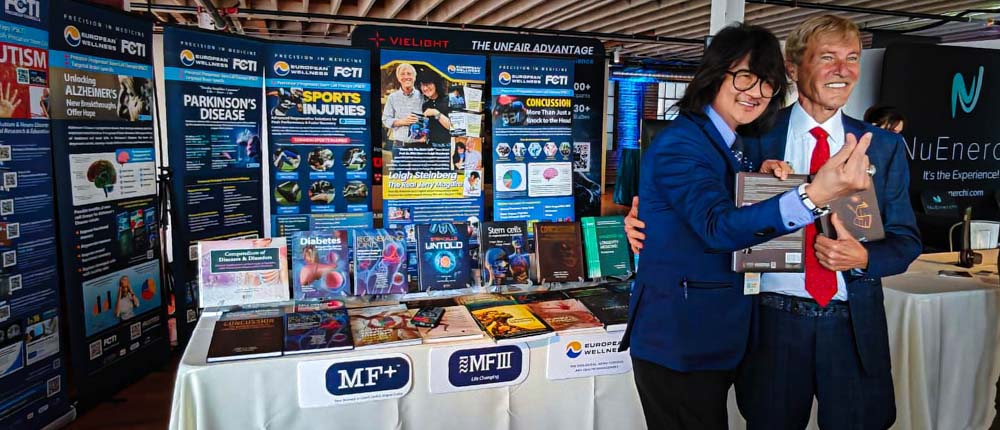
“My most recent stem cell experience has been with Prof. Mike Chan, a pioneer in the field with clinics in 46 locations worldwide,” Steinberg wrote. “He has authored multiple books on stem cell breakthroughs, and together we co-wrote a book about stem cells and concussions, released in February 2026.”
Steinberg described Prof. Mike Chan not simply as a physician, but as a pioneering figure in regenerative medicine, with four decades of experience and a global network of 46 centres devoted to advancing stem cell science, longevity medicine and restorative care. In Steinberg’s account, Prof. Chan’s treatment went far beyond addressing isolated pain points.
“What began as care for sciatica, spinal discomfort and knee pain evolved into a broader experience of recovery that, he suggests, also brought sharper cognition, stronger mental clarity and a renewed sense of vitality.”
Steinberg wrote that the improvement he experienced under Prof. Chan’s care “has exceeded what I experienced with other therapies,” underscoring the depth of his confidence in the treatment.
That trust, according to Prof. Chan’s feedback, extended beyond Steinberg himself. It also shaped his decision to entrust his son Matt to Prof. Chan’s care for retinitis pigmentosa, a serious degenerative eye condition that affects vision.
The decision adds a deeply personal dimension to Steinberg’s relationship with Prof. Chan, suggesting that his confidence in the regenerative medicine pioneer was built not only on professional interest or personal results, but on the willingness to place his own family’s hopes for healing in Chan’s hands.
For Steinberg, that experience appears to have reinforced a broader hope: that the same kinds of emerging modalities being explored for his own recovery could one day benefit the athletes he has spent a lifetime protecting.
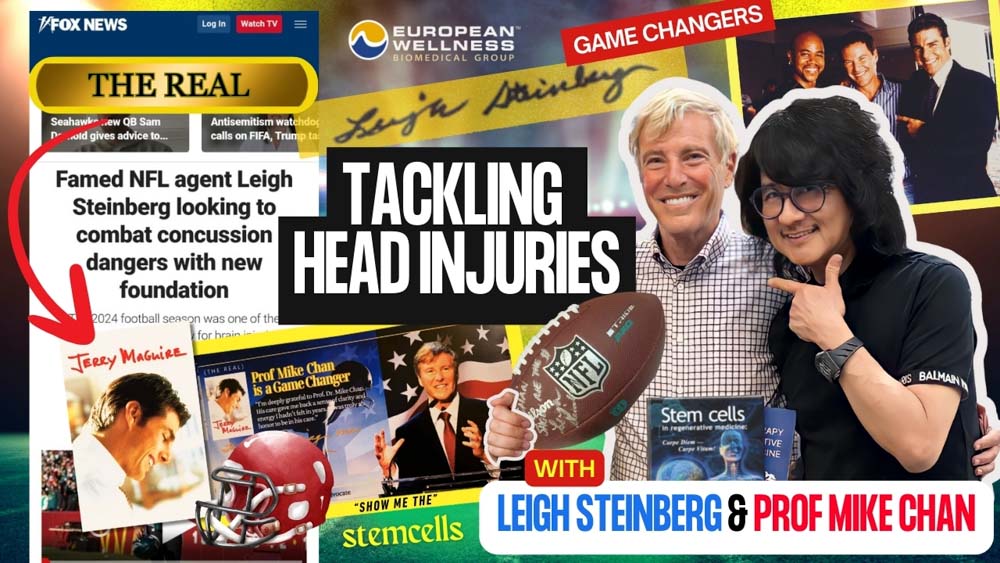
“Seeing these results firsthand has motivated me to bring these technologies into professional and collegiate athletic programs,” he wrote. “If these methods can support recovery and long-term health for elite athletes, they can also benefit everyday people.”
That makes his meeting with Prof. Chan more than personal. It marks a convergence between advocacy and innovation, between sports leadership and regenerative science.
A Change Agent Still at Work
One of the most revealing chapters in The Comeback is titled “Generosity: Be a Change Agent.” There, Steinberg defines the role that seems to best capture his second act.
“I like the term ‘change agent’ — one who not only improves himself or herself but catalyzes change in others,” he wrote. “They inspire, influence, and invigorate.”
He makes clear that his own comeback was never meant to end with sobriety alone.
“My comeback has led me to focus directly on making a difference on several fronts,” he wrote. “I also had the opportunity to play a role in making collision sports safer, and I have researched and promoted new health and productivity modalities.”
That line now reads almost like a bridge to his work with Prof. Chan.
The sports agent who once changed how athletes were represented is now helping push a conversation about how they may be healed.
At 73, Steinberg says he remains committed to that mission, combining rigorous training, daily walking, and a renewed dedication to long-term health.
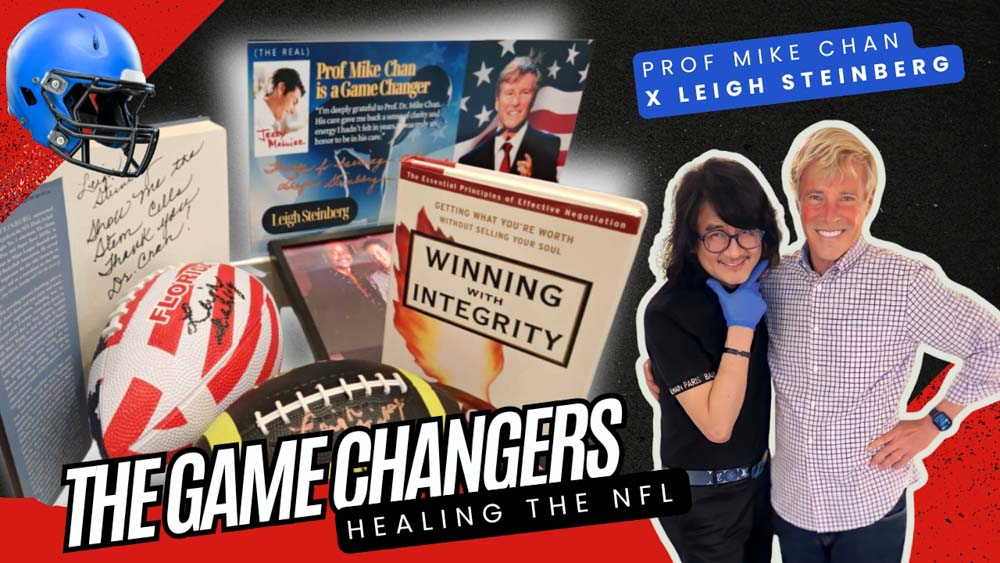
“It is never too late to change course,” he wrote. “No matter the damage that has already been done, physically or emotionally, there is always potential for improvement.”
For a man once defined by billion-dollar deals, those may be the most important words in the book.
Because Leigh Steinberg’s legacy is no longer just about helping athletes reach the top.
It is about helping them survive what comes after.
And in Prof. Mike Chan, he appears to have found not only a healer but also a partner in that next fight.
GET THE BOOK:
Follow European Wellness:



Follow European Wellness Academy:
Follow Prof. Dato’ Sri Dr. Mike Chan:

Related Posts