International entrepreneur and fashion personality Hofit Golan and global business leader, investor and author Vinay…
Prof. Mike Chan on the Global Partnership Behind Cell Therapy and Healthy Longevity
As the book’s co-editor, Prof. Mike Chan says the new medical monograph combines the knowledge of more than 30 contributors with lessons drawn from his four decades of international work in cell therapy and longevity medicine.
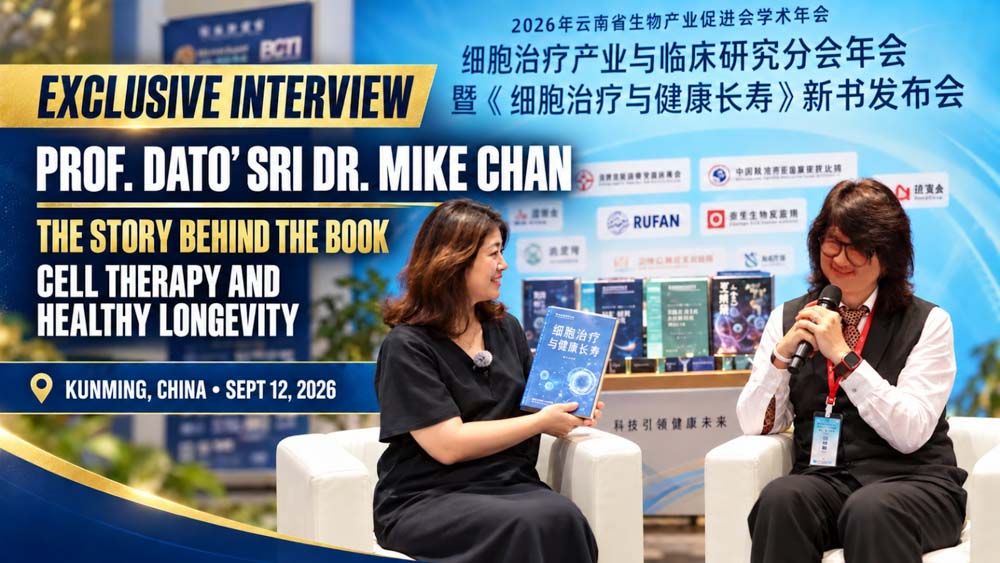
KUNMING, China (Sept 12, 2026) — Prof. Dato’ Sri Dr. Mike Chan says his collaboration with Prof. Liu Baochi on Cell Therapy and Healthy Longevity was guided by a shared ambition: to bring together medical knowledge, clinical experience and research perspectives from leading specialists in a single reference work.
Speaking in an interview during the book’s official launch in Kunming, Prof. Chan described the publication as a collective undertaking involving more than 30 professors and specialists working in stem-cell research, longevity medicine and related disciplines.
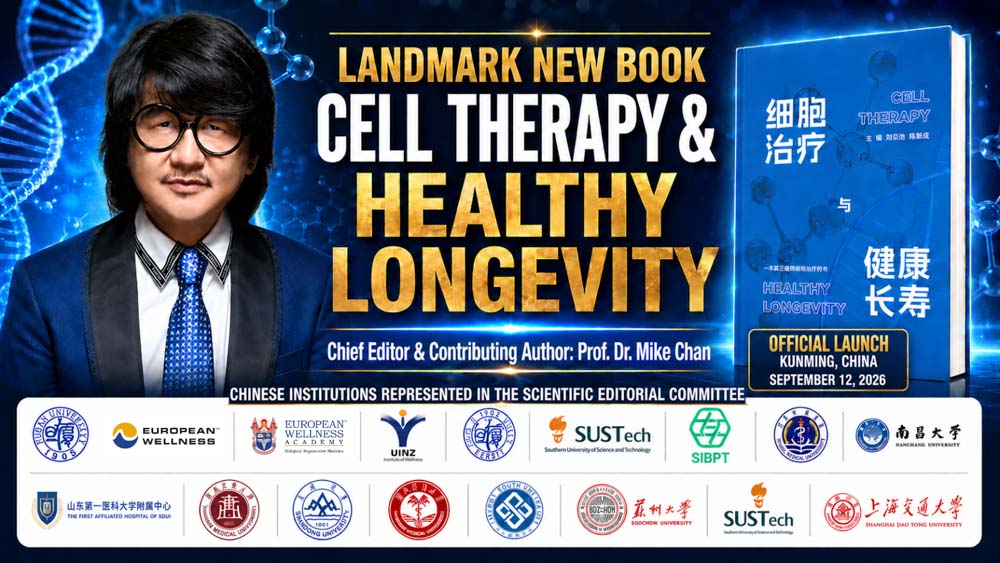
“This is a monograph involving more than 30 professors and experts in stem-cell research and longevity,” he said. “Everyone has contributed a chapter and shared their knowledge.”
“I am one of the two chief editors, and I have put my experience of 44 years into this book,” he said.
Prof. Chan and Prof. Liu served as the book’s chief co-editors. Chan also contributed to several chapters, drawing on what he described as 44 years of experience in the field.
A Meeting of Chinese and International Expertise
The partnership between Prof. Chan and Prof. Liu gives the book both a Chinese foundation and an international outlook.
Prof. Liu brought his experience within China’s medical and academic community to the project, while Prof. Chan contributed a professional perspective shaped by decades of work and training across Europe, Asia and the United States.
Prof. Mike Chan said exposure to different schools of medicine had convinced him that no country or institution holds all the answers. Scientific progress, he argued, depends upon learning from researchers and clinicians wherever valuable expertise can be found.
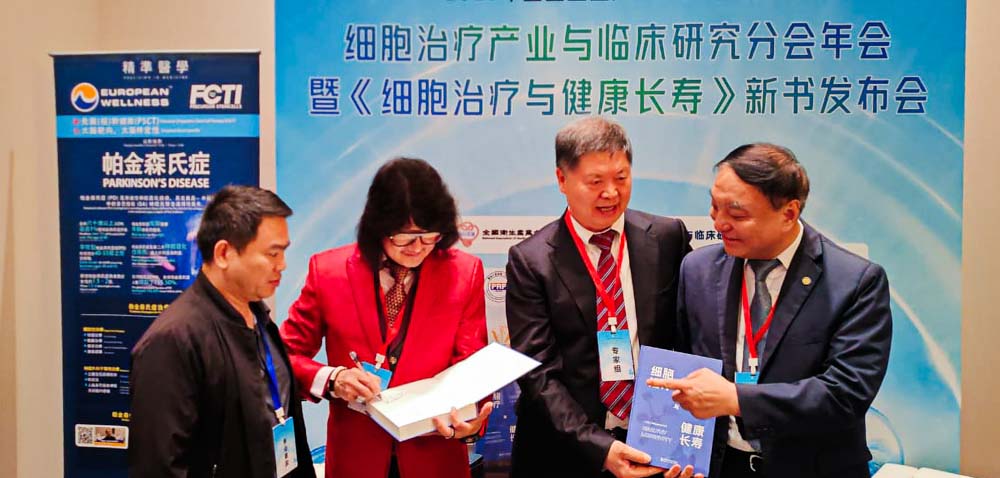
“There is a lot to learn, and there is a lot to learn from everyone,” he said. “Some of the best scientists are in the United States, some are in Japan, and there are many others in China, India, Switzerland and Germany.”
Rather than presenting one national or institutional viewpoint, the monograph brings together a range of specialist perspectives. Its collaborative structure reflects Prof. Chan’s belief that cell therapy and longevity medicine require contributions from multiple disciplines.
“What I have gathered comes from my knowledge and my experience of learning from everyone,” he said. “I am a very keen student. I love to read, and I write books because I have spent so much of my life reading.”
Four Decades of Experience Distilled Into Print
Prof. Chan said his contribution to the book was shaped by a professional journey that began in Europe when he was a young man.
He recalled receiving training influenced by Swiss, German, Russian and Ukrainian medical traditions before extending his work to Japan and the United States. He also spoke about professional links with medical academies and university researchers in America and Germany.
Those experiences, he said, helped him appreciate the considerable differences between healthcare systems, research cultures and scientific approaches. They also reinforced the importance of combining knowledge across borders instead of treating one country’s methodology as universally superior.
The book seeks to distil some of those lessons for medical professionals, researchers and readers interested in the developing relationship between cell science, ageing and healthy longevity.
Prof. Chan described it as one of more than 60 books he has worked on during his career. Unlike a personal memoir or a single-author volume, however, Cell Therapy and Healthy Longevity draws its breadth from a large group of contributors, with each addressing an area of specialist knowledge.
Looking Beyond Lifespan
A central theme of the book is the distinction between lifespan—the total number of years a person lives—and healthspan, the period during which that person remains healthy, independent and mentally and physically capable.
For Prof. Chan, longevity should not be judged solely by how long people survive. The more meaningful question is whether advances in medicine can help people remain healthier as they grow older.
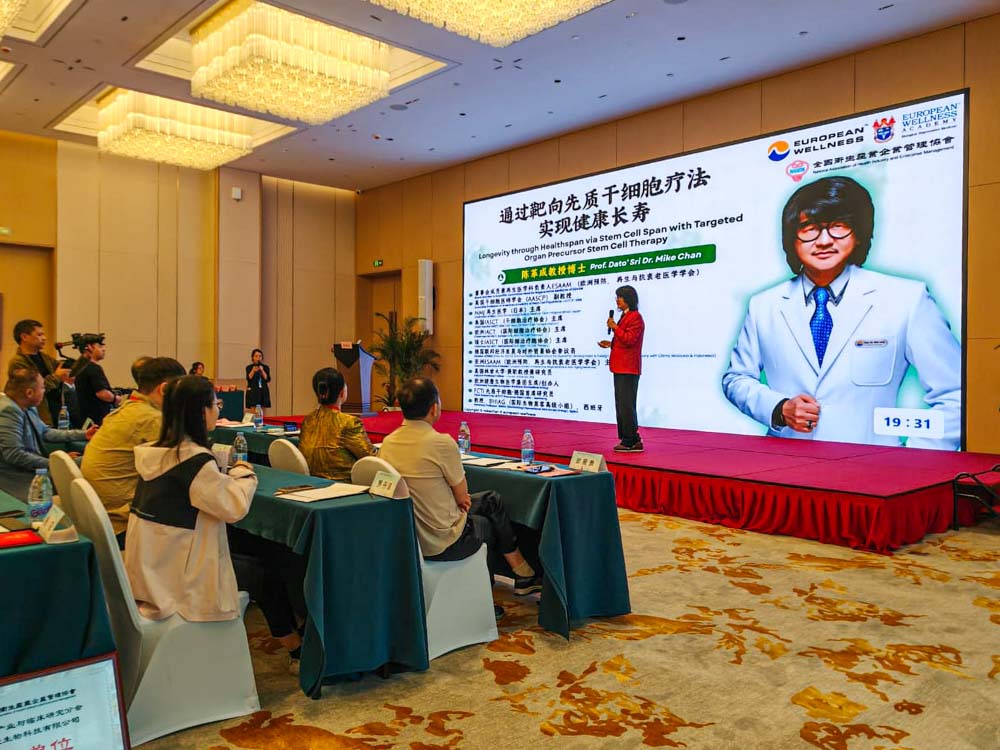
“Can we live longer? Yes. Can we be healthier? Yes. Can we remain sharper in the brain? Yes,” he said. “This is what we are trying to do in this field, and that is why we contributed these chapters.”
He said aging does not affect every part of the body at the same rate. The lungs, heart, brain, muscles, bones, hormonal systems and other organs undergo different age-related changes, making healthy longevity a complex, whole-body challenge.
In his view, progress therefore requires a more precise understanding of individual organs, biological markers and patients’ clinical conditions.
He compared the ageing body with an older vehicle whose components gradually lose performance. Unlike a car, however, human organs cannot simply be replaced whenever they begin to deteriorate. This, he said, is one reason researchers are investigating whether cellular approaches could eventually help preserve or restore aspects of biological function.
A Call for Greater Precision
Prof. Chan cautioned against treating stem cells as though they were a single, universal intervention.

“Stem cells are not just one or two types of cells that can be used to treat the whole body,” he said. “There are hundreds of different types, and they have different molecules, proteins, amino acids and biological characteristics.”
He argued that cellular interventions must be matched carefully to the tissue, organ and condition being studied. A neurological injury, for example, may affect a particular region of the brain and therefore requires an understanding of the location and nature of the damage.
Clinical reports, imaging and laboratory findings, he said, should guide decisions rather than broad assumptions that one cell type can address every disorder.
His comments reflected one of the monograph’s main messages: the future of cell therapy will depend not only on enthusiasm for new technology but also on greater specificity, careful diagnosis, scientific discipline and responsible clinical practice.
The more ambitious longevity projections discussed during the interview—including the possibility of substantially extending healthy human life—remain scientific aspirations rather than guaranteed clinical outcomes. Their realisation will depend upon continuing research, reproducible evidence, regulatory scrutiny and long-term safety data.
A Book Intended to Encourage Exchange
Prof. Mike Chan’s demanding international schedule remains part of his effort to exchange knowledge with doctors and researchers in different countries. Shortly before the Kunming launch, he had travelled from Arizona and was preparing for further engagements in Vietnam, Beijing, Malaysia and Europe.
That pace, he said, reflects a career-long commitment to studying different medical traditions and maintaining professional connections across borders.
In Cell Therapy and Healthy Longevity, that international outlook is placed alongside the knowledge of Prof. Liu and the book’s wider group of Chinese contributors. The result is intended to serve as a platform for discussion rather than the final word on a rapidly developing field.
For Prof. Chan, the publication is ultimately about sharing accumulated knowledge so that future research and clinical practice can develop on firmer foundations.
“There is a lot to learn from everyone,” he said. “That is what I have gathered through my experience—and that is why I continue to read, learn and write.” — Prof. Mike Chan
Follow European Wellness:



Follow European Wellness Academy:
Follow Prof. Dato’ Sri Dr. Mike Chan:

Related Posts