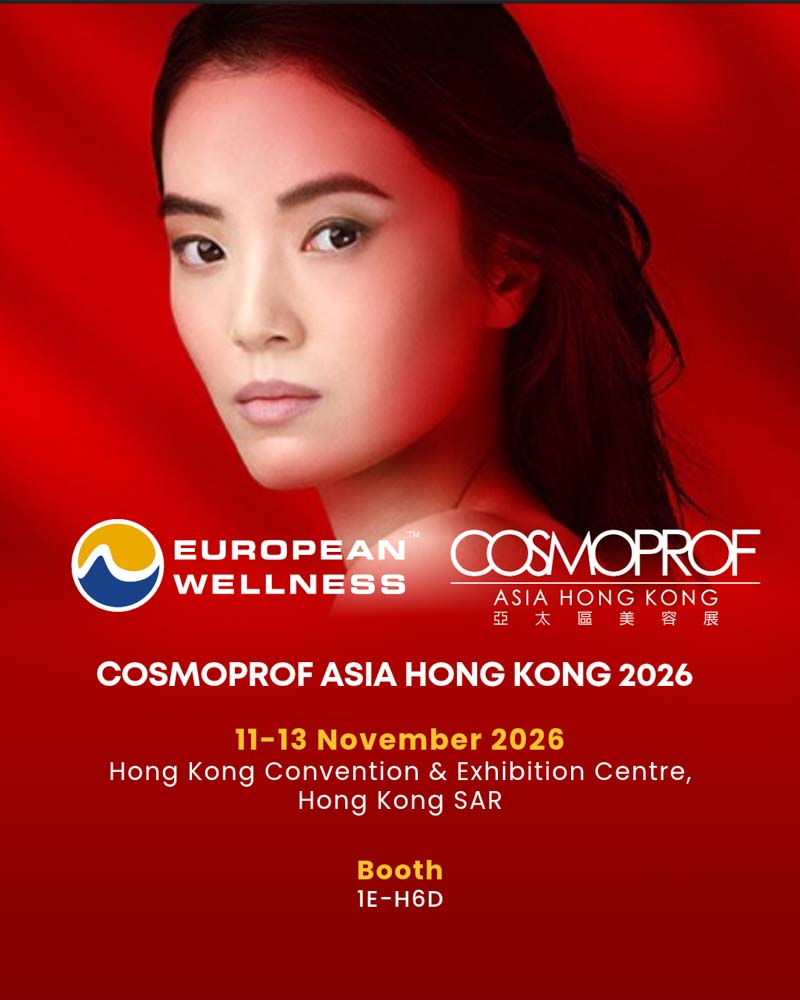
Immerse yourself in a glamorous landscape of emerging trends and lucrative opportunities at Cosmoprof Asia…
🏁 F1 Legend Michael Schumacher No Longer Bedridden: Prof. Mike Chan Highlights Hope Through Regenerative Medicine
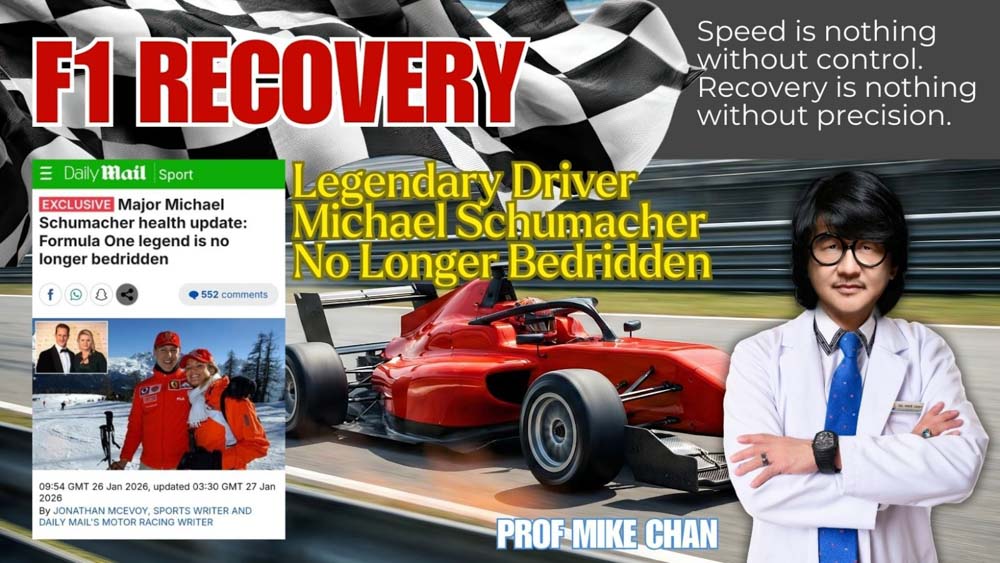
The global sports world was recently jolted by a remarkable update: Michael Schumacher, the seven-time Formula 1 world champion long thought to be in an unchanging state following a catastrophic traumatic brain injury, is reportedly no longer bedridden—twelve years after his devastating 2013 skiing accident. For over a decade, the prevailing medical view on severe TBI has leaned toward permanence. But to Prof. Dato’ Sri Dr. Mike Chan, a world leader in bio-regenerative and cellular therapy, this milestone signals something profoundly different.
“Michael Schumacher’s reported ability to sit up and leave the bedridden state is not just encouraging—it’s a testimony to long-term integrative care, family dedication, and possibly the quiet role of regenerative science behind the scenes,” Prof. Chan states.
“While we don’t know the exact treatments he’s received, this trajectory fits what we see in some of our most hopeful neuro-recovery patients.”
Schumacher, who suffered a severe traumatic brain injury (TBI) in 2013, continues to receive 24/7 care from a dedicated medical team and his wife, Corinna, at home. He is now reported to be mobile in a wheelchair and able to watch Formula 1 races—though his communication remains extremely limited. He divides his time between a secluded estate in Gland, Switzerland, by Lake Geneva, and a private villa in Majorca, Spain, purchased in 2017.
Privacy has remained a top priority for the Schumacher family. Only a tight circle of confidants, including close friend and former Ferrari boss Jean Todt, are granted visits. Despite this protective silence, recent insights reveal a hopeful turn: he is now “no longer bed-bound,” a phrase that significantly shifts the public narrative of his long and difficult recovery.
“Such resilience in the human body—especially after extensive neurological trauma—is rare, but not impossible,” says Prof. Chan. “We are now in an era where science, medicine, and cellular technologies can offer unprecedented support in neural regeneration and quality-of-life recovery”.
Key Points
- Neuro-recovery is possible—even after a decade
With supportive care, stimulation, and regenerative medicine, some brain injury patients regain functions once thought permanently lost.
- Precision cellular therapy targets key brain regions
Prof. Chan’s protocols involve stem cell infusions tailored to the brain cortex, thalamus, cerebellum, and hypothalamus—key areas in TBI and coma recovery.
- Michael’s story reflects a global need for neuroregenerative care
Millions suffer from brain injuries yearly. His journey brings awareness to the life-saving promise of new treatments.
From “Old Dogma” to “New Hope”: The Science of Recovery
The prevailing medical view—often termed the “Old Dogma” suggested that brain tissue, once destroyed, could not be replaced. However, Prof. Chan’s research, detailed in his book The Dawn of New Medicine – Stem Cell Therapy: Old Dogma, New Hope, challenges this. He argues that the brain possesses “regenerative intelligence” and that with the right biological materials, neurogenesis (the growth of new neurons) is possible even years after injury.
Prof. Chan notes that Schumacher’s ability to sit upright implies a recovery in motor control and core stability, functions governed by specific brain regions. “Michael Schumacher’s reported ability to sit up and leave the bedridden state is not just encouraging—it’s a testimony to long-term integrative care… and possibly the quiet role of regenerative science behind the scenes,” Prof. Chan states.
The Procedure: Precision “Hardware” Repair
How is such recovery possible? According to Prof. Chan’s publications, general stem cells are insufficient for complex brain injuries because the brain is not a monolith; it consists of over 67 different types of cells.
To treat TBI effectively, the procedure requires Organ-Specific Precursor Stem Cells (PSC). These are not generic cells but lineage-specific biologicals that target the exact anatomical regions damaged by the impact.
Prof. Chan explains the targeting required for a case like Schumacher’s: “In cases like Schumacher’s, the brain cortex, frontal and temporal lobes, cerebellum, and thalamus are often affected. These are the exact targets we address using neural-specific cell therapies”.
“For this treatment, we focus on all 52 brain lobes and 67 targeted brain regions using precision-specific stem cells,” says Prof. Mike Chan. “Precision is the rightful solution—because true recovery demands more than hope; it requires targeting the right cells, in the right place, at the right time.
The European Wellness Protocol for Brain Injury Recovery Drawing from the Compendium of Diseases and European Wellness clinical protocols, the procedure for treating severe TBI involves a multi-stage administration of targeted cells:
- Cerebellum & Thalamus Precursor Cells: These are administered to restore motor control, balance, and sensory processing—likely the drivers behind the reported ability to “sit upright”.
- Brain Cortex & Frontal Lobe Cells: Targeted to improve cognition, awareness, and memory.
- Hypothalamus & Diencephalon Cells: Essential for regulating hormones and emotional stability, which are often disrupted in coma recovery.
- Placenta-Derived Cells: Used to reduce chronic neuro-inflammation, a condition Prof. Chan describes as “inflammaging” that prevents the brain from healing.
Managing the “Software” and the “Hardware”
Prof. Chan emphasizes that these therapies work by repairing the “hardware” (the neurons and physical brain structure). These precursor cells are typically administered via deep intramuscular (IM) injection, utilizing a biological “homing” mechanism to migrate to the damaged sites in the brain to initiate repair.
This must be paired with aggressive rehabilitation (physical therapy) to train the “software” (neural pathways). Prof. Chan highlights that this recovery trajectory “fits what we see in some of our most hopeful neuro-recovery patients”.
The Legacy Behind the Legend
Michael Schumacher is not just a former Formula 1 driver—he is a symbol of excellence, dominance, and relentless pursuit of perfection. Widely regarded as one of the sport’s greatest champions, Schumacher’s legacy is etched into the very fabric of Formula 1 history.
His rise began with back-to-back World Championships in 1994 and 1995 with Benetton, but it was his unprecedented run with Ferrari that cemented his status as an icon. From 2000 to 2004, Schumacher claimed five consecutive titles—an unbroken streak that remains the longest in F1 history. With a total of seven world championships, he shares the all-time record, a testament to his enduring brilliance.
Over the course of his career, Schumacher claimed 91 Grand Prix victories, a record that stood unchallenged for more than a decade. His 2002 season was especially historic, featuring 11 wins and a perfect podium record in all 17 races. In 2004, he opened the season with five straight victories, showcasing a level of consistency few have ever matched.
Schumacher also set enduring benchmarks beyond victories. He holds the record for the most fastest laps in Formula 1 (77), and achieved 22 career “hat-tricks”—securing pole position, race win, and fastest lap in the same weekend. From 2001 to 2002, he scored 19 consecutive podiums, another unmatched feat that reflects not just speed, but sustained supremacy.
A Vision for the Future
While the exact details of Schumacher’s private treatment remain confidential, his progress illuminates the global need for neuro-regenerative care.
“Michael Schumacher’s case reminds us that healing is not always fast, but it can be possible,” Prof. Chan concludes. “For families, patients, and clinicians, this is the new frontier—regenerating what was once thought irreparable. We are proud to be part of a global effort to restore lives, cell by cell”.
Today, Michael Schumacher’s legacy serves as both a standard and an inspiration—not only to drivers, but to patients and families worldwide holding onto hope.
📚 Article Resources
Primary News & Commentary Source:
- “F1 Recovery: A Glimmer of Recovery” — Daily Mail Sport / European Wellness Commentary on Schumacher Health Update… https://www.dailymail.co.uk/sport/formulaone/article-15497959/michael-schumacher-health-update.html
Scientific Publications & Books by Prof. Mike Chan:
- “The Dawn of New Medicine – Stem Cell Therapy: Old Dogma, New Hope” — Validates the theory that brain tissue can regenerate and outlines protocols for developmental and degenerative delays.
- “Stem Cells & Regenerative Medicine: High-Efficacy Treatment Protocols” — Details the specific use of precursor cells for complex disorders including Traumatic Brain Injury (TBI).
- “Targeted Organ & Brain Specific Peptides & Exosomes” — Explains the “Lock and Key” mechanism of using specific cell types (like cerebellum or cortex cells) rather than generic stem cells.
- “Pathogenetically Based Integrative Therapeutic Strategies” — Research paper outlining the biological mechanisms of neuro-inflammation and immune failure in brain injuries.
Follow European Wellness:



Follow European Wellness Academy:
Follow Prof. Dato’ Sri Dr. Mike Chan:

Related Posts